Penguin News

The following article was written and published by the Penguin News, The Falkland Islands weekly newspaper

“I’ve recently been lucky enough to have the time to join Uzma’s Kazmi’s Spicy Cuisine evenings at FICS. Last week, with her patient supervision, we made Chicken Biryani and Lahori chiker cholay, a spicy chick pea curry. It turns out that the trick with an authentic Biryani is to fry the onions until they are so caramelised they take on a whole new flavour. Uzma informed me that the word Biryani means fried onions. I later asked her what masala meant “gravy” she replied and then as I showed so much wonder at what she had told me she smiled her beautiful, mischievous smile and said “Yes Molly it’s like learning another language!” The list of ingredients was extensive but we all pooled our spices and offered each other advice on where to find the rarer items.

Later in the week I was wandering around Stanley and, as ever, was drawn to the end of aisle bargains. I can never resist a red sticker. In Seafish I found Tamarind and then later in the West Store there was a glut of palm sugar both reduced to pennies. Neither of these ingredients I expected to find in FI. They made me think of one of my all time favourite curries. The Goan Prawn Balchao. I was taught it at Rick Stein’s years ago. It’s a relatively dry curry and is traditionally made with prawns but works just as well with chicken strips and, I can imagine, it would be fabulous with squid.

Firstly make the paste. If you have a coffee grinder throw all your spices in it but if you have had a bad day at work get out your rolling pin, pestle and mortar or whatever blunt instrument you have to hand and start smashing 1 teaspoon of cumin seeds and 2 teaspoons each of coriander seeds, black peppercorns and cloves. Pop them all in to a food processor adding 1 teaspoon of turmeric, 1 teaspoon of palm sugar (muscovado will do if it’s sold out), 1 teaspoon of salt, 6 garlic cloves, 100g red chillies, 2 teaspoons of tamarind (if you are using the dry stuff you might need to add a bit of warm water to soften it) a thumb of ginger and 2 tablespoons of red wine vinegar. Blitz together and that’s your paste done.

When you are ready for supper chop a couple of onions and another 6 cloves of garlic frying them until brown add the paste and fry for a couple of minutes until the spices start to separate from the oil. Mix another 2 tablespoons of red wine vinegar and 1 tablespoon of palm sugar. Simmer for a minute or two before adding the prawns. They just need to warm through. Try it, It’s unusual but so tasty and I do hate seeing good food go to waste”

“Thank you to all the people who emailed to tell me where to find seaweed. I am off out to have a bit of a forage. Mols”

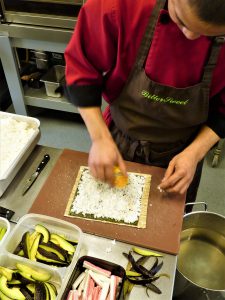
Sushi with Al Matias in Stanley

I’ve been helping out a Bittersweet in Stanley.  Firstly I began on the Tapas Menu whilst Head Chef Al worked flat out on Pizzas. We soon began to talk about our favourite food, countries we wanted to visit and the wonders of local produce. All this lead to us planning a new menu for the restaurant. The owner Julie was delighted with our ideas and gave us carte blanche. I reinvented the brunch menu to include freshly made hollandaise with all the usual trimmings like smoked salmon, bagels, spinach and poached ggs. Al worked on some gorgeous toothfish recipes for lunch. After a few weeks we formulated the idea of a sushi night. I was mad keen to learn all Al’s secrets as he had worked on several prestigious cruise ships as Sushi Chef.

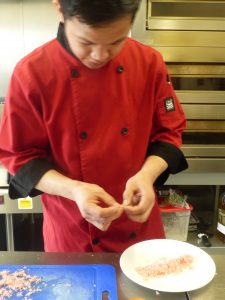
Al Matias Sushi Chef

He set about making Furikake known as the salt and pepper of Japan. He spent a week drying fish and picking it apart into tiny flakes. We added toasted sesame seeds, seaweed, salt and sugar. It is truly gorgeous when you make it yourself and a superb addition to most dishes.

Al carefully separates the strands of dried fish. Part of the intense process of making your own Furikake

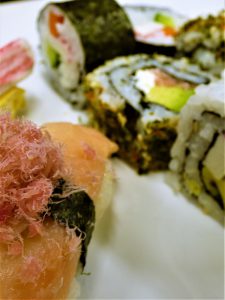
We all had a fabulous evening although it was such hard work making all the rolls, homemade wasabi, pickles and garnish. Proud to say that I think it was one of the events that we held at Bittersweet that lead us to being awarded the Taste of the Falklands Award.

I adored working with Julie, Al. Michelle and Baron. Thank you so much. I do hope our paths cross again on our culinary wanderings.

Look out for some of the recipes on my page coming in March.

Sushi

Penguin News … Cooking with Molly

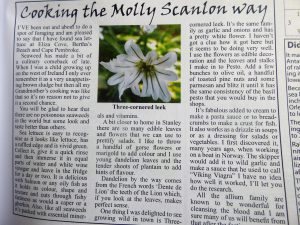
I’ve been out and about this week, taking advantage of the lovely weather to do a spot of foraging. I am pleased to say that I have found Sea lettuce at Eliza’s Cove, Bertha’s and Cape Pembroke. Seaweed has made a bit of a culinary comeback of late. When I was a child growing up on the west of Ireland I only ever remember it as a very unappetising brown sludge but then all my Grandmother’s cooking was like that so it’s no reason not to give it a second chance. You will be glad to hear that there are no poisonous seaweeds in the world but some look and taste better than others. Sea lettuce is easy to recognize as it looks like lettuce, has a ruffled edge and is vivid green. Collect it, give it a quick rinse and then immerse it in equal parts of water and white wine vinegar and leave in the fridge for a day or two. It is delicious with Salmon or any oily fish as it holds its colour, shape and texture and cuts through fishy fattiness as would a caper or a gherkin. Also, like all seaweeds it’s packed with essential minerals and vitamins.

Penguin News

A bit closer to home in Stanley there are so many edible leaves and flowers that we can use to prettify salads. I like to throw a handful of gorse flowers or marigold to add colour and I use young dandelion leaves and the tender shoots of plantain to add hints of flavour.

Dandelion by the way comes from the French words ‘Dente de Lion’ the teeth of the Lion which, if you look at the leaves, makes perfect sense.

One thing I was delighted to see growing wild in town is Three Cornered Leek. It’s the same family as garlic and onions and has a pretty white flower. I haven’t got a clue how it got here but it seems to be doing very well. I use the flowers as edible decoration and the leaves and stalks I make it in to Pesto. Add a few bunches to olive oil, a handful of toasted pine nuts and some parmesan and blitz it until it has the same consistency of the basil pesto that you would buy in the shops. It’s fabulous added to cream to make a pasta sauce or to breadcrumbs to make a crust for fish. It also works as a drizzle in soups or as a dressing for salads or vegetables. I first discovered it, many years ago, when working on a boat in Norway. The skipper would add it to wild garlic and make a sauce that he used to call “Viking Viagra” I have no idea how well it worked, I’ll let you do your own research. All the allium family are known to be wonderful for cleansing the blood and I am sure many of us will benefit from that in the New Year!

Christmas at Bluff Cove

www.penguin-news.com

Darwin House, Falkland Islands

Well here I am on the Falkland Islands. After four months of interviews, work permits and medicals I have finally arrived via RAF Brize Norton. I have  discovered some incredibly tasty new fish and produce and all sorts of innovative recipes. I am particularly fond of Toothfish Cheeks. A Toothfish can grow up to 10 metres in length and live until it’s 50! It’s an absolute privilege to be here and even though the Military call the Islands Dartmoor by Sea in a derogatory sense, I can’t think of any place more lovely.

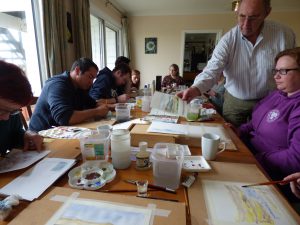
My first major catering event was a watercolour course run by the very talented Richard Cockwell. In between prepping Balmoral Chicken, Toothfish cheeks and STP I managed to join in for an hour of painting. Form the gardens of the Lodge the views over Mount Usbourne are simply breaktaking. What I most like about painting is it gives you the chance to look and watch the clouds skating past the hills. The winds here are deceptive and although the weather can look beautiful from my kitchen window it’s quite often blowing a hooley when I step outdoors.

Richard teaches watercolour at Darwin house

www.darwin-house.com

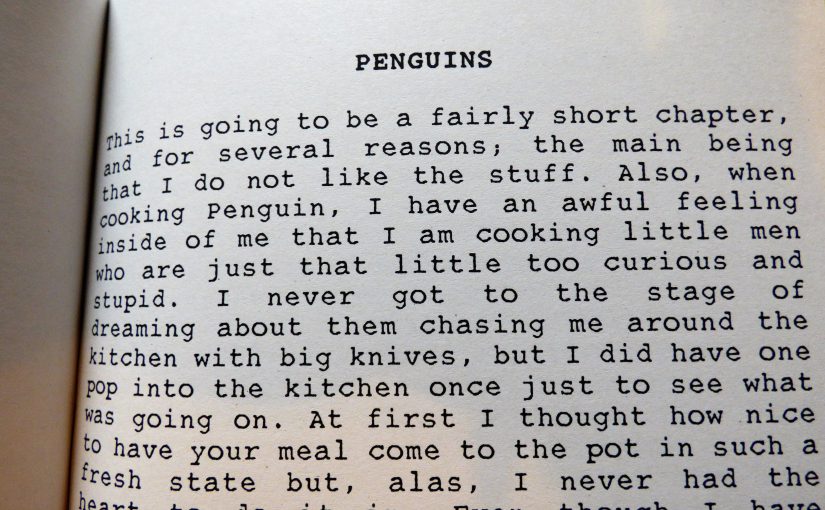
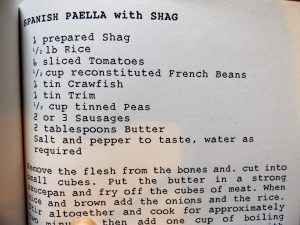
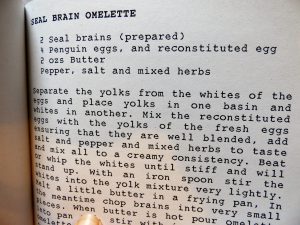
I have also found a funny little book called recipes “Fit for FIDS” It was written in the 1950’s by a interesting character who is spoken of very highly on the Islands. I have eaten smoked Sea Shag in Iceland last year and very good it was too but I am a good deal more wary about seal brain and penguins!

Extracts from “Fit for FIDS”


Facebook
Instagram
LinkedIn
WhatsApp