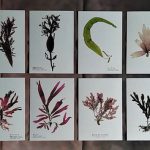
The Wonders of Seaweed

I first cooked seaweed for myself on a boat off St Kilda. We’d had an unusual spate of warm, dry weather and my vegetable cupboard had turned yellow despite my best efforts. On a run ashore I had spotted the fine chestnut tangles of sea spaghetti floating out of the crystal clean Atlantic waters, I cut some and headed back to the boat to see what the passengers would make of it. They were a game lot and we all crammed in to my tiny galley to watch as the strands turned to a vivid green when placed in the hot water. As a child seaweed had figured highly on the Scanlon dining table. My father would pick carrageen and dulse and make potato cakes for Sunday breakfast. Other exiled Irish relatives who found themselves in Wales would cook up a sludge of laverbread which always looked wholly inedible and was served with roll mop herrings, another bizarre family favourite. My Kildan supper was sautéed in garlic butter and oil and served with lamb. It had nothing of the foul smelling slime that I remembered. I watched giggling passengers pass around the bowl of and a pair of scissors . I wanted to learn more so I bought books, went on foraging courses and strolled on the beach, sketching, picking and later cooking weeds. I was hooked.
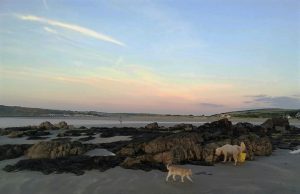
Erik and Mavis on the beach at Poppit sands

Seaweed is Algae. It’s a generic term, like seagulls, and it falls in to three main categories; red, brown and green. There are no poisonous seaweeds, some don’t taste very pleasant but, they wont kill you and for that reason it is the perfect way to get in to wild food foraging.

For thousands of years seaweed has been part of our diet. There are records dating back to the 1st century BC which mention sargassum being used to treat thyroid problems. In the Tang Dynasty the Chinese were successfully treating goitres by using the iodine rich thyroids of sheep which they made in to pills, potions and powders. In the western world outlying Islands helped support themselves with kelp harvests which were exported to the mainland for use in agriculture. It is only quite recently that seaweed fell out of favour in the west. In the early 20th century many inland countries were developing diseases which were associated with poorly functioning thyroid. Over farmed soil deficient in iodine led to goitres. In America in the 1920’s it was common to wear a bottle of iodine around your neck to protect you. The problem became so bad that Americans began to iodise salt which helped to prevent diseases within problem areas like the Mid West which was aptly named the “Goitre belt” . In the midlands of England you might suffer from a “Derbyshire Neck” whilst in Germany you might wear jewellery called a Kropfband which was used to cover the scars left by surgery. Japan and China were virtually immune to all this, and I had to double check this figure, but, forty to fifty percent of their diet is from seaweed. Remarkably the figures from the WHO, advise that you need 150 micrograms of Iodine a day, show that the average Korean diet contains 2,000 % more than that a day!.

Whilst we are on the subject of salt, did you know that the pouring salt (ubiquitous on all dinning tables and used to kill slugs) is salt with all the goodness taken out?. Salt in its natural form is made up of minerals. These are striped out during processing and then sold as supplements. This is very clever business to deconstruct food and then sell it back to us as necessary to health. This is what happened with iodine until the health costs were taken in to account and salt was iodised. A process that has continued in the West. As I always say if you want to substantially help your body use good salt!

Back to seaweed and what it’s made up of. It might surprise you to learn that it has more vitamin C than an orange of equivalent digestible weight. It is packed with calcium (astonishingly ten times as much as milk) and it has lots of good old fibre. It is the only vegetable to contain B vitamins, although there is still some argument as to whether we have the ability to digest them in their seaweedy form. And where do you think fishes get their Omega 3? Seaweed! It’s also home of vitamins; A, B’s C D E and K and minerals; Iodine, Iron, Copper, Zinc, Potassium, Manganese. Do you remember Dr Gillian McKeith from the 80’s (she purported to be a Doctor but no-one know what of) well her mantra included telling us all the we needed to arrange bowel movements after every meal and to eat spirulina. It turns out that she was right about the Spirulina!. But, you don’t need to buy foul smelling fish food in plastic tubs. Seaweed is a tasty addition to any diet and fun to find.

Since the beginning of this century the seaweed industry in the west has developed significantly. Virtually every where that I travel I come across another group of algae fans or seafood chefs who are playing around with recipes to incorporate seaweeds lovely umami taste. If you don’t have access to beach there is the Pembrokeshire beach food company, Mara in Scotland, The Cornish Seaweed Company and Seaman in Denmmark (who just won best cocktail of the year award for his Cointreau seaweed combo). All of these businesses offer all manner of dried products,  they are beautifully packaged and vary in price but they are a great place to begin by adding a sprinkle of dried flakes before going headlong into Dashi making or steeping your own gin
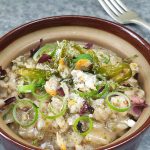
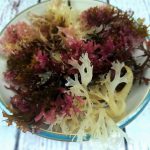
Since being stuck in Wales for lockdown I have used a lot of seaweed in my cooking. I think it began because I would rather walk on the beach than stand in the queue at Tesco’s. I have added dried sea lettuce to salt and crackers. I made a very lovely take on the welsh favourite, laverbread, by making a stock and adding it, along with cockles and bacon to a risotto. I made a gritty seabead noodle dish, (seabeads are a nightmare to get the sand out of) I added a handful of  dulse flakes to new potatoes and butter. I pickled sea lettuce and used it to brighten up some crab cakes. It is not salty by the way. That is the most frequent question that I am asked and no it’s not salty.

My personal favourite usage for bladderwrack, kelp et al is a bath. For some people this may sound wonderful and for others yukky but, give it a go anyway. A lot of wonderfully expensive creams use seaweed as it produces a substance more like a serum than a greasy film.  I begin by collecting half a bucket of brown weed, any type will do but a mixture is nice. If I am not using that day I pop it in to some cold water at home. It will keep for two or three days. Draw a bath of hot water and add the weed, if you are brave, or sieve the water through a teatowel and add that if you don’t fancy kelp rubbing around your legs. Personally, it gives me a giggle but I understand that’s not for everyone. When I first heard about baths I was sceptical. I like science I am not one to believe in things unless I have a good grounding in fact so despite some fairly instant benefits of my bath I set about learning about how lying in weed listening to Melvyn Bragg for an hour could have an beneficial affect on me.

In the most simple terms your skin is made up of three sections the Hypodermis, Dermis and the Epidermis (think of that as upperdermis) They differ a lot in function. The Hypodermis is your fat layer, the buffer between your delicate organs and the outside world. The Dermis is home to blood capillaries and forms the ‘true skin’ containing sweat glands, hair follicles and sebaceous glands etc. It carries nutrients and supports the epidermis. It enables the skin to thrive. It is also the layer which transports whatever you put on to your skin around the body for example a contraceptive patch, Nicotine patch or HRT. The epidermis is made up of 4 or 5 layers depending on the part of the body. It grows from the dermis where it is fed with nutrients and each layer is pushed away with the growth of the next. By the time the outer layer gets to the top it’s quiet old in skin terms. These layers provide a barrier to infection and they regulates the water lost through the skin. If you imagine them like bricks and mortar, the mortar is were things seep through in to the lower layers. That outer layer called the stratum corneum is dying and dry and it should be as damp skin would be perfect for harbouring all sorts of bacteria. It has lost its ability to store calcium as well as host of other deficiencies but it is really useful as it protects they layers beneath it. This is why acid peels and scrubs work to make your skin look a bit brighter. They strip layers of skin. Such a strange thing to do when you think about it but there we are. The Stratum Corneum means horny layer in Greek by the way I am not sure which horny they mean. Cell turnover takes about 30 days in young adults and 45 to 50 days when you get older which explains why you don’t heal as quickly later life.
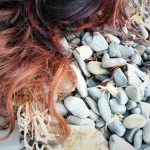
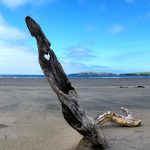
So there you are lying in some kelp and all those lovely nutrients are flowing in to your skin. They pop in to the blood stream and off they go. The skin loves calcium it helps form Keratinocytes which in turn forms the protein keratin responsible for hair, nails and lovely skin. It is why Cleopatra was bathing in milk two thousand years ago. Calcium works best with Vitamin B and C and Zinc which is  abundant in seaweed. You have probably seen shampoos telling you that they contain Keratin but after looking in to it I would seriously doubt that washing it on and off your hair would make the slightest difference.  Keratinocytes need feeding and shampooing your hair with something that smells of apples will not make up for the harshness of the detergent that is its main constituent.

It has been fascinating for me to read up about the thyroid and oronary vascular disease (CVD). I had not realised what an important role the thyroid played in regulating the bodies metabolic rate, controlling the heart, muscle and digestive function as well as brain function and bone development. After two baths I felt less achey and, remarkably, some horrid little lumps on my leg had gone. Most chefs have varicose veins to some extent and I was shocked by how quickly they disappeared, the blueness of thread veins is also markedly improved. My hair and skin is lovely and I am told that I don’t smell of seaweed which is probably a good thing.

Seaweed does have some dangers though. It is not suitable for people who are already taking heparin, a blood thinning agent or warfarin an anti coagulant. Seaweed acts in the same way and so should be avoided for people who take medication after having a heart attack.

The other thing I should mention is use the tiniest bit of shampoo in the bath if you must. It will foam up like the sea on a rough day because the water is so soft.

The recipe below is for Dashi which is a great stock taste of Umami to add to your food. If you wish to make a vegan version leave out the Bonito flakes.

Feel free to email me if you have any questions or follow me on Facebook for recipes and news.

Footnote

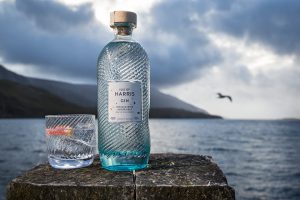
If you don’t like the sound of any of this maybe you could just try drinking isle of Harris Gin which is flavoured with sugar kelp I am not saying that It has any beneficial affects but if you drink enough of it might just give you the courage to have a seaweed bath!.
To make your own Dashi

A Japanese stock that will add goodness and flavour to soups and sauces

Take 10 grams wet weight of Kelp and add to 500mls of water and bring to the boil. Take off the heat and leave to steep.

Add 8 grams of Bonito Flakes and bring to the boil again.

Take of the heat as soon as it boils.

Strain  through a teatowel and bottle.


Veganuary

#leftovereatarian       #leftovereateverything

I am not a great follower of culinary trends. In fact I am not a follower of any trends I do prefer the classics executed well with a touch of flair. That said Vegans are everywhere in January and never one to waste an opportunity I threw myself in to learning a few new recipes. I love vegetables, I don’t think there is a vegetable that I don’t approve of and some I am positively in love with. Thinking ahead in December I rifled through lots of books in my local Waterstone’s as I was working there as a Christmas temp (as you know I am an avid reader so couldn’t pass up the opportunity to return to the bookface) I also went to a couple of Pop up Events in a restaurant run by an committed Vegan. The food was creative, in parts, but with the odd chunk of something processed thrown in. I learnt some alternatives to pastry that don’t pretend to be pastry and ate a lot of vegan cheese which, I think, would taste better if I had not thought for one minute that it was going to resemble cheese.

The thing I like about Vegetarian and Vegan cooking is just that…The Cooking. I see no point in using highly processed packaged ingredients but then that is not different from how I feel about cooking with meat. If there is plastic and instructions anywhere near the food stuff then you are not the one doing the cooking, someone else is. Usually in a factory and you have abnegated your responsibility and choices.

For me it’s simply that I like to know what I am eating.

Vegan Pop Up in Peel

Some of the great new eye openers included a Dauphinoise that I made with cashew cream. I soaked the cashews and hand blended them to achieve the right consistency. I warmed the ‘cream’ through and added onions and herbs etc to give it some extra flavour. I let that infuse overnight and made the Dauphy in the usual way. It tasted delicious.

Chick pea water is a marvelous substitute for eggs. I never seem to have eggs in the house but always have a tin of chickpeas so knocking up a mayonnaise is easy. Hollandaise too although, for me. a hollandaise without butter is a day without sunshine. Meringues are the most wondrous use of aqafaba. This has to be the easiest dessert to make for a vegan and so close to the original that I suspect factory prodeuced meringues will be made like this soon as it’s much cheaper.

In January I taught vegan and Vegetarian Cookery at the Cookshack in Bride. The Menu included the usuals like Hommous, Baba Ganuj, Artichoke & Spinach Dip along with a Béchamel made with coconut milk, a pie crust made of ground nuts and seeds. Remoulade, my favourite, made with celeriac and preserved lemons for that extra kick. The star of the show was a recipe I learnt from a boat Captain in Burgundy. A traditional Bourginion made with Chestnuts or Marron instead of the Beouf. I added dried as well as fresh mushrooms, to give it some extra earthiness. and a pinch of paprika to add smokiness that you usually get from the bacon. Lots of garlic and wine (Vegan) by the bucket load. To be honest I was eating it thinking that I had accidentally put meat in to it!. The sauce was fabulous, unctuous and dark. A great meal for people trying to keep Carni’s and Vegi’s happy as you can just add a steak on the side for that red meat kick.

I am on the fence when it comes to all this. I think my label would be Flexitarian. ( I still bemoan the days before labels) My Grandfather was a Farmer who never ate meat unless he knew where it came from i.e. how it was raised and we were brought up in the same way. I love cooking in France as all the meat has provenance, a name, a birth date, the name of the farm, a death date. Personally, from a nutritional stand point and having been anaemic (sickle cell trait) all my life I function badly without supplements and the odd bit of pate. It’s hard to find the energy to do anything when you are lacking in iron and chefing is a physically demanding job.

I dislike processed food, packaging is my call to arms but I believe that what people eat is up to them. My Bedouin friends would simply not survive without eating goat. The dessert is not a home for farming and without meat and camel milk there would be no Nomadic tribes. Interestingly if you ever wish to disprove the five a day theory go live with the Bedou. Some of the healthiest, most active people in the world never see a Vegetable until it’s Tomato season and they find themselves in the city.

I think it is great that people are veering away from eating battery chickens seven nights a week and Veganuary is a good way to get people to try something new. Even old Dinosaur Chefs like me!

The only think that I believe is shameful concerning food is waste.

You can label me a “leftovereatarian” Hashtag that if you like it could be a new trend!


Teaching at the Cookshack

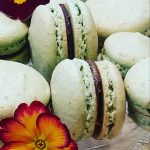
Late in 2019 I arrived on the Isle of Man for my third winter. Usually I don’t work when I am here having spent all summer running around I like to chill for a few months. That way I can begin again with renewed vigour in Spring. It’s a time for painting, catching up on the piles of books I have acquired on my travels and eating simple food. This winter looked different though, I had received a five year work permit from the Isle of Man government and I fancied getting out and about more.  Before I left in spring I met the unrivalled Mrs Revill, owner of the Cookshack cookery school, macron maker extraordinaire and general all round enthusiast of all things foodie. Fair to say we hit it off immediately and were both disappointed that we hadn’t met earlier. So when I arrived in September she was my first port of call.

Georgie began cooking at home in her kitchen near Bride, she went on to run a successful catering company before  making the natural move in to teaching. The Cookshack was purpose built four years ago. It is light and airy full of state of the art equipment, a brand new Esse and superlative views out to the Point of Ayre and across the sea to Scotland and Ireland.

I sat in on a few of her courses in October. It was the lead up to Halloween and we had plenty of spooky pasta colours, witches fingers and macabre macarons. Within a few weeks I had become part of the Cookshack family. I began by teaching children’s courses, though I think they taught me more than I taught them, how to laugh and not take cooking too seriously being the main lessons. I laughed until I cried at the sheer joy of pasta in technicolour. I learnt how to put tagliatelle through the machine so many times that it ended up as one two metre stripe and took four kids to hold it. It was inedibley hilarious as you can imagine. We made bread and cookies but mostly we made a mess. It took Janice a lot of work getting the black food dye off Georgie’s lovely white surfaces. Thank you Janice!

On the run up to Christmas there were corporate events, hangovers, more laughter and molto, molto prosecco. We were all put through our Christmas paces with a visit from Manx Radio. With thanks to Georgie, Janice, Ruth and family I ended 2019 on a culinary high.

Teaching and cooking, speaking and stirring has its challenges. On a normal course we demonstrate and cook seven dishes. It’s a bit like being a circus performer there is an incredible amount of work that goes on before the big top goes up. Menu planning; taking in to account the theme of the day and any dietary requirements. The shopping is done by Georgie who goes out of her way, literally, to ensure that the produce used is the finest that she can buy and is a local as we can get. She is committed, unashamedly, to promoting Manx produce not just because it is the best but because it’s environmentally sensible to do so. All the recipes are written up and sent out . Canapes are made, the Cookshack is set to ‘welcome’ mode, tall glasses are filled with fizz and the show goes on.


It’s exhausting obviously and I was often asked how I could talk and cook without burning things… generally it works but I did learn to weigh my dessert ingredients before the guests arrived after a bit of a disaster with a clafoutis.

In January I held Vegan, Vegi and French classes all of which were fully booked almost instantly. My French course was one of my favourites. Georgie had managed to source everything from my, quite particular, ingredients list. It made me nostalgic for France and in particular Burgundy. I made a Boeuf Bourguinon and the guests were astounded at how much wine went into it. Some recipes have the ability to transport you to another place. Food, for me, is like a cupboard full of memories. Our sense of smell is so closely linked to reminiscences that cooking can feel like a conjuring trick at times. Try not thinking of Venice when you stir a risotto?

The words company and companion comes from the Latin meaning “One who breaks bread with another” I broke bread, baked bread and shared bread with such a range of companions this winter at the Cookshack. To sit at a table with a group of strangers and to share food is a gift, conversations are formed friendships are developed. I sincerely hope that when I am back on the island for winter I can work with Georgie on other ideas for bringing people together. Watch this space

Thank you to everyone who came on one of my courses and to my new culinary friends Georgie, Janice and Ruth. I look forward to seeing you all later in 2020

For more information about Georgie Revill and the Cookshack please follow the link below

Cookshack Cookery School

‘Gatherers’ by Jaime Molina

I met Jaime in ‘The Courtyard’ in Falmouth, excellent food by the way, we got talking and the subject quickly turned to our great love of the outdoors, foraging and exploring the local countryside for scrummy things to eat. When we met again he told me all about his project of putting together a handmade book which focused on Cornwall and the people who chose, as much as possible, to live off the land. He’s interviewed people with thriving seaweed business, people who shoot rabbits as their main food source, fishermen and recreational foragers. and has put together an original book about what it means to them to live sustainably.  To be honest I have a hatred of warehouse food, I can almost feel the cells of my body relinquishing any sense of joy when walking around the likes of Tesco’s. Yes, it’s a necessary part of life to buy toilet roll in a fluorescent floodlit shed but… there’s a cost

Jaime asked me to write a forward to his gorgeous book and I welcomed doing it. It’s full of lovely photographs as he’s studying photography at Falmouth. At the moment there is a limited print run but hopefully a publishing house will notice it and it will be more widely available.

Gourmet Foraging at Fat Hen

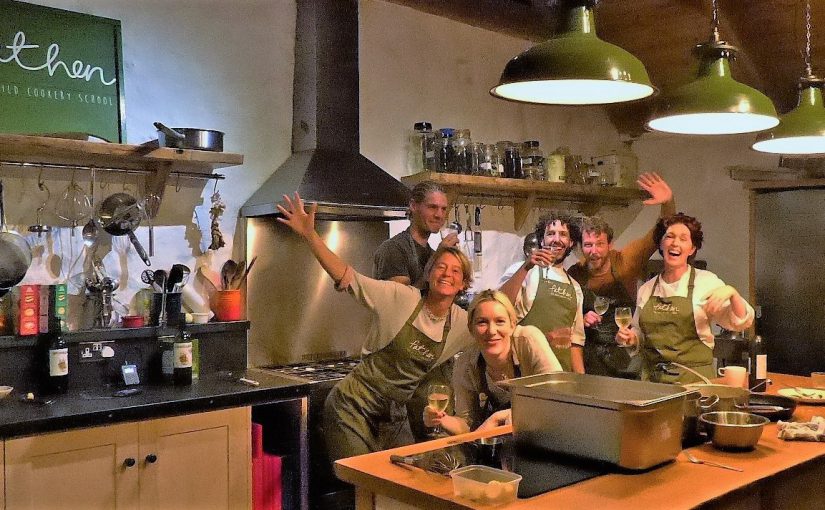
April saw a weekend of Gourmet Foraging at Fat Hen in Penwith, I’ve known of Caroline since she began her business in 2009. Back then she taught from her farmhouse kitchen, these days we all pile in to a lovely converted barn which caters for groups of up to 16. The aim is to source as much as possible from the hedgerows and seashore around her home in St Buryan.

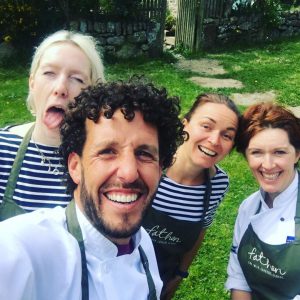
Fat Hen Family


This year I will be teaching at two Gourmet Weekends along with Top T.V. Mark Devonshire.

I’ve narrowly avoided meeting Mark for years. He was Rick Stein’s Development Chef for years and taught at the Cookery School in Padstow where I have spent many a day. I have also done some stages at the Seafood Restaurant in Padstow so it’s amazing that we haven’t met until now. Upon meeting it was Chefy love at first sight and along with Jill and Poppy we ploughed on with then extensive Mise list for the weekend.


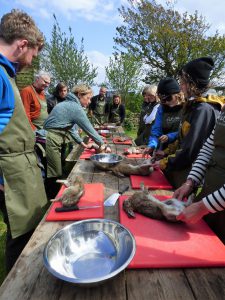
Watership down massacre

Caroline takes our keen foragers out for the morning where they scour the leafy Penwith lanes for salads before heading to the beach. Back at Fat Hen Mark and I prep our “Here’s one I made early” assortment of goodies. My Favourites this year have been Potato Cakes with Dulse, Venison Carpaccio with burnt Hazelnuts and Orange and Carragheen Pannacotta. The group return at lunchtime for a sit down meal of Soup, Breads, Crackers, Potato Cakes and Salads before embarking on an afternoon of skill based tasks like filleting fish, preparing crab and skinning rabbits. Later Mark demonstrates the art of pasta making avec green colouring from the luminous tips of nettles. I prep the basics for the Rabbit Stew.

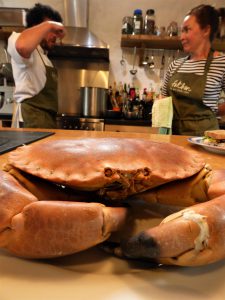
Brown Crab

On Saturday evening we cook a celebratory meal for our amateur foragers and their partners, everyone relaxes with a Buckthorn Fizz and canapes followed by all the best from our stunning Penwith Pennisular.

The course ends after lunch on Sunday. It’s tremendously hard work and there have been injuries, notably the black eye and cuts that I sustained after tripping in the garden when hunting for the Rosemary bush at dusk, but, I always learn so much on Caro’s courses

Mark and I have become firm friends and I was delighted when he invited me to help judge at the 18th International Pasty Championships at the Eden Project. He and his partner run a catering company in Cornwall www.markdevonshire.co.uk

Poppy runs a highly regarded Supper club in London and Caroline continues to wander the verdant lanes of Cornwall thinking up new and exciting recipes.

www.fathen.org

www.facebook.com/troughsupperclub

Fat Hen Foragers


Penguin News

The following article was written and published by the Penguin News, The Falkland Islands weekly newspaper

“I’ve recently been lucky enough to have the time to join Uzma’s Kazmi’s Spicy Cuisine evenings at FICS. Last week, with her patient supervision, we made Chicken Biryani and Lahori chiker cholay, a spicy chick pea curry. It turns out that the trick with an authentic Biryani is to fry the onions until they are so caramelised they take on a whole new flavour. Uzma informed me that the word Biryani means fried onions. I later asked her what masala meant “gravy” she replied and then as I showed so much wonder at what she had told me she smiled her beautiful, mischievous smile and said “Yes Molly it’s like learning another language!” The list of ingredients was extensive but we all pooled our spices and offered each other advice on where to find the rarer items.

Later in the week I was wandering around Stanley and, as ever, was drawn to the end of aisle bargains. I can never resist a red sticker. In Seafish I found Tamarind and then later in the West Store there was a glut of palm sugar both reduced to pennies. Neither of these ingredients I expected to find in FI. They made me think of one of my all time favourite curries. The Goan Prawn Balchao. I was taught it at Rick Stein’s years ago. It’s a relatively dry curry and is traditionally made with prawns but works just as well with chicken strips and, I can imagine, it would be fabulous with squid.

Firstly make the paste. If you have a coffee grinder throw all your spices in it but if you have had a bad day at work get out your rolling pin, pestle and mortar or whatever blunt instrument you have to hand and start smashing 1 teaspoon of cumin seeds and 2 teaspoons each of coriander seeds, black peppercorns and cloves. Pop them all in to a food processor adding 1 teaspoon of turmeric, 1 teaspoon of palm sugar (muscovado will do if it’s sold out), 1 teaspoon of salt, 6 garlic cloves, 100g red chillies, 2 teaspoons of tamarind (if you are using the dry stuff you might need to add a bit of warm water to soften it) a thumb of ginger and 2 tablespoons of red wine vinegar. Blitz together and that’s your paste done.

When you are ready for supper chop a couple of onions and another 6 cloves of garlic frying them until brown add the paste and fry for a couple of minutes until the spices start to separate from the oil. Mix another 2 tablespoons of red wine vinegar and 1 tablespoon of palm sugar. Simmer for a minute or two before adding the prawns. They just need to warm through. Try it, It’s unusual but so tasty and I do hate seeing good food go to waste”

“Thank you to all the people who emailed to tell me where to find seaweed. I am off out to have a bit of a forage. Mols”

Penguin News … Cooking with Molly

I’ve been out and about this week, taking advantage of the lovely weather to do a spot of foraging. I am pleased to say that I have found Sea lettuce at Eliza’s Cove, Bertha’s and Cape Pembroke. Seaweed has made a bit of a culinary comeback of late. When I was a child growing up on the west of Ireland I only ever remember it as a very unappetising brown sludge but then all my Grandmother’s cooking was like that so it’s no reason not to give it a second chance. You will be glad to hear that there are no poisonous seaweeds in the world but some look and taste better than others. Sea lettuce is easy to recognize as it looks like lettuce, has a ruffled edge and is vivid green. Collect it, give it a quick rinse and then immerse it in equal parts of water and white wine vinegar and leave in the fridge for a day or two. It is delicious with Salmon or any oily fish as it holds its colour, shape and texture and cuts through fishy fattiness as would a caper or a gherkin. Also, like all seaweeds it’s packed with essential minerals and vitamins.

Penguin News

A bit closer to home in Stanley there are so many edible leaves and flowers that we can use to prettify salads. I like to throw a handful of gorse flowers or marigold to add colour and I use young dandelion leaves and the tender shoots of plantain to add hints of flavour.

Dandelion by the way comes from the French words ‘Dente de Lion’ the teeth of the Lion which, if you look at the leaves, makes perfect sense.

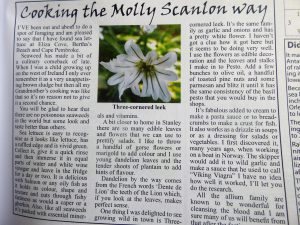
One thing I was delighted to see growing wild in town is Three Cornered Leek. It’s the same family as garlic and onions and has a pretty white flower. I haven’t got a clue how it got here but it seems to be doing very well. I use the flowers as edible decoration and the leaves and stalks I make it in to Pesto. Add a few bunches to olive oil, a handful of toasted pine nuts and some parmesan and blitz it until it has the same consistency of the basil pesto that you would buy in the shops. It’s fabulous added to cream to make a pasta sauce or to breadcrumbs to make a crust for fish. It also works as a drizzle in soups or as a dressing for salads or vegetables. I first discovered it, many years ago, when working on a boat in Norway. The skipper would add it to wild garlic and make a sauce that he used to call “Viking Viagra” I have no idea how well it worked, I’ll let you do your own research. All the allium family are known to be wonderful for cleansing the blood and I am sure many of us will benefit from that in the New Year!

Christmas at Bluff Cove

www.penguin-news.com

Darwin House, Falkland Islands

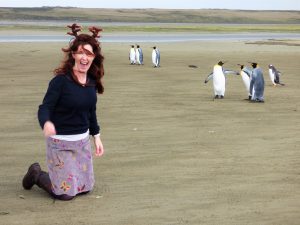
Well here I am on the Falkland Islands. After four months of interviews, work permits and medicals I have finally arrived via RAF Brize Norton. I have  discovered some incredibly tasty new fish and produce and all sorts of innovative recipes. I am particularly fond of Toothfish Cheeks. A Toothfish can grow up to 10 metres in length and live until it’s 50! It’s an absolute privilege to be here and even though the Military call the Islands Dartmoor by Sea in a derogatory sense, I can’t think of any place more lovely.

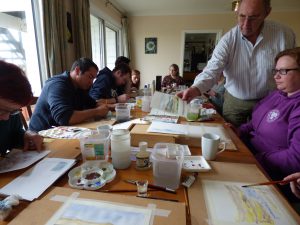
My first major catering event was a watercolour course run by the very talented Richard Cockwell. In between prepping Balmoral Chicken, Toothfish cheeks and STP I managed to join in for an hour of painting. Form the gardens of the Lodge the views over Mount Usbourne are simply breaktaking. What I most like about painting is it gives you the chance to look and watch the clouds skating past the hills. The winds here are deceptive and although the weather can look beautiful from my kitchen window it’s quite often blowing a hooley when I step outdoors.

Richard teaches watercolour at Darwin house

www.darwin-house.com

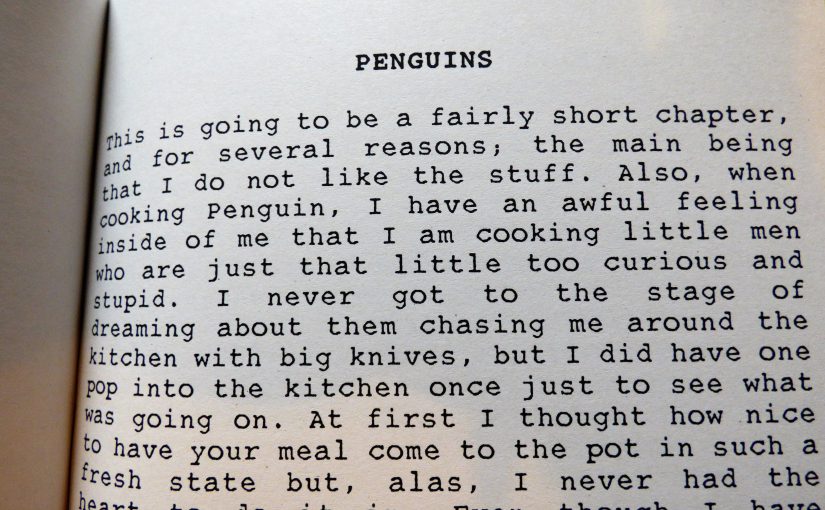
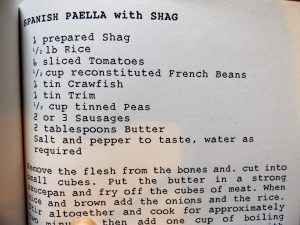
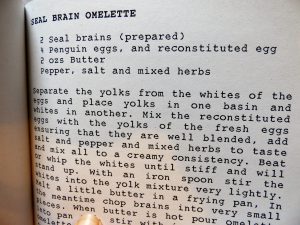
I have also found a funny little book called recipes “Fit for FIDS” It was written in the 1950’s by a interesting character who is spoken of very highly on the Islands. I have eaten smoked Sea Shag in Iceland last year and very good it was too but I am a good deal more wary about seal brain and penguins!

Extracts from “Fit for FIDS”


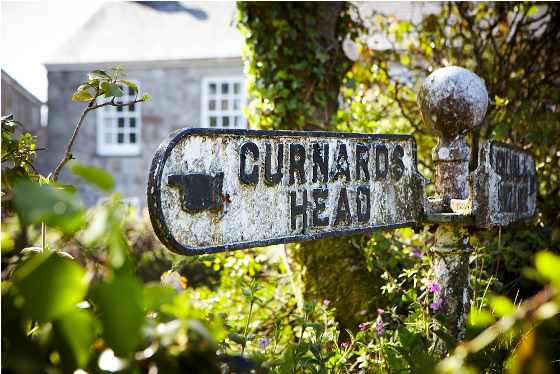
The Gurnard’s Head, Zennor

I love the Gurnie. It’s one of those pubs that you pop in to for a coffee at 11am and end up staying all day. I lived in Hay on Wye for number of years and was a regular at Charles’s other Hotel the Griffen at Felin Fach. I used to eat there when Max was the Chef. Max has just moved to become Head Chef at the Gurnard’s and I will be working with him, Fionn, Trigs and Dan. I love the team and I’ve done some adhoc work there a few times now. It’s always intensely busy but such a  good laugh working with the lads and all that gorgeous food.

I’m looking forward to learning lots of tips and new recipes. The pastry chef Fionn makes the best Soda Bread and the added joy of it is that he has his Mum’s recipe for it tattooed to his bottom. Just as well as I do seem to forget that recipe quite alot!!. I will try to take a photograph of it for you one day. To be honest that is hard core cheffing when you start inking your body with recipes!

www.gurnardshead.co.uk

Spring Stew

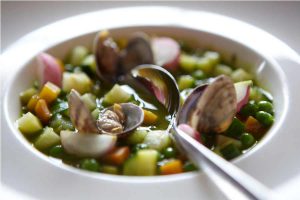
A typical supper at this time of year

Mushroom Soup *
Purple sprouting broccoli, garlic, za’atar, yoghurt *
Mackerel, brown shrimp, sesame & coriander broth *
Scampi monkfish, mango, carrot, red onion & coriander 8.50
Cod tongue, ham hock & parmesan cassoulet, garlic oil 8.00
Hake, mushroom, spring onion & seaweed dashi 8.50
Chicken liver parfait, red onion jam, toast 8.50
~
Ray wing, crushed potatoes, spinach, caper butter *
Sprouting broccoli, garlic, za’atar, yoghurt *
Lamb breast, kale, goats cheese, cauliflower *
Red gurnard, spring onions, ginger, seaweed, cuttlefish  18.00
Cod, taramasalata, broccoli tempura, smoked almonds, za’atar  19.00
Pork collar, black pudding, mash quince 19.00
Rump of beef, wild garlic, broccoli, crispy tongue  21.00

www.gurnardshead.co.uk

Facebook
Instagram
LinkedIn
WhatsApp