Cruising the Scottish Islands

Handa and Loch Eribol were covered in fat red arrows when Peter, Jill and I looked at the weather app on Tuesday night.

‘Well, we could get there’ said Peter… ‘and very quickly!’ I added. There was a short silence before Peter pronounced gravely, ‘but, we’d never get back!’

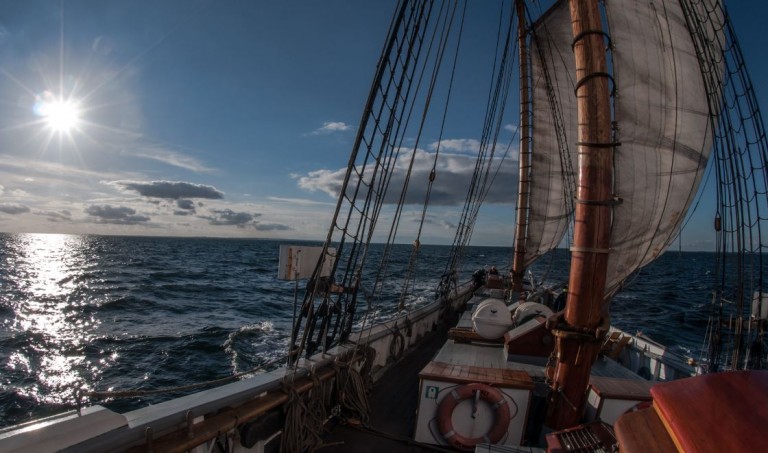
It’s July in Scotland so you might think that sailing up along the west coast would not be too much trouble. However, the weather is whimsical in the British Isles. One of the deals that you have to make when you step on to a boat, of any worth, is that you go where the sea and the sky want to take you. The crew were all concerned about how disappointed the passengers might be but they have all sailed with us before and understand that nothing can be done about oncoming storms. Peter comes up with  a plan to head south, avoid the worst of the weather and take in the whiskey Isles, the whirpool of correyvreckan, puffins and maybe some islands that we hadn’t been to before.

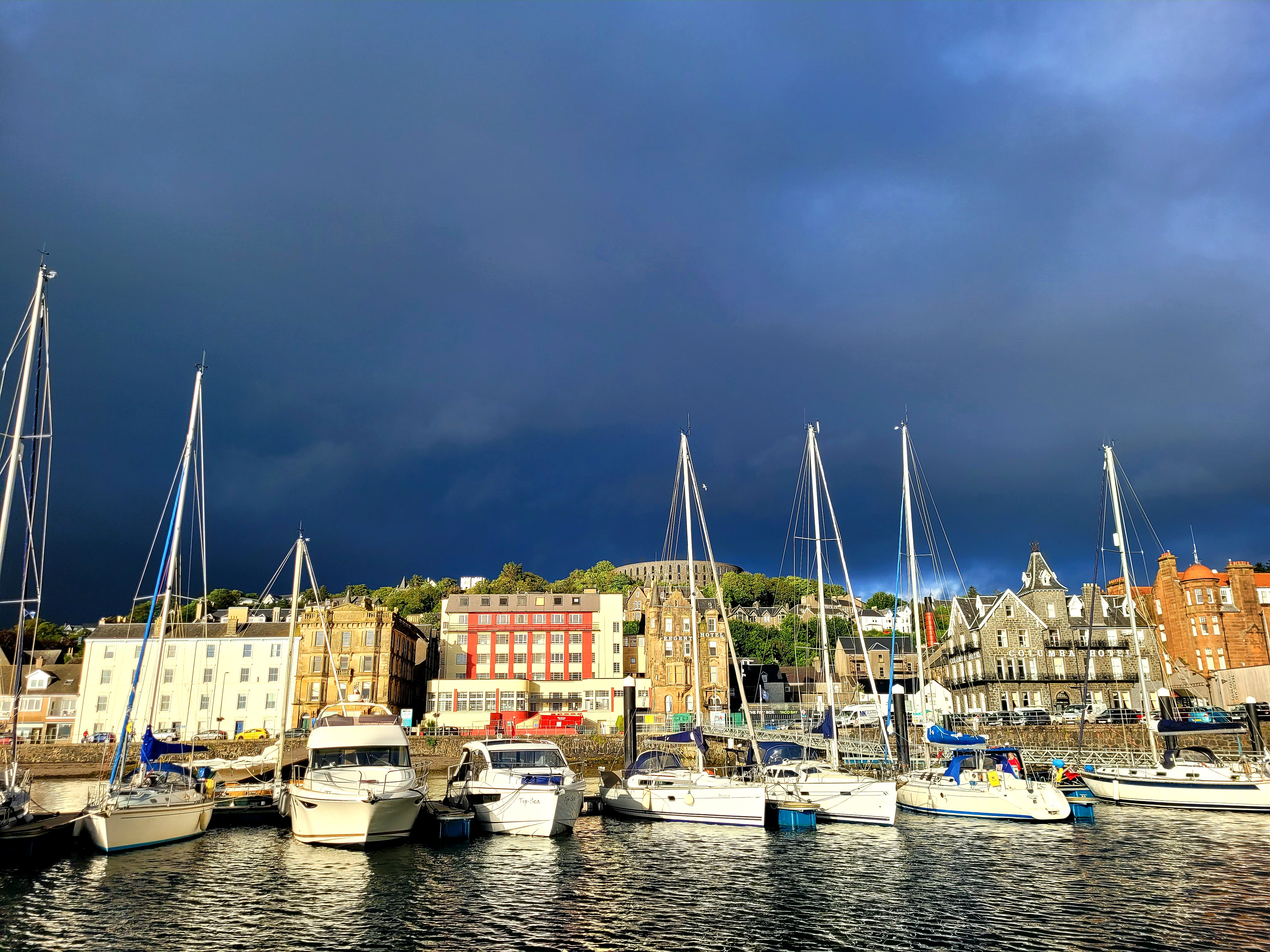
The next day the passengers arrive, quite literally, in dribs and drabs. The rain has begun and the wind is rattling through the halyards of the yachts and pinning us onto the pontoon. Michael and Pam are stuck on rail replacement buses and running very late due to the extreme conditions. Peter, our skipper, decides that it is best to alleviate the pressure and to stay alongside for that night. The alarming weather predictions are now south westerly 40mph and everyone agrees with the plan as none of us wants to sail in to the eye of a storm. Gales are fun for a few hours but their excitement quickly wears off. It is a holiday after all!. We have dinner alongside and take photo’s of the gorgeous sky over Oban caused by the low pressure.
Thursday 7th July

We leave Oban at 9.00am and head along the sound of Kerrera towards the correyvreckan whirlpool. The skipper says that it is best seen on a flood tide but we are to go past it at slack water. The whirlpool is created by the underwater features of a deep hole and a basalt pinnacle that rises from 70m to 29m at it’s rounded top. When the flood tide runs in between the islands of Jura and Scarba it creates standing waves and one of the largest maelstroms in the world. A tenth century Irish King wrote that the sea here

‘whirls around like moulding compasses, each of them taking the place of the other, like the paddles of a millwheel, until they are sucked into the depths so that the cauldron remains with its mouth wide open’.

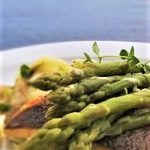
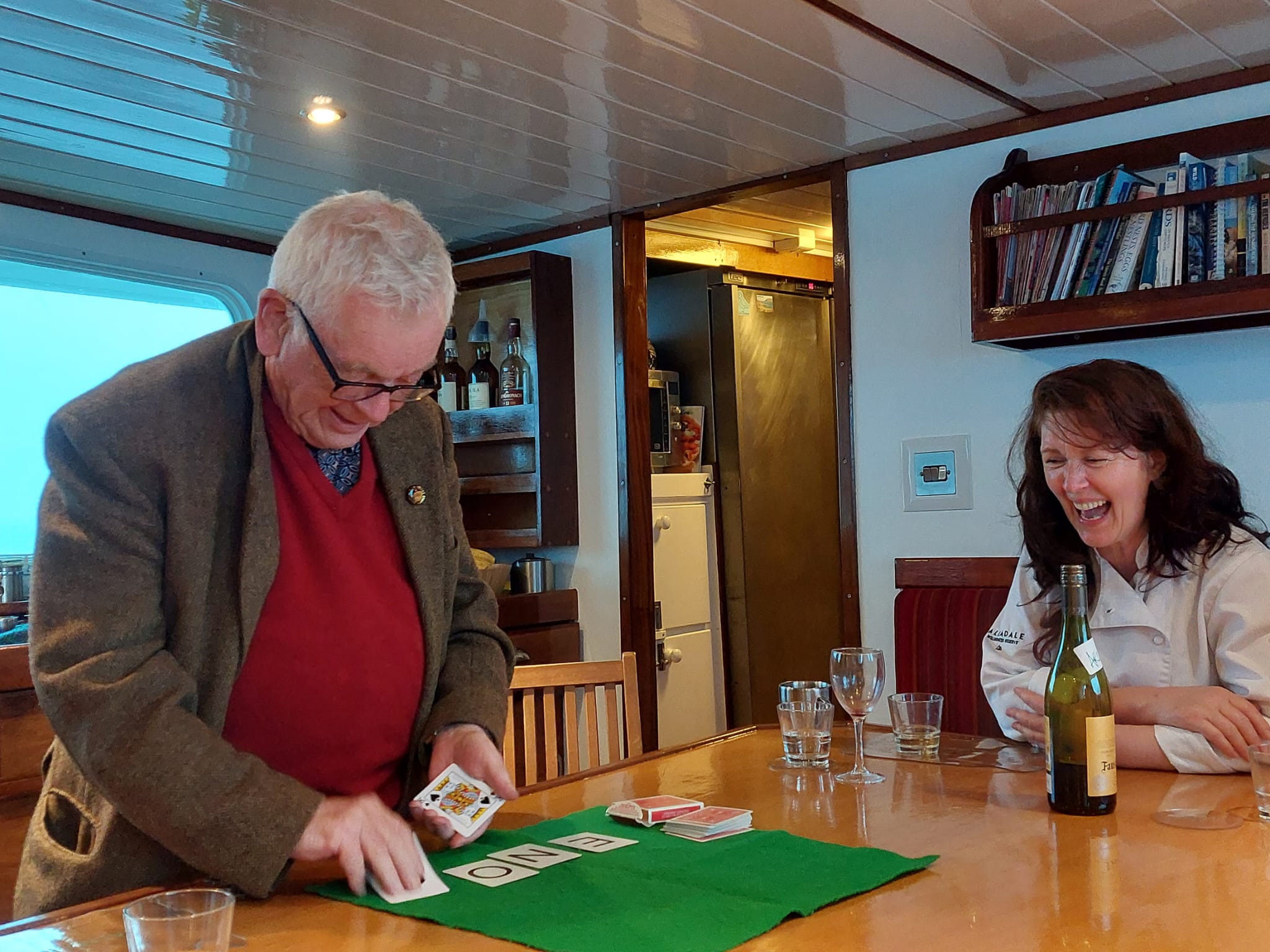
This morning the sea was like a mill pond and although I was slightly disappointed I thought that maybe it was a good sign. There is a cailleach who is supposed to inhabit these waters and hopefully she is allowing us a safe passage and a calm onward journey. We arrive at Tayvalich after lunch and all go ashore for a leg stretch and coffee at the excellent little café. It is such a pretty place with sculpture trails and art studios. Jill and I have time for spot of beach combing and collect seaglass along the shoreline. Back aboard for dinner and the passengers are treated to Mediterranean salmon parcels with homemade spicy seaweed chutney followed by an after dinner magic show. Archie has been sailing with Northern Light Charters since 2002. I sailed with him in 2015 and was always delighted by his slight of hand. I decide that I will change my seat every evening so that I can try to gauge how he does his tricks (if I might call them that?). Despite my cunning tactics I still have absolutely no ideas. I continue the cruise wary of saying ‘flibberdy gibbit gorgonzola’ in case a bowline shortens by half or a playing card turns up in an orange!.
Friday 8th July

We are away from Tayvalich at 9.00am.  It has come to light (!) that there is a more knowledgeable pharologist than me onboard. Ruth has sailed on Hjalmar on a lighthouse viewing cruise back in 2019. Although I try desperately to out lighthouse her (Pembroke head on the Falklands?) I have to concede that her erudition about all of the beacons of the sea is utterly comprehensive. She even knows about SPLATS!. We grin like lunatics as we sail past Skervuile which she tells me is a Stephenson lighthouse. Hjalmar arrives at Jura just after 11am and our passengers disembark for a few hours ashore. Everyone is back aboard for a lunch and I serve pan fried mackerel, salads and homemade goats cheese bread. I thought the bread was quite appropriate as Jura is famous for it’s wild goats who, some think, made it ashore from the Armada fleet. We up anchor at 3pm and head over to glorious Gigha where we settle in for the evening.

Saturday 9th July

Passengers wake to the smell of freshly baked pastries. The sun is shining and the island is so stunning we all want to go ashore. Jill and I organize packed lunches so that everyone has plenty of time to explore the island. It’s my visit to Gigha and I am instantly taken by how beautiful the sea looks as I walk along the pontoon. The seaweed is unfeasibly large and vibrant and the sand a pristine pale gold. I am on a mission to get hold of some of the famous Gigha halibut which is smoked on the island. I walk up to the shop and chat to the owner about how best to serve it and she recommends that I accompany it with pickled samphire. She also tells me that she teaches at the school and shows the children how to pickle the seed pods from wrack. Before heading back to the boat I pick up handfuls of seaweed bladders with the intention of preserving them. Everyone is back aboard for 4pm and Jill picks up the anchor. We all have freshly baked scones, jam and clotted cream en route to Islay home of, amongst other things, one of my favourite gins. Dinner is a pea and mint risotto with scallops and prawns followed by chocolate tart. It has been a fantastic day and I, for one, am very glad we are not battling through snotty weather around the Cape.

Sunday 10th July

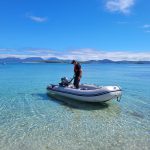
Bacon butties for breakfast and a couple of hours ashore on Islay, also known as the ‘Queen of the Hebrides’. I manage to take an hour off for a run into port with Peter. We head for the Botanist visitor centre and arrive at six minutes past ten, it opens a ten, to find Steve propped against a pole sampling whiskey, ‘I’ve had two already’ he says merrily, ‘what a way to start the day!’. It makes me think that I must come back as a passenger, It’s looks like so much fun!.  Peter and I fill the dinghy with merry passengers and try to wiggle it free from the beach. Everyone is giggling as we glide slowly back to the boat…I can hear hiccupping over the sound of the outboard. Safely aboard and somewhat soused, we leave Port Charlotte and turn west towards the Rhinns of Islay. Rhinn is an old Irish word for point or promontory and it is where the word, rind, comes from. It is the outer edge of the most southern of inner Hebrides and has a ferocious little race. We pass another elegant Stephenson lighthouse established in 1825 on the Isle of Orsay and here the sea plunges and rises like a roller coaster. I vaguely wonder whether the term originally comes from sailors as nothing rolls about as much as a boat rounding a coastal headland. Lunch on the hoof as Mark used to call it. I decide on Welsh rarebit, which I am quite good at since moving to Wales. It is not simply cheese on toast it has beer, worcester sauce, eggs and mustard and is just the thing for being on the roll. Jill and I pass it around to passengers sitting out on deck. The two of us walk around with the most ungamely gait at sea, hopefully we don’t walk like that ashore ‘though they do say you can tell a sailor by their walk. We arrive off Oronsay at 3pm and everyone is quite excited as it’s a first for all of us. Mike tells me that St. Columba briefly lived here but, legend has it, that because he could still see Ireland he moved to Iona. According to the vita or Life of Saint Columba written by Adomnán at the end of the seventh century, the monastery on Iona had a number of satellites or daughter houses. The main one was named Hinba, it is not certain that this is the island of Oronsay but, William Watson proposes that Hinba derives from inbe, a Gaelic word meaning ‘incision’. This would fit with the great slice of tidal strand that intermittently attaches Oronsay to Colonsay. Oronsay is home to a 10th or 11th century priory dedicated to Saint Columba and some of our passengers head off to look at it. For some mad reason I take a wrong turn and end up in the heart of the Island where I am followed by a short eared owl. It laughs and makes stunning acrobatic turns as it follows for most of my walk and almost back to the landing beach. The island is full to the brim with bird life, angsty little oyster catchers chatter at me as I intrude on their homes. I hear the haunting call of curlews and see five lapwings near the boathouse. Some of our passengers swim in the crystal clear waters, others are floored by the history of the priory… quite literally in Mike’s case!
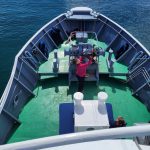
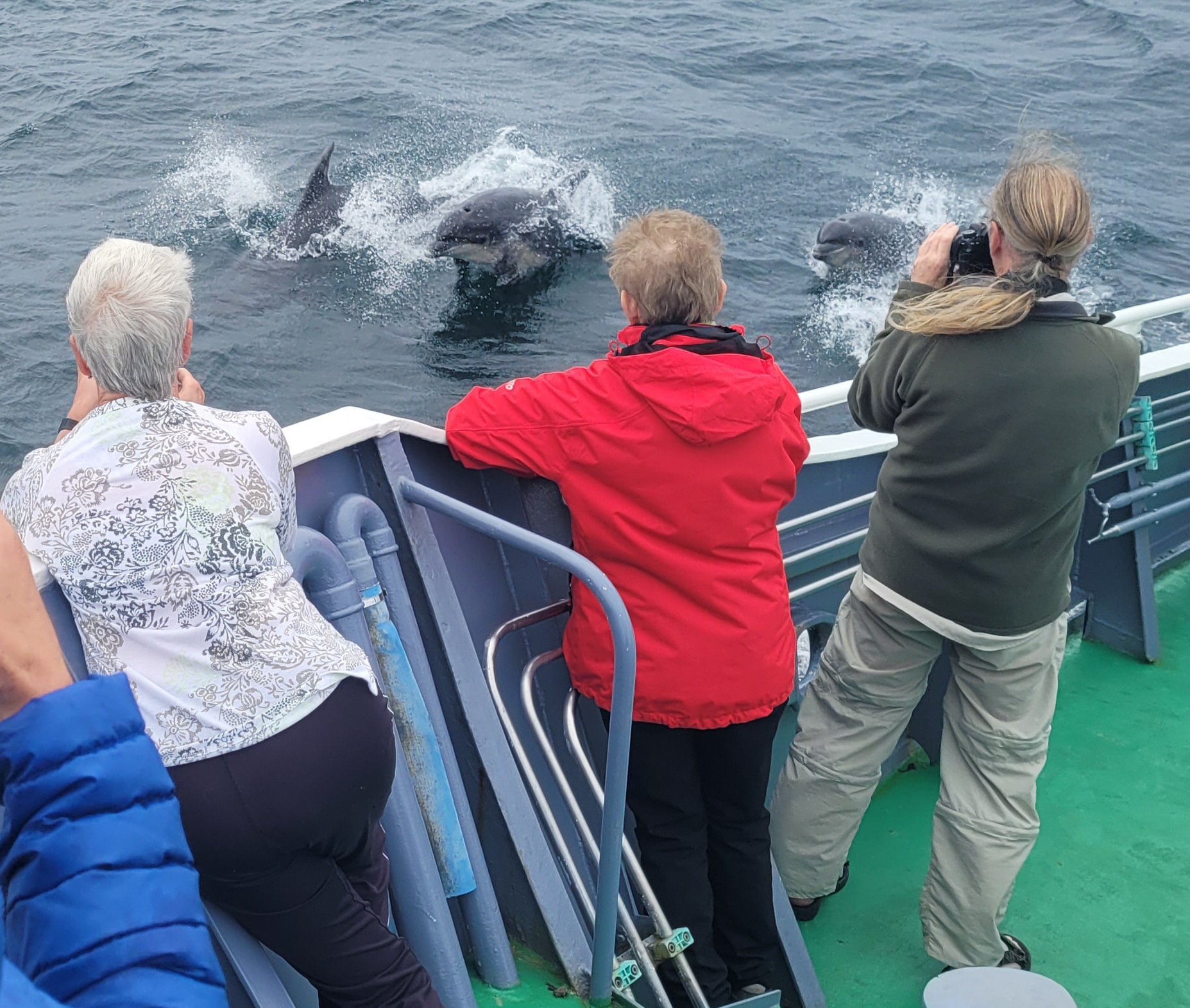
One of the most magical aspects of working aboard Hjalmar has been the sheer amount of knowledge that I have effortlessly acquired. I was very green when I first joined Mark in 2014 and I was always astounded, not only by Marks skill and proficiency as a skipper but, also by his expertise when it came to wildlife and island life. Mark was and, I am sure still is, a consummate enthusiast. Hazel, who has sailed with NLC six times remembers that he and Anna always exuded an intense enjoyment each and every time they saw dolphins or other sea mammals. Hazel said  how rare she thought that was and she is right. You would think that no-one could ever be sick of seeing dolphins but, I have worked with people who are intensely bored by being at sea. Peter, Jill and I still joke about a skipper we knew who when the shout went up of ‘Dolphin!’ would respond dryly with, ‘seen them before’. I think if you don’t grin like a Lulu at the sight of these fabulous creatures then your life has taken a very unfortunate direction. Mark used to say that ‘dolphins love Hjalmar’ and after working on many other boats I realize that it is absolutely true. Maybe it is the shape of the hull, the speed she can reach or all of us grinning idiots hanging two meters above their heads but, they do seem to make a bow charge toward her from miles away. Later in the cruise we are joined by six bottlenose dolphins off Iona and I recognize them as dolphins that I had seen before. I have so many photographs and remember Mark showing me how he could identify them by the rope scars caused by finishing lines. It is this kind of attention to detail, I think, that makes a Northern Light cruise so unique.

Everyone is back aboard for six o’clock, and Peter, Jill and I have a crew attitude adjustment drink in the wheelhouse. There used to be a piece of wood aboard with ‘crew attitude adjustment stick’ written on it in bold black felt tip. I am not sure what happened to the stick but, the drink is still part of the Hjalmar legacy and long may it continue. At dinner we all sample the Gigha smoked halibut, pickled samphire and mackerel pate followed by individual venison wellingtons. I make champ mash as I can see Ireland and have an odd yearning for it. During the night the anchorage develops a lolling swell which keeps Peter and Jill awake but, from my bunk below the waterline I am rocked to sleep like a baby in a crib. There are a few advantages to sleeping in steerage.

Monday 11th July

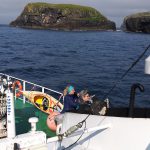
Winch operator, waitress and woman of innumerable talents, Jill, gets us underway at 9am and we roll along the west coast of Colonsay to Iona. None of us had ever been around the west of the island before and seeing as the tide wasn’t quite right for the sound we take the long way round. Jill drops the hook off the north end of the island but, Peter feels it is a bit exposed so we pick it up again and head for Bunessan. We are bimbling along slowly when a bottlenose dolphin joins us. Peter cranks Hjalmar up to dolphin speed and soon we have six playing around in our bow wave. Mike has told me that it is his birthday tomorrow and I wonder what I can get for a man who has spent so much of his life photographing wildlife. The answer, of course, is a photo of him with a dolphin giving him the eye!. I take endless photo’s and 99% of them are of the backs of peoples heads and a wash of grey sea…. but, finally ‘Derek’, as we call him, obliges me with a full on cete smile for the birthday boy.
At Bunessan passengers pop ashore for late afternoon walk. I notice that they seem to have acquired a bit of a nose for sniffing out pubs.

Tuesday 12th July

No tour of the southern islands would be complete without a jolly to Fingal’s cave. Even if you missed being told that it was part of the plan, you would know because at breakfast, every second person is humming the Hebridean overture. Mendelsohn’s association with Staffa is well documented but, Keats also visited the cave and fittingly described it as ‘the cathedral of the sea’. It’s basalt columns inspired the lines

This was architectur’d thus

By the great Oceanus!–

Here his mighty waters play

Hollow organs all the day;

Little did Mendelsohn and Keats know that the caves would go on to arouse and impel another great talent in the form of Steve. We are all treated to a remarkable musical journey via comb and paper as we sail over the northend of the Giant’s Causeway and on to Inch Kenneth. Many of us wept laughing and begged him to stop … but he wouldn’t. It turns out that in the land of bagpipes, the tuneless comb and paper player is most definitely king!

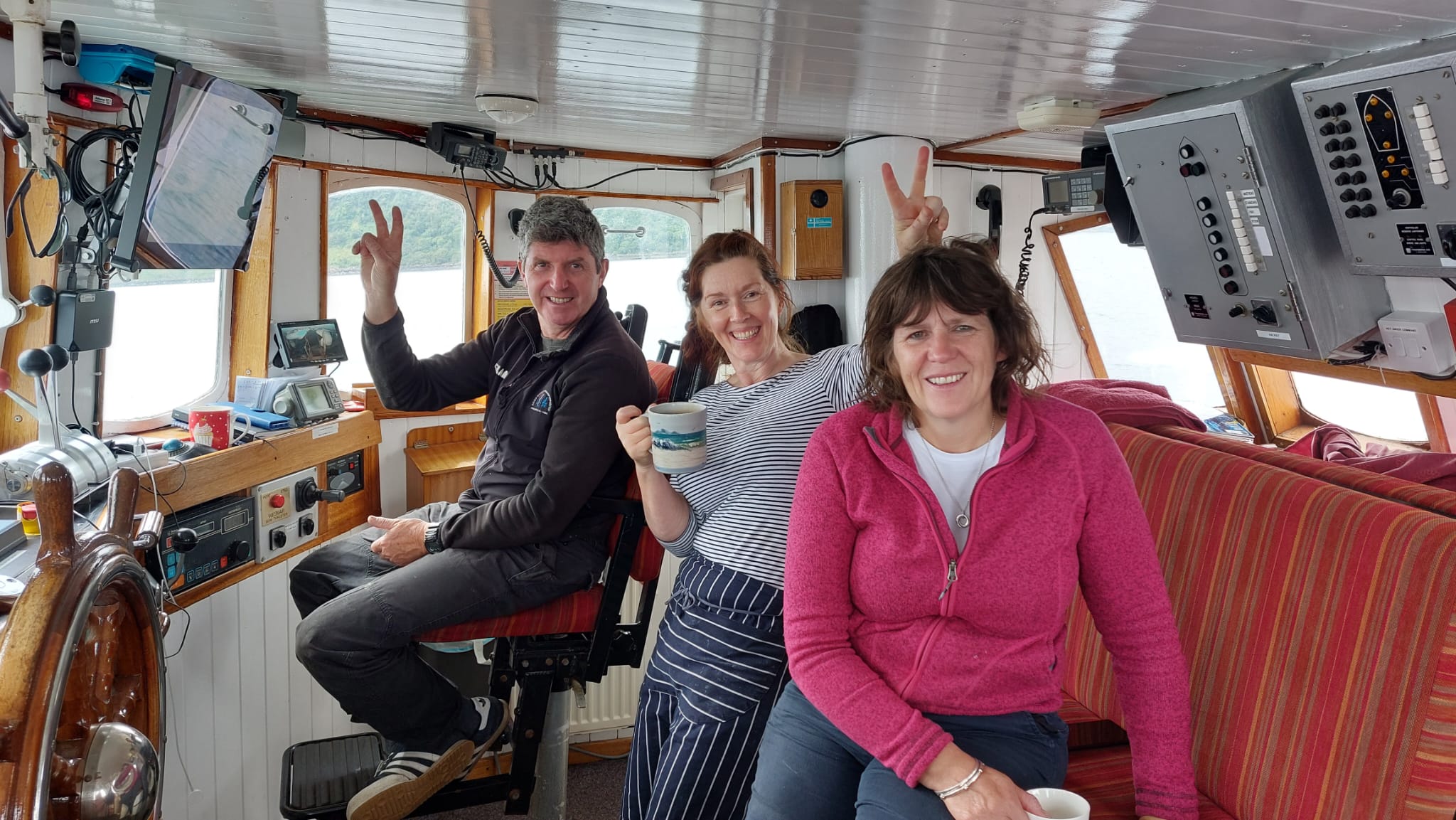
We arrive at Inch Kenneth and there is an opportunity for a walk before we head to Ulva for a sheltered evening anchorage and, amongst other treats, sticky toffee pudding for Mike’s birthday. Jill has organized us all to make dolphin bunting with the aid of her extensive art box. Jill could make an art gallery out of a midden tip. The drying room has become a museum of sea glass and shells. It is because of Jill that the boat always looks shipshape and Bristol fashion and she is a joy to sail with. We chatter on about everything and anything and hope that our galley banter is not too overheard by guests!. Jill once made me laugh so much that I nearly choked to death and as a result could not actually look at her without crying laughing for three days. Crewmates can make a hell of heaven and a heaven of hell and I have been extremely fortunate to have worked with people who are incredibly good at their job and also bloody good fun to work with. I think I will miss the camaraderie even more than the dolphins.
And on that note any final blog would not be complete without mentioning Tim Weir. For anyone who ever sailed with him you will know how exceptional he is and to those of you who didn’t … well, you missed something incredibly special.. like concorde or being part of the EU. I think all the passengers on this trip knew Tim and everyone says ‘Hello!’ and wishes him a happy retirement.

We rounded off another evening with more magic, mirth, mayhem and merriment and I got a kiss for taking the best photo of the birthday boy and Derek the dolphin!

Wednesday 13th July

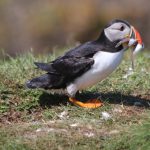
Away after breakfast for the island of Lunga, home to puffins and men with enormous extensions. In the next few weeks the owners are considering closing the island because of the avaian flu which is wreaking havoc amongst the bird population. The Farne islands have already been shut and more sanctions are to be put in place. It is very sad and hopefully the puffins will avoid it as they will be off soon to spend winter rafting at sea. On a positive note I saw many more birds with sandeels in their beaks than I had seen in previous years.

Puffins go to sea for winter, they no longer have their distinctive plumage, they moult and lose their wing feathers which makes them flightless and vulnerable to weather and food supplies. Some vessels have reported huge rafts of puffins offshore but, it is thought that they are  largely solitary in winter and that they lead eremitic existences. Research and tagging has shown that some birds make one to three month trips in to the Atlantic and do not just stay in the north sea as was previously thought. Puffins it turns out are very like boat crew in that they are incredibly sociable and always on show in summer but, a bit of an enigma in winter!
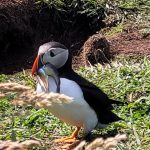
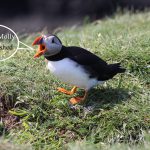
Back aboard and we pootle around the north of Mull to Tobermory. Jill and I effortlessly pick up the buoy, which is a pleasant surprise although the sodden ropes still bring up a harvest of seaweed onto the foredeck. I consider serving some for dinner but decide against it. Fish pie for supper with a haggis pastilla as an entre.

Thursday 14th July

A few hours ashore in Tob is almost an obligatory ending for a charter. Tob is the only place that I have ever seen otters in the wild. Last year there was one in the carpark eating a crab. The closest I have ever got to an Iolaire Suile na Grein was whilst drinking a coffee on the aft deck in Tob. The sky became very dark and when I looked up the ‘eagle with the sunlit eye’ was flying like a barn door ten meters above my head. It was white tails that led me to want the job aboard Hjalmar. I met Mark and Anna in Hastings in 2014 and after being offered the job Mark said very definitely, ‘you will see sea eagles’. I did and I still do, I was obsessed by them at that time. I had been to Iceland and Norway and never caught a glimpse. Since 2014 I have been incredibly lucky to see them so often. What I didn’t understand back then was just how much working aboard Hjalmar would open my eyes to everything else that the sea along the west coast had to offer. All the information I have learnt aboard has, undoubtedly, led me to going to Aberystwyth University. I hope to go on to read for a masters in Island Studies on Orkney in 2024. I feel incredibly fortunate to have been a small part of this boats history and to have continued to work aboard in the same spirit which Mark instigated so many years ago. I feel very sad to be leaving.

After lunch we steam along the sound of Mull and anchor off Kerrera. It’s an island that I have sailed past almost every summer for the past eight years but, one which I have never set foot on. I walk up to the iconic monument at the north of the island and consider how many places I have missed because I have been too busy to get underway or depart. My future will, hopefully, include the chance to spend more time on these spectacular islands instead of being moored off them. I sincerely hope that when I am ashore I will still see Hjalmar, her crew and passengers. I asked our eight guests how many times they have sailed on HB and totaled it up. Between us all we have knotted up over 100 cruises. That is not to say that we are an elitist club, it is more that, like anything really good in life, it just keeps getting better the more you do it.

I look forward to returning as a passenger.
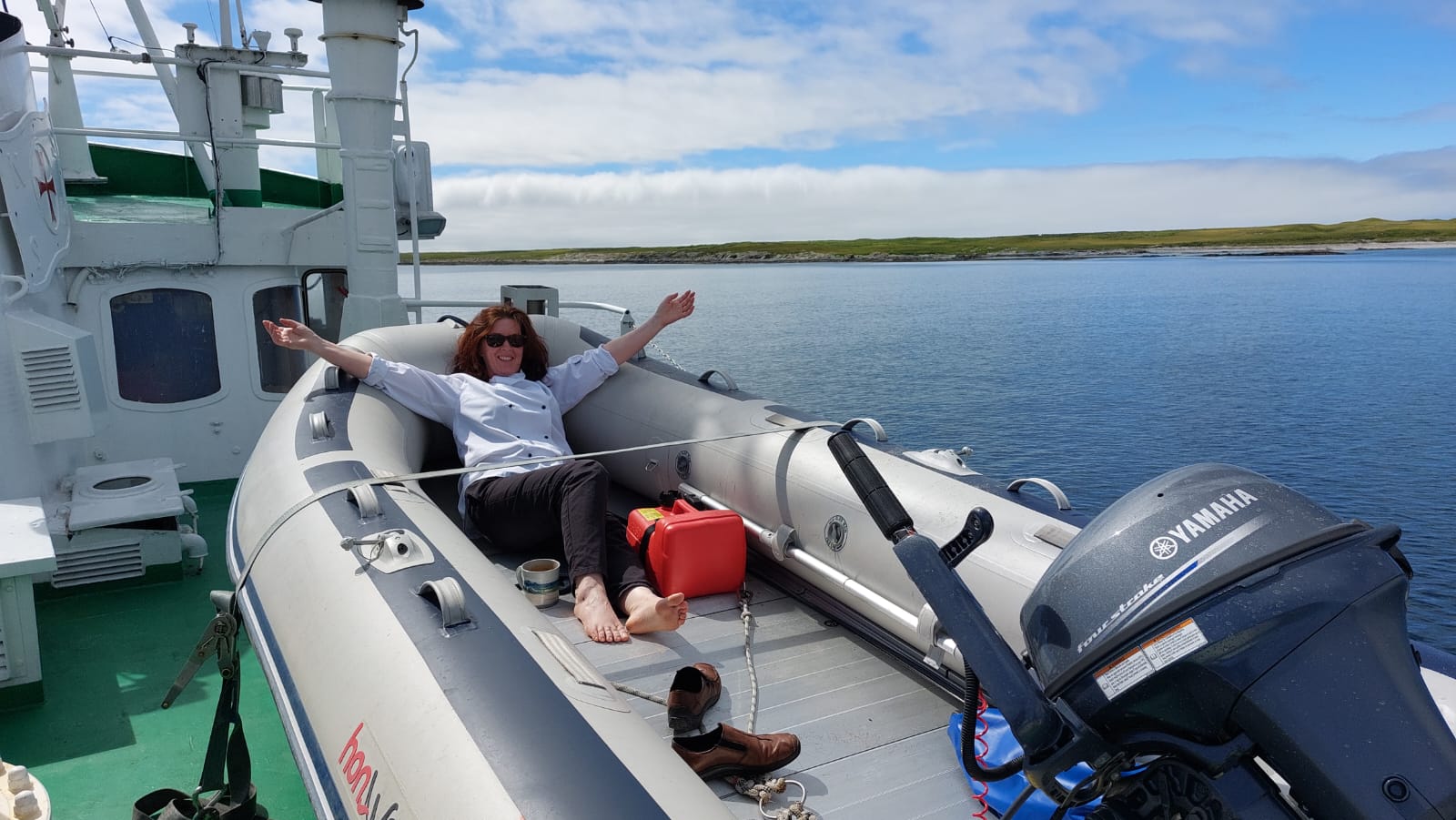
Thank you

Can I just give an ocean of thanks to all the crew I have sailed with over the years. To the skippers; Mark, Tim, Chris and Peter thanks for keeping me safe. To my bosun’s; Lulu, Anna, Sarah and Jill thanks for keeping me laughing. Thanks to Michelle for always making sure that I am abreast of the weird and wonderful dietary requirements (which I am sure some folk write when they have been drinking!!!) Despite the absurdity of victualling a 25m boat with enough food for 16 over 10 days it has, no doubt, made me a better chef. To all the passengers can I say a huge thank you for sharing your holidays with me. It has been an absolute, wonderfully exhausting, pleasure.

All the best to David and the new team. I cannot think of anything better than being part of Hjalmar’s ongoing legacy.
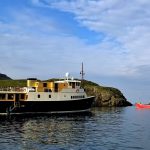
Cruising around Mull with Majestic

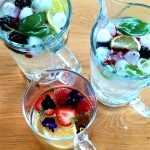
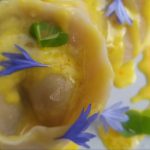
I was working for the Salvesson’s at the Lary Estate when I took a call from Mike at Majestic.  “Molly where are you?” It turned out that on the first cruise of the year chef Will had missed his footing, fallen and broken his leg in a few places. It was Wednesday and, luckily for all of us, my contract finished on Friday so I said yes and began planning my journey from Balmoral to Oban. I left Ballater at 7am on Friday arriving in Oban at 8pm by the last train. I found the galley full to the brim of dry goods, vivid and varied fresh vegetables, smoked meats, pates, wonderful cheeses and a box of lobster. Usually chefs order supplies after some very precise menu planning but we had no time. I asked head chef Gordon to repeat the previous chefs orders and I decided to go with a ready steady cook approach. This isn’t as daunting as it sounds when you have a fully stocked floating delicatessen. There was nothing I was short of and a few things that I had more than enough of. Passengers from that week will remember the pansies! Somehow in the ordering someone had not realised that decorative flowers came in packs of four and so had ordered 24 boxes instead of six. It became a standing joke amongst crew and passengers as the pansies featured in and on everything but, I do hate waste especially onboard.

I had met Captain Neil briefly in 2019 when working for another Hebridean cruising company. A storm had pinned us all to the pier in Casteltown Bay and so we had two days sat alongside waiting for a gap in the weather. Neil had invited myself and skipper Tim aboard the Glen Shiel, Majestics newest and most luxurious vessel. We were keen to have a look around and I remember being incredibly envious of the galley, which was palatial in terms of little ships. It was well equipped and sparklingly clean with a porthole above the sink. I imagined myself peeling vegetables whilst gazing at gannets and herring gulls following us around the islands. We were both extremely envious of the wheelhouse, crew dining area and crew accommodation which all felt luxurious. I had applied to work for Majestic later that year but had been given a job working for Belmond in France so it was a wonderful stroke of luck for me to have a few weeks aboard after what had been a crazy year.

Glen Shiel usually accommodates 12 passengers but because of covid restrictions we had eight. I quickly did the maths and this worked out at three boxes of pansies per passenger!. On Saturday with everyone aboard, socially distanced and having been fully briefed on covid awareness we set off around Mull. The forecast wasn’t looking too bad and Neil decided to head straight out to the west and clockwise around Mull. The idea being to first stop at Iona and hopefully land at Fingal’s cave on Staffa. As we pootled past Carsaig I chatted to passengers. I like to get a feel of what sort of food people are hoping to enjoy on the trip and confirm any special dietary requirements. These are sent to me beforehand but things change so I like to make sure. I discovered that one of our passengers was a geologist so I tried to pick his brains about the stunning geology of the south coast of Mull.

It’s lovely when you step aboard and settle straight in with a crew and even better when the guests do the same thing. I think that from the first night we all felt that we had been aboard for years. I had been slightly concerned that we  had acclaimed cruising aficionado Dave “Shipmonk” Monk onboard. Usually when journalists are aboard I would have menu planned for weeks in advance but the ‘font of knowledge for all things that float’ could not have been more lovely. We spent the week chatting about ships and the world of cruising. Dave is always up to date and seems to have a good deal of insider information. I was delighted to learn, from him, that Swan Hellenic, who I had worked for many years ago, was set to build a new ship.

As we came in to the sound of Iona dolphins left where they had been playing with the CalMac ferry and escorted us to our anchorage. It was a beautiful blue day and I took the opportunity to head ashore with the passengers as it was years since I’d had been to this gorgeous Island. I walked out to the Abbey and lay down in the grounds to sketch. After a while I noticed a white tailed sea eagle circling above me. This majestic raptor was the reason I first came to the west coast of Scotland (although my grandmother’s family are Tait’s from Aberdeen) I had read William Horwood’s The Stonor Eagles when I was 14 years old and I was obsessed by the birds from there on in. In Scots Gaelic they have many names including Iolaire Ghlas, Iolaire Chladaich and my favourite Iolaire suil na greine; the eagle with the sunlit eye. The Anglo Saxon name for them is Erne which means soarer and that is just what it was doing directly above my head.  Dolphins and the largest bird in the United Kingdom on the first day!.

I decided to learn a smattering of Gaelic on the trip. Shortly before coming up to Scotland in August I had been accepted to read English at Aberystwyth University and I wanted to incorporate my interest in the six Celtic languages in to my degree. My first words were blasta meaning tasty and snog meaning nice. This seemed quite easy!.

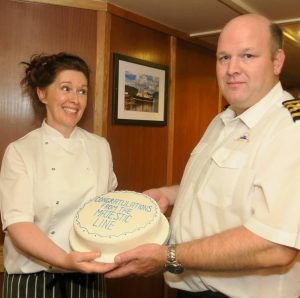
Chef Moll and Captain congratulate passengers on birthdays and anniversaries

I possibly shouldn’t say this just in case Majestic don’t want to pay me in the future but the cruise did not feel like work. It was more like having friends to stay and having a marvellous time being a top host. Yes there are a great many stresses to cooking, the hours are long and budgets can be tight but, as a chef, when you are allowed to buy the best ingredients and you have a team who supports you then it can be one of the most rewarding vocations that there is. I quickly got used to the idiosyncrasies of the boats movements and had room to spread out in the galley. Glen Shiel is an amazingly sturdy little boat and rolled very little in the recalcitrant Island swell. Nothing got smashed which is a testament to myself Jaimie and Dave’s forward thinking and stowage of all things that roll and wander. I even found the perfect place to prove my bread; Dave’s battery room. If it needed, I get it a little extra burst of heat from the engine room. Don’t knock it back ‘til you’ve tried it.

We pootled around Mull mostly in good weather though it became a bit murky near Calgary. It was such a splendid week Neil made me laugh with his turns of phrase and unique wit. Dave recited poetry in the galley when the stress of the pansies got to me. Jamie kept me in tea which, arguably, is the most important job aboard and along the lines of naval standing orders. The passengers were such an affable and erudite lot and two couples booked for 2021 before leaving the cruise.

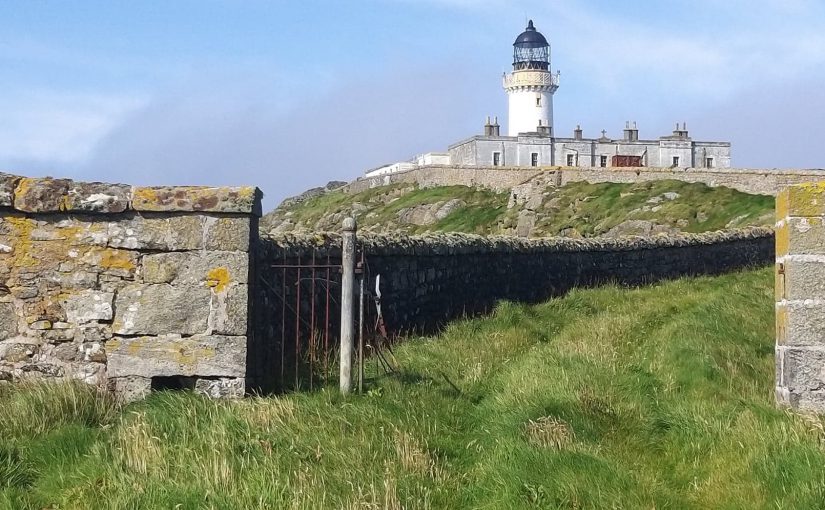
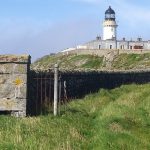
The following week was a change of crew and lots of singles which made for a very different cruise. Skipper Peter’s wheelhouse was full of solo travellers who wanted to learn as much as possible about flora, fauna and seascapes. My right hand on this trip was Jill; Peter’s partner. Jill added colour and artistry to everything she touched. She had taught cookery and it was lovely to try out her ideas as she is, obviously, a very accomplished cook in her own right. She introduced me to avocado cheesecake and a whole new world of cake decoration that I did not know existed. It still brings tears to my eyes thinking about it. Dave my poetic engineer was replaced by Chris, one of the most upbeat people I have ever met so, although the weather looked filthy for most of the week and there seemed little chance that we would get around Skye the atmosphere onboard was sunny. We managed to get to Muck, which was a first for me, I had anchored off many times but had never managed to get ashore. Other highlights were Canna, one of my favourite places on the planet, and seeing three White tailed Sea Eagles on an islet in the sound of Mull. On the final day I was lucky enough to get to Lismore and meet the owners of the Lighthouse. Lismore lighthouse was built in 1833 by Robert Stevenson, it is situated on Eilean Musdile which is attached to Lismore island by a tiny bridge. I have sailed past it possibly hundreds of times so it was a real treat to set foot ashore and to stand still and watch the vessels go by for a change. The next morning we headed back to Oban and were all on the bridge to witness the most stunning sunrise behind the lighthouse.

A big thank you to the crew and all at Majestic for a sporsail fortnight and thanks to all the passengers who so appreciated being cooked for after nearly six months of lock down. Many of you have kept in touch and I do hope that we will meet again in 2021.

Thank you for some of the best memories of 2020. Those few weeks made it all worth while.

For more information about Majestic Line click the link.

The Wonders of Seaweed

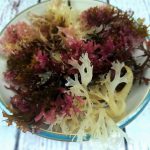
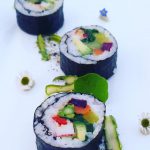
I first cooked seaweed for myself on a boat off St Kilda. We’d had an unusual spate of warm, dry weather and my vegetable cupboard had turned yellow despite my best efforts. On a run ashore I had spotted the fine chestnut tangles of sea spaghetti floating out of the crystal clean Atlantic waters, I cut some and headed back to the boat to see what the passengers would make of it. They were a game lot and we all crammed in to my tiny galley to watch as the strands turned to a vivid green when placed in the hot water. As a child seaweed had figured highly on the Scanlon dining table. My father would pick carrageen and dulse and make potato cakes for Sunday breakfast. Other exiled Irish relatives who found themselves in Wales would cook up a sludge of laverbread which always looked wholly inedible and was served with roll mop herrings, another bizarre family favourite. My Kildan supper was sautéed in garlic butter and oil and served with lamb. It had nothing of the foul smelling slime that I remembered. I watched giggling passengers pass around the bowl of and a pair of scissors . I wanted to learn more so I bought books, went on foraging courses and strolled on the beach, sketching, picking and later cooking weeds. I was hooked.

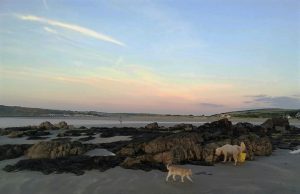
Erik and Mavis on the beach at Poppit sands

Seaweed is Algae. It’s a generic term, like seagulls, and it falls in to three main categories; red, brown and green. There are no poisonous seaweeds, some don’t taste very pleasant but, they wont kill you and for that reason it is the perfect way to get in to wild food foraging.

For thousands of years seaweed has been part of our diet. There are records dating back to the 1st century BC which mention sargassum being used to treat thyroid problems. In the Tang Dynasty the Chinese were successfully treating goitres by using the iodine rich thyroids of sheep which they made in to pills, potions and powders. In the western world outlying Islands helped support themselves with kelp harvests which were exported to the mainland for use in agriculture. It is only quite recently that seaweed fell out of favour in the west. In the early 20th century many inland countries were developing diseases which were associated with poorly functioning thyroid. Over farmed soil deficient in iodine led to goitres. In America in the 1920’s it was common to wear a bottle of iodine around your neck to protect you. The problem became so bad that Americans began to iodise salt which helped to prevent diseases within problem areas like the Mid West which was aptly named the “Goitre belt” . In the midlands of England you might suffer from a “Derbyshire Neck” whilst in Germany you might wear jewellery called a Kropfband which was used to cover the scars left by surgery. Japan and China were virtually immune to all this, and I had to double check this figure, but, forty to fifty percent of their diet is from seaweed. Remarkably the figures from the WHO, advise that you need 150 micrograms of Iodine a day, show that the average Korean diet contains 2,000 % more than that a day!.

Whilst we are on the subject of salt, did you know that the pouring salt (ubiquitous on all dinning tables and used to kill slugs) is salt with all the goodness taken out?. Salt in its natural form is made up of minerals. These are striped out during processing and then sold as supplements. This is very clever business to deconstruct food and then sell it back to us as necessary to health. This is what happened with iodine until the health costs were taken in to account and salt was iodised. A process that has continued in the West. As I always say if you want to substantially help your body use good salt!

Back to seaweed and what it’s made up of. It might surprise you to learn that it has more vitamin C than an orange of equivalent digestible weight. It is packed with calcium (astonishingly ten times as much as milk) and it has lots of good old fibre. It is the only vegetable to contain B vitamins, although there is still some argument as to whether we have the ability to digest them in their seaweedy form. And where do you think fishes get their Omega 3? Seaweed! It’s also home of vitamins; A, B’s C D E and K and minerals; Iodine, Iron, Copper, Zinc, Potassium, Manganese. Do you remember Dr Gillian McKeith from the 80’s (she purported to be a Doctor but no-one know what of) well her mantra included telling us all the we needed to arrange bowel movements after every meal and to eat spirulina. It turns out that she was right about the Spirulina!. But, you don’t need to buy foul smelling fish food in plastic tubs. Seaweed is a tasty addition to any diet and fun to find.

Since the beginning of this century the seaweed industry in the west has developed significantly. Virtually every where that I travel I come across another group of algae fans or seafood chefs who are playing around with recipes to incorporate seaweeds lovely umami taste. If you don’t have access to beach there is the Pembrokeshire beach food company, Mara in Scotland, The Cornish Seaweed Company and Seaman in Denmmark (who just won best cocktail of the year award for his Cointreau seaweed combo). All of these businesses offer all manner of dried products,  they are beautifully packaged and vary in price but they are a great place to begin by adding a sprinkle of dried flakes before going headlong into Dashi making or steeping your own gin

Since being stuck in Wales for lockdown I have used a lot of seaweed in my cooking. I think it began because I would rather walk on the beach than stand in the queue at Tesco’s. I have added dried sea lettuce to salt and crackers. I made a very lovely take on the welsh favourite, laverbread, by making a stock and adding it, along with cockles and bacon to a risotto. I made a gritty seabead noodle dish, (seabeads are a nightmare to get the sand out of) I added a handful of  dulse flakes to new potatoes and butter. I pickled sea lettuce and used it to brighten up some crab cakes. It is not salty by the way. That is the most frequent question that I am asked and no it’s not salty.

My personal favourite usage for bladderwrack, kelp et al is a bath. For some people this may sound wonderful and for others yukky but, give it a go anyway. A lot of wonderfully expensive creams use seaweed as it produces a substance more like a serum than a greasy film.  I begin by collecting half a bucket of brown weed, any type will do but a mixture is nice. If I am not using that day I pop it in to some cold water at home. It will keep for two or three days. Draw a bath of hot water and add the weed, if you are brave, or sieve the water through a teatowel and add that if you don’t fancy kelp rubbing around your legs. Personally, it gives me a giggle but I understand that’s not for everyone. When I first heard about baths I was sceptical. I like science I am not one to believe in things unless I have a good grounding in fact so despite some fairly instant benefits of my bath I set about learning about how lying in weed listening to Melvyn Bragg for an hour could have an beneficial affect on me.

In the most simple terms your skin is made up of three sections the Hypodermis, Dermis and the Epidermis (think of that as upperdermis) They differ a lot in function. The Hypodermis is your fat layer, the buffer between your delicate organs and the outside world. The Dermis is home to blood capillaries and forms the ‘true skin’ containing sweat glands, hair follicles and sebaceous glands etc. It carries nutrients and supports the epidermis. It enables the skin to thrive. It is also the layer which transports whatever you put on to your skin around the body for example a contraceptive patch, Nicotine patch or HRT. The epidermis is made up of 4 or 5 layers depending on the part of the body. It grows from the dermis where it is fed with nutrients and each layer is pushed away with the growth of the next. By the time the outer layer gets to the top it’s quiet old in skin terms. These layers provide a barrier to infection and they regulates the water lost through the skin. If you imagine them like bricks and mortar, the mortar is were things seep through in to the lower layers. That outer layer called the stratum corneum is dying and dry and it should be as damp skin would be perfect for harbouring all sorts of bacteria. It has lost its ability to store calcium as well as host of other deficiencies but it is really useful as it protects they layers beneath it. This is why acid peels and scrubs work to make your skin look a bit brighter. They strip layers of skin. Such a strange thing to do when you think about it but there we are. The Stratum Corneum means horny layer in Greek by the way I am not sure which horny they mean. Cell turnover takes about 30 days in young adults and 45 to 50 days when you get older which explains why you don’t heal as quickly later life.

So there you are lying in some kelp and all those lovely nutrients are flowing in to your skin. They pop in to the blood stream and off they go. The skin loves calcium it helps form Keratinocytes which in turn forms the protein keratin responsible for hair, nails and lovely skin. It is why Cleopatra was bathing in milk two thousand years ago. Calcium works best with Vitamin B and C and Zinc which is  abundant in seaweed. You have probably seen shampoos telling you that they contain Keratin but after looking in to it I would seriously doubt that washing it on and off your hair would make the slightest difference.  Keratinocytes need feeding and shampooing your hair with something that smells of apples will not make up for the harshness of the detergent that is its main constituent.

It has been fascinating for me to read up about the thyroid and oronary vascular disease (CVD). I had not realised what an important role the thyroid played in regulating the bodies metabolic rate, controlling the heart, muscle and digestive function as well as brain function and bone development. After two baths I felt less achey and, remarkably, some horrid little lumps on my leg had gone. Most chefs have varicose veins to some extent and I was shocked by how quickly they disappeared, the blueness of thread veins is also markedly improved. My hair and skin is lovely and I am told that I don’t smell of seaweed which is probably a good thing.

Seaweed does have some dangers though. It is not suitable for people who are already taking heparin, a blood thinning agent or warfarin an anti coagulant. Seaweed acts in the same way and so should be avoided for people who take medication after having a heart attack.

The other thing I should mention is use the tiniest bit of shampoo in the bath if you must. It will foam up like the sea on a rough day because the water is so soft.

The recipe below is for Dashi which is a great stock taste of Umami to add to your food. If you wish to make a vegan version leave out the Bonito flakes.

Feel free to email me if you have any questions or follow me on Facebook for recipes and news.

Footnote

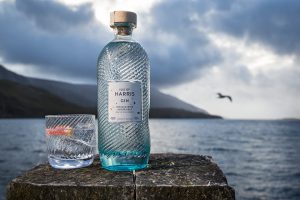
If you don’t like the sound of any of this maybe you could just try drinking isle of Harris Gin which is flavoured with sugar kelp I am not saying that It has any beneficial affects but if you drink enough of it might just give you the courage to have a seaweed bath!.

To make your own Dashi

A Japanese stock that will add goodness and flavour to soups and sauces

Take 10 grams wet weight of Kelp and add to 500mls of water and bring to the boil. Take off the heat and leave to steep.

Add 8 grams of Bonito Flakes and bring to the boil again.

Take of the heat as soon as it boils.

Strain  through a teatowel and bottle.


Belmond Afloat in France

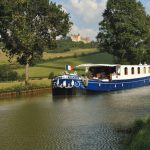
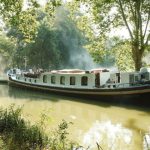
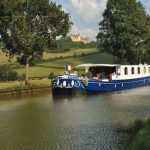
At the beginning of 2020 I was invited to interview by Belmond. Although I had worked in France, both ashore and afloat, being asked to cook for Belmond was the pinnacle of my career. Belmond is part of the group which owns the Orient Express and Le Manoir aux quat’saisons amongst others. It operates seven barges, five of which reside in Champagne and Burgundy whilst the others are in South eastern France and the canal du Midi. So in early March I drove over to Saint- Jean-de- Losne for a chef test. It was to consist of a selection of canapes, an entrée, main course and dessert to be served at lunch to their executive chef, director and head of recruitment and a few other members of staff.

I have been cooking for years but I suppose this was my MasterChef moment and I was as nervous as a kitten and as excited as Tigger.

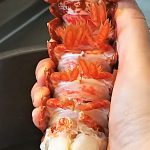
I had planned my menu thoroughly but was still tweaking it on the unusually quiet ferry crossing. My car was the only one on the car deck, it was three weeks before England went into lockdown and none of us knew, or had a hope of imagining, what came next. I arrived in Dijon and met a crew member who handed me a credit card and I ran around Grand Frais ticking items off my list. I had a budget but, unless I filled my trolley with caviar, I had no real chance of going above it. My entree was supposed to be a trio of seafood, but I did not like the look of the selection and could not find any oursin, which was one of the main components of the dish. I was beginning to panic and so decided to grab a croissant, sit in the car for five minutes and consider altering the menu. I had spotted some Manx Queen scallops, I had a vague idea about a dish that I hadn’t actually tried out but, had been toying with for years. Now was the time, I thought. I felt the scallops were going to be my lucky charm. I decided on black risotto made with lobster bisque and tiny pink crevettes and finished with the jewel like scollies. I would add a few micro herbs et voila. I had learnt my risotto skills in Venice so I was quite confident about handling the squid ink Vialolone Nano rice. As for Coquille St Jacques they are my favourite food, my death bed dinner, and I treat them with absolute love. I headed to the boat for an afternoon of mise en place.

The menu now looked like this…

Canapes

Roasted carrot, avocado and hommous

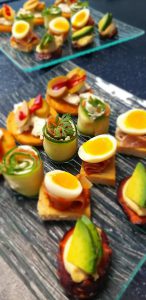
Mini toast, jambon, tomato caviar and a quail’s egg

Smoked salmon, cucumber and cream cheese pin wheels

Mustard biscuits, goats’ cheese and beetroot.

I had picked one vegetarian, one gluten free and vegan, one fish and one which was ostensibly a posh mini bacon, egg and tomato on toast. They were gone in seconds and I was delighted with the feedback.

Entre

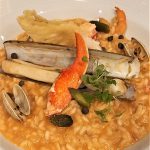
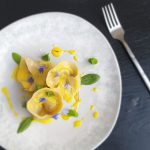
Black risotto with lobster bisque and crevettes decorated with Manx Queenies

The executive chef loved it!. He could see what I was trying to do, which was use the nuttiness of the Nano rice as a contrast to the softness of the seafood. The black backdrop was perfect for the vibrant pink shrimp and pearlescent scallops. I added a few micro herbs of vibrant green and a dust of parmaggio

Main

Loin of Rabbit stuffed with boudin noir wrapped in pancetta and served with pommes fondant, celeriac puree, heritage carrots and Dijon mustard sauce.

The feedback was great and chef thought that the rabbit was perfect, the mustard sauce could have been a little more punchy on the Dijon, the puree needed a little cream, the potatoes were delicious but the dish could go to a new level with the addition of a fruity note. He suggested a prune soused in Marc de Bourgogne and I thought that was such a clever idea. I will always incorporate it in the future. This dish holds happy memories for me as I first had a take on it at Bully’s French Bistro in Cardiff with my dear friends Lib and Rob. I love how recipes capture feelings of nostalgia and joy, I think that is one of my favourite things about cooking; that it is an aide memoir to love, life and fun.

Dessert

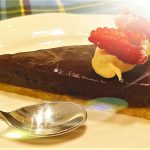
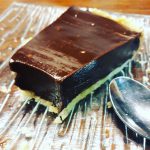
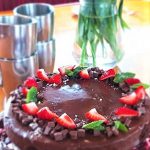
Chocolate Tart, crème d’isigny, raspberry coulis.

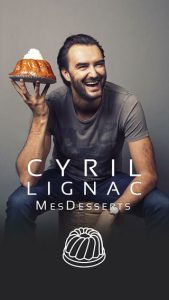
What else could it be? I have used this recipe for years. It is Simon Hopkinson’s and, to my mind, if you are serious about chocolate, you will find none better. It is for adults, it uses hardly any sugar; the texture comes from eggs, cream and 70% + chocolate. It has a sweet pastry which is like biscuit and is seriously good. It was so good in fact that the remainder of it disappeared from the fridge over night and the E.C. wanted the recipe. The feedback was that it was the best chocolate tart ever and I agree as do many other chefs. Eat it straight from the fridge or with anything you care to pair it with. People will think you are Cyril Lignac it is that good! (If you don’t know Cyril I will add a picture, because I can!)

I had a marvellous three days in France, it was intense but rewarding. It felt like I had been judged by the best and they had said Yes! Before I left, they told me I had the job, and I was given an incredible seven boat itinerary for the rest of 2020. It was certainly the highlight of my professional career.

Obviously, what came next was a bit of a surprise to us all. I headed back to Wales with a car full of wine thinking that I would return in a month to begin my season in Champagne. It turned out that the wine was very useful for the strange unfolding of the events to come.


If you would like to make the Chocolate Tart for yourself this is the recipe.

There are a few hacks below which will mean that your chocolate tart will be equally fit for a Belmond Cruise.

For the Pastry

175g butter

65g Icing sugar

2 egg yolks

225g Plain Flour

Ok this is the tricky part particularly if you have warm hands. Add all the ingredients together making sure it is well combined without over working it as this will make the pastry tough. It will be very sticky so wrap it in cling film and chill it.

When it is cold roll it out between two sheets of clingfilm, this will mean it won’t stick to everything and anything. Line your tart tin and leave a nice overlap as it will shrink. Back in to the fridge to chill. Then line with baking beans and bake at 180 for twenty mins before removing the parchment. Bake for another ten minutes until the pastry is cooked. It should be pale biscuit in colour. When I take it from the oven I like to glaze it with an egg yolk as this acts as a varnish and stops you getting the dreaded soggy bottom, but you don’t need to.

That is the tough bit done so now you can relax…

For the Filling

3 yolks

2 eggs

40g caster sugar

200g Chocolate 70% or higher

Melt the chocolate, sugar and butter in a Bain Marie or a microwave which is easy to do if you just give it bursts of 30 seconds at a time and then stir. When it is all lovely and glossy and melted thoroughly check it is not hot (think babies’ bath or the virgin Mary’s bath which is where the term Bain Marie comes from) Whisk up the eggs and with the oven on 190 add the chocolate mix and eggs together and pour in to the pastry case. Return to the oven for five minutes no longer or else it will lose that lovely shiny look.

Tips

If you do over cook it, you can use a blow torch when chilled to bring that velvety look back.

If you are having trouble with the pastry put your hands in ice water or return to the fridge. Once it’s sticky you are losing the battle so don’t struggle on …just chill.

Eat with clotted cream, pouring cream or icecream. It works well with a fruit coulis but equally you can eat it straight from the fridge. It is not for the fainthearted and if your favourite chocolate is dairy milk it is probably not for you. But if you are a bit of a choccy connoisseur you will have found your own personal Nirvana.


For more information about Belmond’s barge cruises click the link

Belmond Afloat in France | Luxury River Cruises

Happy Cruising


Veganuary

#leftovereatarian       #leftovereateverything

I am not a great follower of culinary trends. In fact I am not a follower of any trends I do prefer the classics executed well with a touch of flair. That said Vegans are everywhere in January and never one to waste an opportunity I threw myself in to learning a few new recipes. I love vegetables, I don’t think there is a vegetable that I don’t approve of and some I am positively in love with. Thinking ahead in December I rifled through lots of books in my local Waterstone’s as I was working there as a Christmas temp (as you know I am an avid reader so couldn’t pass up the opportunity to return to the bookface) I also went to a couple of Pop up Events in a restaurant run by an committed Vegan. The food was creative, in parts, but with the odd chunk of something processed thrown in. I learnt some alternatives to pastry that don’t pretend to be pastry and ate a lot of vegan cheese which, I think, would taste better if I had not thought for one minute that it was going to resemble cheese.

The thing I like about Vegetarian and Vegan cooking is just that…The Cooking. I see no point in using highly processed packaged ingredients but then that is not different from how I feel about cooking with meat. If there is plastic and instructions anywhere near the food stuff then you are not the one doing the cooking, someone else is. Usually in a factory and you have abnegated your responsibility and choices.

For me it’s simply that I like to know what I am eating.

Vegan Pop Up in Peel

Some of the great new eye openers included a Dauphinoise that I made with cashew cream. I soaked the cashews and hand blended them to achieve the right consistency. I warmed the ‘cream’ through and added onions and herbs etc to give it some extra flavour. I let that infuse overnight and made the Dauphy in the usual way. It tasted delicious.
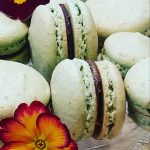

Chick pea water is a marvelous substitute for eggs. I never seem to have eggs in the house but always have a tin of chickpeas so knocking up a mayonnaise is easy. Hollandaise too although, for me. a hollandaise without butter is a day without sunshine. Meringues are the most wondrous use of aqafaba. This has to be the easiest dessert to make for a vegan and so close to the original that I suspect factory prodeuced meringues will be made like this soon as it’s much cheaper.

In January I taught vegan and Vegetarian Cookery at the Cookshack in Bride. The Menu included the usuals like Hommous, Baba Ganuj, Artichoke & Spinach Dip along with a Béchamel made with coconut milk, a pie crust made of ground nuts and seeds. Remoulade, my favourite, made with celeriac and preserved lemons for that extra kick. The star of the show was a recipe I learnt from a boat Captain in Burgundy. A traditional Bourginion made with Chestnuts or Marron instead of the Beouf. I added dried as well as fresh mushrooms, to give it some extra earthiness. and a pinch of paprika to add smokiness that you usually get from the bacon. Lots of garlic and wine (Vegan) by the bucket load. To be honest I was eating it thinking that I had accidentally put meat in to it!. The sauce was fabulous, unctuous and dark. A great meal for people trying to keep Carni’s and Vegi’s happy as you can just add a steak on the side for that red meat kick.

I am on the fence when it comes to all this. I think my label would be Flexitarian. ( I still bemoan the days before labels) My Grandfather was a Farmer who never ate meat unless he knew where it came from i.e. how it was raised and we were brought up in the same way. I love cooking in France as all the meat has provenance, a name, a birth date, the name of the farm, a death date. Personally, from a nutritional stand point and having been anaemic (sickle cell trait) all my life I function badly without supplements and the odd bit of pate. It’s hard to find the energy to do anything when you are lacking in iron and chefing is a physically demanding job.

I dislike processed food, packaging is my call to arms but I believe that what people eat is up to them. My Bedouin friends would simply not survive without eating goat. The dessert is not a home for farming and without meat and camel milk there would be no Nomadic tribes. Interestingly if you ever wish to disprove the five a day theory go live with the Bedou. Some of the healthiest, most active people in the world never see a Vegetable until it’s Tomato season and they find themselves in the city.

I think it is great that people are veering away from eating battery chickens seven nights a week and Veganuary is a good way to get people to try something new. Even old Dinosaur Chefs like me!

The only think that I believe is shameful concerning food is waste.

You can label me a “leftovereatarian” Hashtag that if you like it could be a new trend!


Teaching at the Cookshack

Late in 2019 I arrived on the Isle of Man for my third winter. Usually I don’t work when I am here having spent all summer running around I like to chill for a few months. That way I can begin again with renewed vigour in Spring. It’s a time for painting, catching up on the piles of books I have acquired on my travels and eating simple food. This winter looked different though, I had received a five year work permit from the Isle of Man government and I fancied getting out and about more.  Before I left in spring I met the unrivalled Mrs Revill, owner of the Cookshack cookery school, macron maker extraordinaire and general all round enthusiast of all things foodie. Fair to say we hit it off immediately and were both disappointed that we hadn’t met earlier. So when I arrived in September she was my first port of call.

Georgie began cooking at home in her kitchen near Bride, she went on to run a successful catering company before  making the natural move in to teaching. The Cookshack was purpose built four years ago. It is light and airy full of state of the art equipment, a brand new Esse and superlative views out to the Point of Ayre and across the sea to Scotland and Ireland.

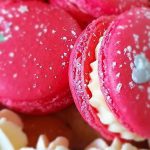
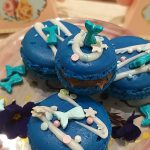
I sat in on a few of her courses in October. It was the lead up to Halloween and we had plenty of spooky pasta colours, witches fingers and macabre macarons. Within a few weeks I had become part of the Cookshack family. I began by teaching children’s courses, though I think they taught me more than I taught them, how to laugh and not take cooking too seriously being the main lessons. I laughed until I cried at the sheer joy of pasta in technicolour. I learnt how to put tagliatelle through the machine so many times that it ended up as one two metre stripe and took four kids to hold it. It was inedibley hilarious as you can imagine. We made bread and cookies but mostly we made a mess. It took Janice a lot of work getting the black food dye off Georgie’s lovely white surfaces. Thank you Janice!

On the run up to Christmas there were corporate events, hangovers, more laughter and molto, molto prosecco. We were all put through our Christmas paces with a visit from Manx Radio. With thanks to Georgie, Janice, Ruth and family I ended 2019 on a culinary high.

Teaching and cooking, speaking and stirring has its challenges. On a normal course we demonstrate and cook seven dishes. It’s a bit like being a circus performer there is an incredible amount of work that goes on before the big top goes up. Menu planning; taking in to account the theme of the day and any dietary requirements. The shopping is done by Georgie who goes out of her way, literally, to ensure that the produce used is the finest that she can buy and is a local as we can get. She is committed, unashamedly, to promoting Manx produce not just because it is the best but because it’s environmentally sensible to do so. All the recipes are written up and sent out . Canapes are made, the Cookshack is set to ‘welcome’ mode, tall glasses are filled with fizz and the show goes on.


It’s exhausting obviously and I was often asked how I could talk and cook without burning things… generally it works but I did learn to weigh my dessert ingredients before the guests arrived after a bit of a disaster with a clafoutis.

In January I held Vegan, Vegi and French classes all of which were fully booked almost instantly. My French course was one of my favourites. Georgie had managed to source everything from my, quite particular, ingredients list. It made me nostalgic for France and in particular Burgundy. I made a Boeuf Bourguinon and the guests were astounded at how much wine went into it. Some recipes have the ability to transport you to another place. Food, for me, is like a cupboard full of memories. Our sense of smell is so closely linked to reminiscences that cooking can feel like a conjuring trick at times. Try not thinking of Venice when you stir a risotto?

The words company and companion comes from the Latin meaning “One who breaks bread with another” I broke bread, baked bread and shared bread with such a range of companions this winter at the Cookshack. To sit at a table with a group of strangers and to share food is a gift, conversations are formed friendships are developed. I sincerely hope that when I am back on the island for winter I can work with Georgie on other ideas for bringing people together. Watch this space

Thank you to everyone who came on one of my courses and to my new culinary friends Georgie, Janice and Ruth. I look forward to seeing you all later in 2020

For more information about Georgie Revill and the Cookshack please follow the link below

Cookshack Cookery School

Cooking afloat around the Hebrides

I was lucky enough to spend the past ten days cooking aboard Hjalmar Bjorge.

Learn more about life in the restaurant with the best views in Scotland here Moll’s Outer Isles Blog

For more information contact www.northernlight-uk.com


Lodge Chef at Alladale

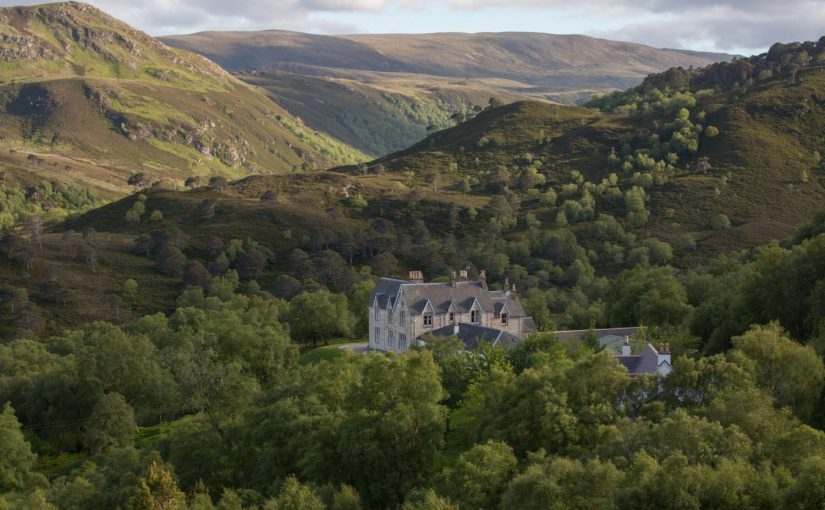
Early July saw me packing up and moving to Scotland. I had been working for a fabulous agency called Winners who keep me gainfully employed whenever I am back in Cornwall but an old barge chum Anna called informing me that Head Chef Max was leaving Alladale. She asked if I would like to hold the fort for a couple of months whilst they recruited and handed over the kitchen. I said Yes immediately. It’s been five years since I worked in Scotland and I have missed that sublime scenery.

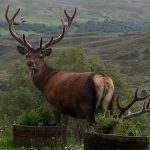
At first I was lucky enough to work on a wedding with talented Chef Max Verycuse. We had great fun dreaming up a nibbles to accompany Champagne and oysters which greeted the Bride and Groom after the ceremony. The table was full of Antlers, Ferns, Stones and two hundred delicious mini morsels. The wedding was a huge success and in great part down to the extraordinary staff.

I was lucky enough to have access to wonderful produce at Alladale. All the Venison is reared and shot on the estate and I used in Carpaccio, Fillet au poivre, Lasagne, Burgers and Stews. I had marvellous supply of duck, pigeon and pheasant from Ardgay Game and fresh Sea bass from the fisherman in Alness.

In six weeks I cooked for a Sacred Warrior retreat, a host of private clients, a wedding and a 50th Birthday with help from fellow Lodge Chef; Ali Sutherland, we also fed people at the remote cottages on the estate.

In the last two weeks I worked closely with new Chef Natasha to make sure all HACCAP proceedures where in place. I have an CIEH level three qualification and I am always keen to comply with good working procedures.  I learnt from Natasha how to make Pierogi, a comforting Polish pasta dish which worked perfectly for wintery days.

I thoroughly enjoyed my time at the Wilderness Reserve. I saw my first wild cats and fed bananas to the Estates, rather tame, deer. An array of Red squirrels collected nesting material just outside my window (much to  the frustration of my Burmese Erik) It was hard work but an utterly charming place to live.

I would like to thank all the gorgeous staff who made my time there so special. Big hugs to Mairi, Carron, Anna and Gill. Hope to see you all again soon

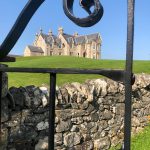
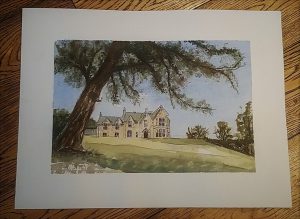
Watercolour of Alladale Lodge


Flavours of Petra

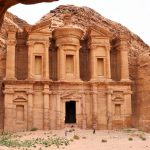
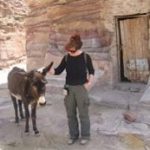
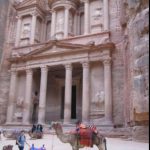
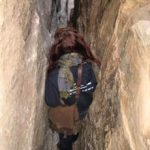
I had travelled to Petra three or four times before moving there in the spring of 2008

Initially my work involved setting up and running a hotel in Wadi Musa but it was inevitable that I would become more involved in cooking. I had already spent most of my adult life living on hommus and baba ganuj so the transition to Jordanian food was effortless. The only taste I missed was tea. Friends sent me food packages of Earl Grey and I sent them spices and jasmine flowers in return.

All recipes alter as they travel, they absorb local flavours and incorporate new ingredients replacing the exotic regional foods. In some cases a dish can become unrecognisable as it travels hundreds of miles. Most Chefs, including myself, look to the original, the classic, as a starting point. My Art teacher is fond of saying “nothing bad ever came from a good drawing” and, I feel the same way about having a solid understanding of a classic dish. Nothing inedible will ever come of it. It is advisable, I think, to never try to deconstruct something unless you first know how to put it together!

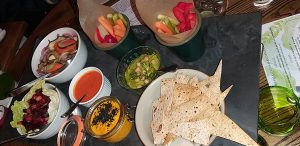
Homous means pea in Arabic and in case you are wondering it can be spelt in a variety of ways. Translations only work for pedants when they use a common alphabet if not then the word is translated phonetically. Therefore it rather depends on the dialect as to how you, personally chose to spell it. Humus has endless variations in the west which usually involve adding extra flavours. In Arabia the differences tend to me more about texture. My favourite is Umsubaha; a smooth puree which most people would recognise as hommous with the addition of chunky cooked chickpeas. I love the satisfying pop of a whole chickpea. It is usually served with lots of olive oil or zay zaytuna and sumaq which is taken from the fruit of the tree and adds a lemony zing. In all my time in Jordan I never saw garlic or tahini added to houmous. But this maybe because I was living amongst partly settled Bedou and Howeitat tribes who are never more than a suggestion away from a journey. Simple is good and complicated unnecessary in the desert. Nomadic hommus is chickpeas, oil, salt and lemon if you have it.

Ful medame is served at breakfast, it is cooked and mashed fava beans sometimes chopped tomatoes are added at the end. It is served with boiled eggs and shraq bread. In that sense it equals the western world’s beans and egg start to the day. There really is nothing new under the sun and I always find that travel highlights similarities rather than differences.

I attended a few cookery classes in Wadi Musa but I always felt that I learnt more from watching friends and their families cook. I was lucky enough to be involved in the Wadi Rhum marathon, horses from all over the Arabic peninsular compete in a two day endurance and speed competition. We followed in a 4×4 carrying water and dibs for the horses and riders. On the first night we camped at the base of the Seven Pillars of Wisdom waiting to begin the race at sunrise. After the horses were fed and watered we collected sticks from dry dessert bushes for a fire. Tomatoes and onions were chopped and added to a large pot. It takes an age to cook Galayat bandura with twigs. The onions need to dissolve to nothing, various friends would taste the dish and declare that the onions could still be discerned and so the cooking went on. It was my first lesson in the fussiness of cooks. Food in the dessert takes as long as it takes and when you only have a couple of ingredients how they taste is all about the quality of the cooking. We chomped on fustuk and sedera until after midnight when this simple stew was ready. Jordan is famous for its elaborate whole goat meals buried in hot sand and cooked for hours or days but I have always found more pleasure in simple food with lots of love attention poured over it.

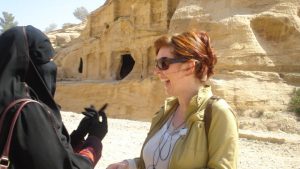
Wadi Araba is the barren valley that sits between Jordan and Israel. It is separated by the slither of water that is the biblical River Jordan. It is not far from the Mountains of Wadi Musa and with its proximity to the Dead Sea it was my favourite location on a day off. I had begun at sunrise and visited the stones salt pillars of Lot and his wife so that I could be heading down from the high place well before the tourist coaches turned up. I scrambled my way in to the valley and out on a to miraged plain with nothing to discern but sand and the odd scratch of a juniper tree. It takes a long time for your eyes to acclimatise to the dessert. At around midday I was aware I needed to look for a tree to rest under until the heat passed. I realised that what I had thought were the shadows of a tree were in fact two ladies in black dishdashs. The wreaths of smoke from their fire mixed with the trembling layer of heat as it left the sand The Qu’ran advises that a stranger who passes you should be offered water and food, bread at the very least. It is a bargain of hospitality which goes both ways. The obligation for the traveller is to be sociable, maybe to tell a story or at least wile away a few hours in company. I have seen people, usually those who do not know the culture, take this hospitality as a free buffet and it greatly annoys me to witness this. Muhammed PBUH did not foresee thousands of affluent tourists generously being offered food by proud people with little money. With this always in mind I sit on the half shadowed sand and take a small sip of water.  The branches of tree are festooned with what few possessions the ladies own. Two handbags, a packet of cigarettes, and a leather pouch made of a camel’s stomach. Around the fire is a low circle of stones and resting on it a pan which resembles an upturned wok. Both ladies are dressed in plain black. I realise that they are mother and daughter. Uma’s face is a relief map of lines etched as deeply as the valley itself. Her small deep-set eyes, lost beneath the folds of her eyelids, are at the same time intimidating and kind. She shows the beneficent scrutiny of someone far too old to be concerned with superficiality. Her Daughter has the bright orange hair of a woman stubbornly attached to henna and I should know. Henna gives a luscious red tone to dark hair but as it goes grey it becomes the vibrant orange of a clowns wig. Her name is Maha and we chat in basic Arabic as she mixes the dough, adding water to her hands to make a sloppy mess in a round brass coloured platter. It is like wallpaper paste she adds more flour from a sack beside her,  bringing it together before moulding it into balls and passing it to her mother. Uma makes a shape similar to that of a pizza maker. She has the dexterity of a young woman. She throws the thin dough on the metal dome and it instantly begins to crackle and blister. After half a minute she picks up one end and turns it over in the air before throwing it back down on to the hot metal. This is shraq. In my opinion the best bread in the world. It’s rare to find in Jordan now. There is a shop in Amman where people queue around the block from sunrise and walk out with shraq rolled in brown paper the same size and shape as six baguettes. Hubus is usual bread that you will find everywhere and it is much thicker and leavened like a  focaccia. There is also Bedouin bread which is the colour of old leather and so large you could saddle a horse with it.

I have never found it difficult to converse with people who don’t speak the same language even though I have little Arabic and they have no English we understand so much from tone and signs. The basic questions on meeting strangers are as carved in stone as the Decalogue. Where do you come from, where are you going, how old are you, are you married, do you have children?. In the West the first question is “What do you do? That question never crosses my mind in the desert.

We sit the on the sand until the midday begins to develop colour and gives way to afternoon. The only inhabitants of a vast beach lower than all the seas of the world. “Half as old as time” is the saying synonymous with Petra but could easily apply to us three. Time feels as though it has become redefined below this black tree garlanded bejewelled with handbags and packets of Marlborough lights


Malfoof dwalhi is another favourite memory. I was invited to Bukr’s house where his sisters and mother, aunts and grandmothers had all gathered to meet the lady who wanted to learn to cook dwhali. They lived on the road from Wadi Musa to Aqaba down a dirt track with views over Mount Aaron.

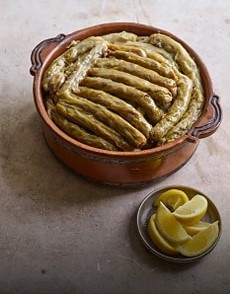
Dwlali is something that we have in the west, usually in tins, and is made with vine leaves, in that sense we think of it as a Greek or Lebanese dish. Malfoof is a huge white cabbage, a flattened circle the size of a bedside table. The leaves open out easily and are often so tender that they do not require blanching. The filling consists mainly of rice, sometimes meat, with onions and spices. The rice is part cooked initially and this trick enables the cabbage rolls to become tight as the rice takes up liquid and expands when cooked for the second time in a tomato and herb stock. The resulting cigar shaped cabbage farcies hold their shape together beautifully.  Sometimes vine leaf dwali is added for a contrast to the white cabbage. Traditionally it is cooked and layered in a large pan of a hundred or so rolls. When it was cooked we all sit outside on half built concrete walls overlooking Petra . A small goat eyes me from a nearby tree as the sun  goes down over the red sandstone.

I think of all the dishes I have lived on my favourite to cook, share and eat was and still is Magloubah. It means upside down in Arabic and is a one pot rice and meat dish which is served on the largest silver platter that you can find. I have seen Magloubahs on platters the size of a double bed. It is a family staple along with Mensaf, the national dish, though I was never too keen on Mensaf as it usually came with camel milk which could lead to unexpected results!. Magloubah etiquette is very particular, you imagine a pie chart and you stick to your own section of food, Good natured arguments can prevail if a favourite morsel sits between yours and your neighbours imaginary line. Trade offs are made. Aubergine is often bargained for roasted cauliflower. Magloubah can be made with lamb, chicken or left meatless. If there is chicken, it leads to more bargaining as everyone has their particular fondness for a leg or a thigh. A neck or a breast. The neck is rightly a delicacy and it is a mark of respect to give it to to the head of the household or an important guest. It is a lovely thing to sit crosslegged around a Magloubah and watch as husbands quietly pass their wives a favourite morsel or a child playfully steals from a relative.  It is served with labneh, a yoghurt and a salad of cubed and salted cucumber, tomato and lemon. Magloubah is a dish which, for me, has the same resonance as religious wafer or the Japanese tea ceremony but with more fun, laughter and mischief which is so indicative of Arabic culture

Many years ago when I lived in Hay on Wye I met Yotam Ottolengi at the festival. I asked him what his favourite food was and he replied without hesitation “Magloubah”. His interviewer asked where they could find the recipe and he said that he would not publish one as he had too many memories of his partners family and his mother cooking it. I don’t know if that has changed but I feel the same way about Magloubah for me is the closest food has ever got to spirituality.


Selection Voyage for The Williams II

Antarctica was discovered by a ship from Blyth, Northumberland…

In April I will be joining The Williams II on its training and selection voyage around Britain. I will pick up the ketch in Weymouth and sail with her to Milford Haven. I am so proud to be involved in such an important Charity. Here’s some information about this fantastic project.

Almost 200 years ago Antarctica was discovered from a ship built in the small North East town of Blyth, Northumberland.

The Williams was built and owned by a Captain William Smith a man born and raised in Blyth. On the anniversary of this British achievement in 2019 it is The Williams Expedition aim to build a modern replica of the Williams in Blyth to recreate the original expedition with a local crew.

The expedition aims to showcase the North Easts talent, engineering and technology on a world stage and in conjunction with Newcastle University undertake meaningful marine science.

We have now completed the core refit of Williams II in preparation for  after three years of dedicated work by our trainees and volunteers. Over the 2018 summer, we have also trained a core group of volunteers with specialist senior skills to operate efficiently onboard the vessel while training and supporting inexperienced crew.

The Williams II is a 36m gaffed riffed ketch, which was built of oak with pine decking and masts in 1914 in Denmark and at 24m on deck, with a 2.7m draft she is almost exactly the same dimensions as the original Williams built 100 years earlier in Blyth.

Facebook
Instagram
LinkedIn
WhatsApp