Belmond Afloat in France

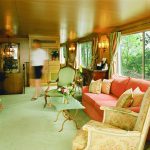
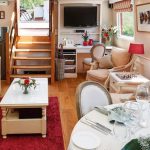
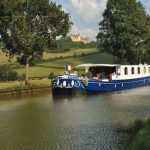
At the beginning of 2020 I was invited to interview by Belmond. Although I had worked in France, both ashore and afloat, being asked to cook for Belmond was the pinnacle of my career. Belmond is part of the group which owns the Orient Express and Le Manoir aux quat’saisons amongst others. It operates seven barges, five of which reside in Champagne and Burgundy whilst the others are in South eastern France and the canal du Midi. So in early March I drove over to Saint- Jean-de- Losne for a chef test. It was to consist of a selection of canapes, an entrée, main course and dessert to be served at lunch to their executive chef, director and head of recruitment and a few other members of staff.

I have been cooking for years but I suppose this was my MasterChef moment and I was as nervous as a kitten and as excited as Tigger.
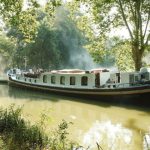
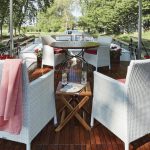
I had planned my menu thoroughly but was still tweaking it on the unusually quiet ferry crossing. My car was the only one on the car deck, it was three weeks before England went into lockdown and none of us knew, or had a hope of imagining, what came next. I arrived in Dijon and met a crew member who handed me a credit card and I ran around Grand Frais ticking items off my list. I had a budget but, unless I filled my trolley with caviar, I had no real chance of going above it. My entree was supposed to be a trio of seafood, but I did not like the look of the selection and could not find any oursin, which was one of the main components of the dish. I was beginning to panic and so decided to grab a croissant, sit in the car for five minutes and consider altering the menu. I had spotted some Manx Queen scallops, I had a vague idea about a dish that I hadn’t actually tried out but, had been toying with for years. Now was the time, I thought. I felt the scallops were going to be my lucky charm. I decided on black risotto made with lobster bisque and tiny pink crevettes and finished with the jewel like scollies. I would add a few micro herbs et voila. I had learnt my risotto skills in Venice so I was quite confident about handling the squid ink Vialolone Nano rice. As for Coquille St Jacques they are my favourite food, my death bed dinner, and I treat them with absolute love. I headed to the boat for an afternoon of mise en place.

The menu now looked like this…

Canapes

Roasted carrot, avocado and hommous

Mini toast, jambon, tomato caviar and a quail’s egg

Smoked salmon, cucumber and cream cheese pin wheels

Mustard biscuits, goats’ cheese and beetroot.
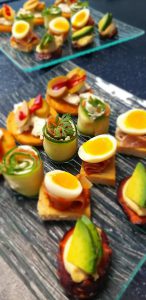
I had picked one vegetarian, one gluten free and vegan, one fish and one which was ostensibly a posh mini bacon, egg and tomato on toast. They were gone in seconds and I was delighted with the feedback.

Entre

Black risotto with lobster bisque and crevettes decorated with Manx Queenies

The executive chef loved it!. He could see what I was trying to do, which was use the nuttiness of the Nano rice as a contrast to the softness of the seafood. The black backdrop was perfect for the vibrant pink shrimp and pearlescent scallops. I added a few micro herbs of vibrant green and a dust of parmaggio

Main

Loin of Rabbit stuffed with boudin noir wrapped in pancetta and served with pommes fondant, celeriac puree, heritage carrots and Dijon mustard sauce.

The feedback was great and chef thought that the rabbit was perfect, the mustard sauce could have been a little more punchy on the Dijon, the puree needed a little cream, the potatoes were delicious but the dish could go to a new level with the addition of a fruity note. He suggested a prune soused in Marc de Bourgogne and I thought that was such a clever idea. I will always incorporate it in the future. This dish holds happy memories for me as I first had a take on it at Bully’s French Bistro in Cardiff with my dear friends Lib and Rob. I love how recipes capture feelings of nostalgia and joy, I think that is one of my favourite things about cooking; that it is an aide memoir to love, life and fun.

Dessert

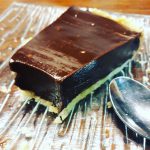
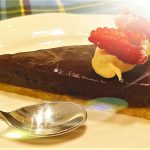
Chocolate Tart, crème d’isigny, raspberry coulis.

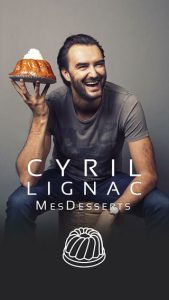
What else could it be? I have used this recipe for years. It is Simon Hopkinson’s and, to my mind, if you are serious about chocolate, you will find none better. It is for adults, it uses hardly any sugar; the texture comes from eggs, cream and 70% + chocolate. It has a sweet pastry which is like biscuit and is seriously good. It was so good in fact that the remainder of it disappeared from the fridge over night and the E.C. wanted the recipe. The feedback was that it was the best chocolate tart ever and I agree as do many other chefs. Eat it straight from the fridge or with anything you care to pair it with. People will think you are Cyril Lignac it is that good! (If you don’t know Cyril I will add a picture, because I can!)
I had a marvellous three days in France, it was intense but rewarding. It felt like I had been judged by the best and they had said Yes! Before I left, they told me I had the job, and I was given an incredible seven boat itinerary for the rest of 2020. It was certainly the highlight of my professional career.

Obviously, what came next was a bit of a surprise to us all. I headed back to Wales with a car full of wine thinking that I would return in a month to begin my season in Champagne. It turned out that the wine was very useful for the strange unfolding of the events to come.


If you would like to make the Chocolate Tart for yourself this is the recipe.

There are a few hacks below which will mean that your chocolate tart will be equally fit for a Belmond Cruise.

For the Pastry

175g butter

65g Icing sugar

2 egg yolks

225g Plain Flour

Ok this is the tricky part particularly if you have warm hands. Add all the ingredients together making sure it is well combined without over working it as this will make the pastry tough. It will be very sticky so wrap it in cling film and chill it.

When it is cold roll it out between two sheets of clingfilm, this will mean it won’t stick to everything and anything. Line your tart tin and leave a nice overlap as it will shrink. Back in to the fridge to chill. Then line with baking beans and bake at 180 for twenty mins before removing the parchment. Bake for another ten minutes until the pastry is cooked. It should be pale biscuit in colour. When I take it from the oven I like to glaze it with an egg yolk as this acts as a varnish and stops you getting the dreaded soggy bottom, but you don’t need to.

That is the tough bit done so now you can relax…

For the Filling

3 yolks

2 eggs

40g caster sugar

200g Chocolate 70% or higher

Melt the chocolate, sugar and butter in a Bain Marie or a microwave which is easy to do if you just give it bursts of 30 seconds at a time and then stir. When it is all lovely and glossy and melted thoroughly check it is not hot (think babies’ bath or the virgin Mary’s bath which is where the term Bain Marie comes from) Whisk up the eggs and with the oven on 190 add the chocolate mix and eggs together and pour in to the pastry case. Return to the oven for five minutes no longer or else it will lose that lovely shiny look.
Tips

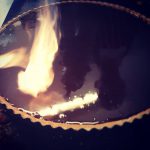
If you do over cook it, you can use a blow torch when chilled to bring that velvety look back.

If you are having trouble with the pastry put your hands in ice water or return to the fridge. Once it’s sticky you are losing the battle so don’t struggle on …just chill.

Eat with clotted cream, pouring cream or icecream. It works well with a fruit coulis but equally you can eat it straight from the fridge. It is not for the fainthearted and if your favourite chocolate is dairy milk it is probably not for you. But if you are a bit of a choccy connoisseur you will have found your own personal Nirvana.


For more information about Belmond’s barge cruises click the link

Belmond Afloat in France | Luxury River Cruises

Happy Cruising


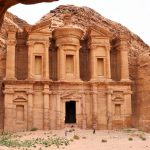
Flavours of Petra

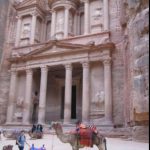
I had travelled to Petra three or four times before moving there in the spring of 2008

Initially my work involved setting up and running a hotel in Wadi Musa but it was inevitable that I would become more involved in cooking. I had already spent most of my adult life living on hommus and baba ganuj so the transition to Jordanian food was effortless. The only taste I missed was tea. Friends sent me food packages of Earl Grey and I sent them spices and jasmine flowers in return.

All recipes alter as they travel, they absorb local flavours and incorporate new ingredients replacing the exotic regional foods. In some cases a dish can become unrecognisable as it travels hundreds of miles. Most Chefs, including myself, look to the original, the classic, as a starting point. My Art teacher is fond of saying “nothing bad ever came from a good drawing” and, I feel the same way about having a solid understanding of a classic dish. Nothing inedible will ever come of it. It is advisable, I think, to never try to deconstruct something unless you first know how to put it together!

Homous means pea in Arabic and in case you are wondering it can be spelt in a variety of ways. Translations only work for pedants when they use a common alphabet if not then the word is translated phonetically. Therefore it rather depends on the dialect as to how you, personally chose to spell it. Humus has endless variations in the west which usually involve adding extra flavours. In Arabia the differences tend to me more about texture. My favourite is Umsubaha; a smooth puree which most people would recognise as hommous with the addition of chunky cooked chickpeas. I love the satisfying pop of a whole chickpea. It is usually served with lots of olive oil or zay zaytuna and sumaq which is taken from the fruit of the tree and adds a lemony zing. In all my time in Jordan I never saw garlic or tahini added to houmous. But this maybe because I was living amongst partly settled Bedou and Howeitat tribes who are never more than a suggestion away from a journey. Simple is good and complicated unnecessary in the desert. Nomadic hommus is chickpeas, oil, salt and lemon if you have it.

Ful medame is served at breakfast, it is cooked and mashed fava beans sometimes chopped tomatoes are added at the end. It is served with boiled eggs and shraq bread. In that sense it equals the western world’s beans and egg start to the day. There really is nothing new under the sun and I always find that travel highlights similarities rather than differences.

I attended a few cookery classes in Wadi Musa but I always felt that I learnt more from watching friends and their families cook. I was lucky enough to be involved in the Wadi Rhum marathon, horses from all over the Arabic peninsular compete in a two day endurance and speed competition. We followed in a 4×4 carrying water and dibs for the horses and riders. On the first night we camped at the base of the Seven Pillars of Wisdom waiting to begin the race at sunrise. After the horses were fed and watered we collected sticks from dry dessert bushes for a fire. Tomatoes and onions were chopped and added to a large pot. It takes an age to cook Galayat bandura with twigs. The onions need to dissolve to nothing, various friends would taste the dish and declare that the onions could still be discerned and so the cooking went on. It was my first lesson in the fussiness of cooks. Food in the dessert takes as long as it takes and when you only have a couple of ingredients how they taste is all about the quality of the cooking. We chomped on fustuk and sedera until after midnight when this simple stew was ready. Jordan is famous for its elaborate whole goat meals buried in hot sand and cooked for hours or days but I have always found more pleasure in simple food with lots of love attention poured over it.

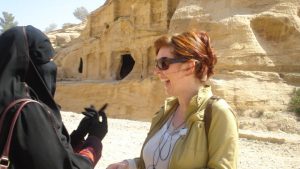
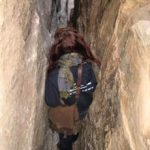
Wadi Araba is the barren valley that sits between Jordan and Israel. It is separated by the slither of water that is the biblical River Jordan. It is not far from the Mountains of Wadi Musa and with its proximity to the Dead Sea it was my favourite location on a day off. I had begun at sunrise and visited the stones salt pillars of Lot and his wife so that I could be heading down from the high place well before the tourist coaches turned up. I scrambled my way in to the valley and out on a to miraged plain with nothing to discern but sand and the odd scratch of a juniper tree. It takes a long time for your eyes to acclimatise to the dessert. At around midday I was aware I needed to look for a tree to rest under until the heat passed. I realised that what I had thought were the shadows of a tree were in fact two ladies in black dishdashs. The wreaths of smoke from their fire mixed with the trembling layer of heat as it left the sand The Qu’ran advises that a stranger who passes you should be offered water and food, bread at the very least. It is a bargain of hospitality which goes both ways. The obligation for the traveller is to be sociable, maybe to tell a story or at least wile away a few hours in company. I have seen people, usually those who do not know the culture, take this hospitality as a free buffet and it greatly annoys me to witness this. Muhammed PBUH did not foresee thousands of affluent tourists generously being offered food by proud people with little money. With this always in mind I sit on the half shadowed sand and take a small sip of water.  The branches of tree are festooned with what few possessions the ladies own. Two handbags, a packet of cigarettes, and a leather pouch made of a camel’s stomach. Around the fire is a low circle of stones and resting on it a pan which resembles an upturned wok. Both ladies are dressed in plain black. I realise that they are mother and daughter. Uma’s face is a relief map of lines etched as deeply as the valley itself. Her small deep-set eyes, lost beneath the folds of her eyelids, are at the same time intimidating and kind. She shows the beneficent scrutiny of someone far too old to be concerned with superficiality. Her Daughter has the bright orange hair of a woman stubbornly attached to henna and I should know. Henna gives a luscious red tone to dark hair but as it goes grey it becomes the vibrant orange of a clowns wig. Her name is Maha and we chat in basic Arabic as she mixes the dough, adding water to her hands to make a sloppy mess in a round brass coloured platter. It is like wallpaper paste she adds more flour from a sack beside her,  bringing it together before moulding it into balls and passing it to her mother. Uma makes a shape similar to that of a pizza maker. She has the dexterity of a young woman. She throws the thin dough on the metal dome and it instantly begins to crackle and blister. After half a minute she picks up one end and turns it over in the air before throwing it back down on to the hot metal. This is shraq. In my opinion the best bread in the world. It’s rare to find in Jordan now. There is a shop in Amman where people queue around the block from sunrise and walk out with shraq rolled in brown paper the same size and shape as six baguettes. Hubus is usual bread that you will find everywhere and it is much thicker and leavened like a  focaccia. There is also Bedouin bread which is the colour of old leather and so large you could saddle a horse with it.

I have never found it difficult to converse with people who don’t speak the same language even though I have little Arabic and they have no English we understand so much from tone and signs. The basic questions on meeting strangers are as carved in stone as the Decalogue. Where do you come from, where are you going, how old are you, are you married, do you have children?. In the West the first question is “What do you do? That question never crosses my mind in the desert.

We sit the on the sand until the midday begins to develop colour and gives way to afternoon. The only inhabitants of a vast beach lower than all the seas of the world. “Half as old as time” is the saying synonymous with Petra but could easily apply to us three. Time feels as though it has become redefined below this black tree garlanded bejewelled with handbags and packets of Marlborough lights


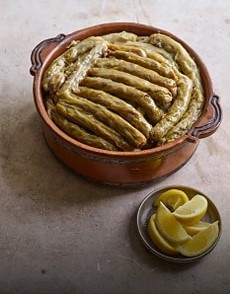
Malfoof dwalhi is another favourite memory. I was invited to Bukr’s house where his sisters and mother, aunts and grandmothers had all gathered to meet the lady who wanted to learn to cook dwhali. They lived on the road from Wadi Musa to Aqaba down a dirt track with views over Mount Aaron.

Dwlali is something that we have in the west, usually in tins, and is made with vine leaves, in that sense we think of it as a Greek or Lebanese dish. Malfoof is a huge white cabbage, a flattened circle the size of a bedside table. The leaves open out easily and are often so tender that they do not require blanching. The filling consists mainly of rice, sometimes meat, with onions and spices. The rice is part cooked initially and this trick enables the cabbage rolls to become tight as the rice takes up liquid and expands when cooked for the second time in a tomato and herb stock. The resulting cigar shaped cabbage farcies hold their shape together beautifully.  Sometimes vine leaf dwali is added for a contrast to the white cabbage. Traditionally it is cooked and layered in a large pan of a hundred or so rolls. When it was cooked we all sit outside on half built concrete walls overlooking Petra . A small goat eyes me from a nearby tree as the sun  goes down over the red sandstone.

I think of all the dishes I have lived on my favourite to cook, share and eat was and still is Magloubah. It means upside down in Arabic and is a one pot rice and meat dish which is served on the largest silver platter that you can find. I have seen Magloubahs on platters the size of a double bed. It is a family staple along with Mensaf, the national dish, though I was never too keen on Mensaf as it usually came with camel milk which could lead to unexpected results!. Magloubah etiquette is very particular, you imagine a pie chart and you stick to your own section of food, Good natured arguments can prevail if a favourite morsel sits between yours and your neighbours imaginary line. Trade offs are made. Aubergine is often bargained for roasted cauliflower. Magloubah can be made with lamb, chicken or left meatless. If there is chicken, it leads to more bargaining as everyone has their particular fondness for a leg or a thigh. A neck or a breast. The neck is rightly a delicacy and it is a mark of respect to give it to to the head of the household or an important guest. It is a lovely thing to sit crosslegged around a Magloubah and watch as husbands quietly pass their wives a favourite morsel or a child playfully steals from a relative.  It is served with labneh, a yoghurt and a salad of cubed and salted cucumber, tomato and lemon. Magloubah is a dish which, for me, has the same resonance as religious wafer or the Japanese tea ceremony but with more fun, laughter and mischief which is so indicative of Arabic culture

Many years ago when I lived in Hay on Wye I met Yotam Ottolengi at the festival. I asked him what his favourite food was and he replied without hesitation “Magloubah”. His interviewer asked where they could find the recipe and he said that he would not publish one as he had too many memories of his partners family and his mother cooking it. I don’t know if that has changed but I feel the same way about Magloubah for me is the closest food has ever got to spirituality.


‘Gatherers’ by Jaime Molina

I met Jaime in ‘The Courtyard’ in Falmouth, excellent food by the way, we got talking and the subject quickly turned to our great love of the outdoors, foraging and exploring the local countryside for scrummy things to eat. When we met again he told me all about his project of putting together a handmade book which focused on Cornwall and the people who chose, as much as possible, to live off the land. He’s interviewed people with thriving seaweed business, people who shoot rabbits as their main food source, fishermen and recreational foragers. and has put together an original book about what it means to them to live sustainably.  To be honest I have a hatred of warehouse food, I can almost feel the cells of my body relinquishing any sense of joy when walking around the likes of Tesco’s. Yes, it’s a necessary part of life to buy toilet roll in a fluorescent floodlit shed but… there’s a cost

Jaime asked me to write a forward to his gorgeous book and I welcomed doing it. It’s full of lovely photographs as he’s studying photography at Falmouth. At the moment there is a limited print run but hopefully a publishing house will notice it and it will be more widely available.

A Summer in France at La Cloche

I am back from the Falklands for five days and it’s time to head off to the Dordogne where I shall be heading up the tiny kitchen team at La Cloche in Abjat Sur Bandiat.

1940’s food and dress

First thing to think about is Edwina’s 70th. I got the job through a chum of mine from early barging days and it’s her Mum’s Birthday soon so we are organising a 1940’s party. The Menu will reflect a ‘Dig for victory’ theme. A foraged soup to start made with Wild Sorrel, Pennywort, Dandelion, Spinach and Oxalis. Cheap cuts of meat cooked long and slow followed by Pain Perdu, which translates as lost bread, and is a take on the British Bread and Butter pud but much nicer as it’s made with the left over Croissants and Pain au Chocolate.

Moulin D’Abbeye

Brantome and the Moulin D’abbeye
Brantome

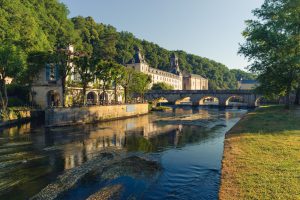
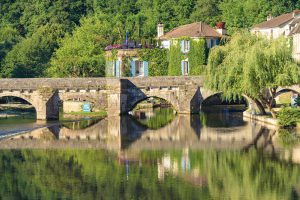
The real highlight of my Summer in the Dordogne was Brantome and the Moulin D’Abbeye. I spent a long sublime evening alone working my way through the Chef’s Degustation Menu, all seven exquisite courses of it. It was honestly the best meal I have ever tasted combined with the most superb scenery and perfect service. A definite return to … again and again

www.moulinabbaye.com


Gourmet Foraging at Fat Hen

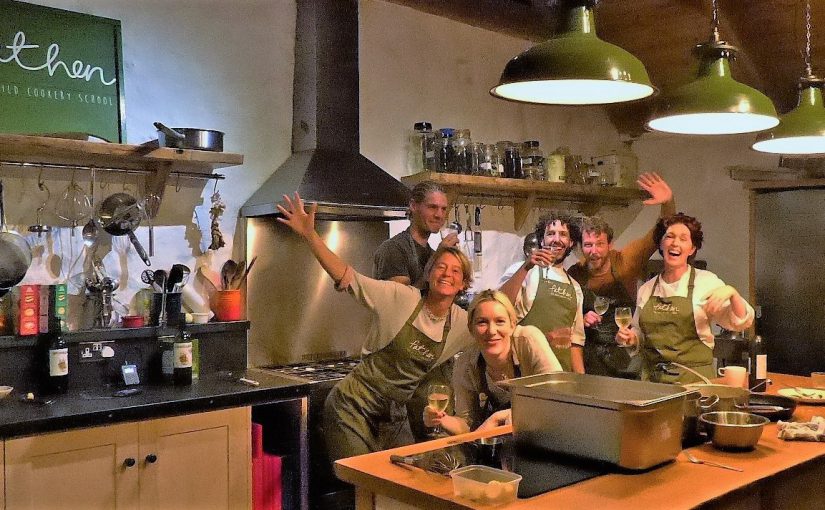
April saw a weekend of Gourmet Foraging at Fat Hen in Penwith, I’ve known of Caroline since she began her business in 2009. Back then she taught from her farmhouse kitchen, these days we all pile in to a lovely converted barn which caters for groups of up to 16. The aim is to source as much as possible from the hedgerows and seashore around her home in St Buryan.

Fat Hen Family


This year I will be teaching at two Gourmet Weekends along with Top T.V. Mark Devonshire.

I’ve narrowly avoided meeting Mark for years. He was Rick Stein’s Development Chef for years and taught at the Cookery School in Padstow where I have spent many a day. I have also done some stages at the Seafood Restaurant in Padstow so it’s amazing that we haven’t met until now. Upon meeting it was Chefy love at first sight and along with Jill and Poppy we ploughed on with then extensive Mise list for the weekend.


Watership down massacre

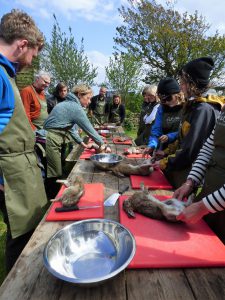
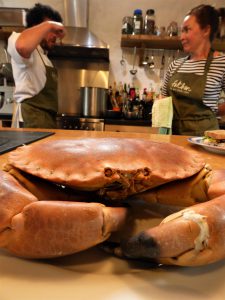
Caroline takes our keen foragers out for the morning where they scour the leafy Penwith lanes for salads before heading to the beach. Back at Fat Hen Mark and I prep our “Here’s one I made early” assortment of goodies. My Favourites this year have been Potato Cakes with Dulse, Venison Carpaccio with burnt Hazelnuts and Orange and Carragheen Pannacotta. The group return at lunchtime for a sit down meal of Soup, Breads, Crackers, Potato Cakes and Salads before embarking on an afternoon of skill based tasks like filleting fish, preparing crab and skinning rabbits. Later Mark demonstrates the art of pasta making avec green colouring from the luminous tips of nettles. I prep the basics for the Rabbit Stew.

Brown Crab

On Saturday evening we cook a celebratory meal for our amateur foragers and their partners, everyone relaxes with a Buckthorn Fizz and canapes followed by all the best from our stunning Penwith Pennisular.

The course ends after lunch on Sunday. It’s tremendously hard work and there have been injuries, notably the black eye and cuts that I sustained after tripping in the garden when hunting for the Rosemary bush at dusk, but, I always learn so much on Caro’s courses

Mark and I have become firm friends and I was delighted when he invited me to help judge at the 18th International Pasty Championships at the Eden Project. He and his partner run a catering company in Cornwall www.markdevonshire.co.uk

Poppy runs a highly regarded Supper club in London and Caroline continues to wander the verdant lanes of Cornwall thinking up new and exciting recipes.

www.fathen.org

www.facebook.com/troughsupperclub

Fat Hen Foragers


Sushi with Al Matias in Stanley

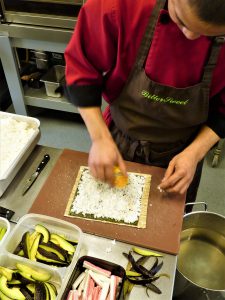
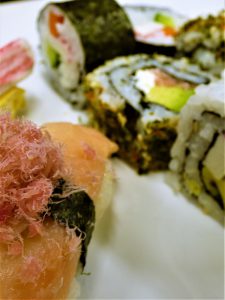
I’ve been helping out a Bittersweet in Stanley.  Firstly I began on the Tapas Menu whilst Head Chef Al worked flat out on Pizzas. We soon began to talk about our favourite food, countries we wanted to visit and the wonders of local produce. All this lead to us planning a new menu for the restaurant. The owner Julie was delighted with our ideas and gave us carte blanche. I reinvented the brunch menu to include freshly made hollandaise with all the usual trimmings like smoked salmon, bagels, spinach and poached ggs. Al worked on some gorgeous toothfish recipes for lunch. After a few weeks we formulated the idea of a sushi night. I was mad keen to learn all Al’s secrets as he had worked on several prestigious cruise ships as Sushi Chef.

Al Matias Sushi Chef

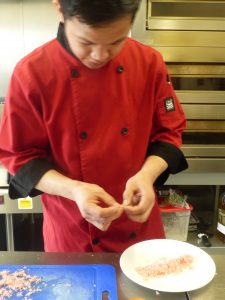
He set about making Furikake known as the salt and pepper of Japan. He spent a week drying fish and picking it apart into tiny flakes. We added toasted sesame seeds, seaweed, salt and sugar. It is truly gorgeous when you make it yourself and a superb addition to most dishes.

Al carefully separates the strands of dried fish. Part of the intense process of making your own Furikake

We all had a fabulous evening although it was such hard work making all the rolls, homemade wasabi, pickles and garnish. Proud to say that I think it was one of the events that we held at Bittersweet that lead us to being awarded the Taste of the Falklands Award.

I adored working with Julie, Al. Michelle and Baron. Thank you so much. I do hope our paths cross again on our culinary wanderings.

Look out for some of the recipes on my page coming in March.

Sushi

Darwin House, Falkland Islands

Well here I am on the Falkland Islands. After four months of interviews, work permits and medicals I have finally arrived via RAF Brize Norton. I have  discovered some incredibly tasty new fish and produce and all sorts of innovative recipes. I am particularly fond of Toothfish Cheeks. A Toothfish can grow up to 10 metres in length and live until it’s 50! It’s an absolute privilege to be here and even though the Military call the Islands Dartmoor by Sea in a derogatory sense, I can’t think of any place more lovely.

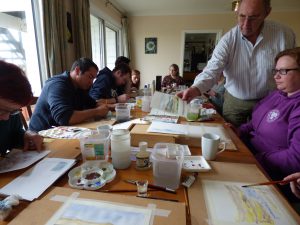
My first major catering event was a watercolour course run by the very talented Richard Cockwell. In between prepping Balmoral Chicken, Toothfish cheeks and STP I managed to join in for an hour of painting. Form the gardens of the Lodge the views over Mount Usbourne are simply breaktaking. What I most like about painting is it gives you the chance to look and watch the clouds skating past the hills. The winds here are deceptive and although the weather can look beautiful from my kitchen window it’s quite often blowing a hooley when I step outdoors.

Richard teaches watercolour at Darwin house

www.darwin-house.com

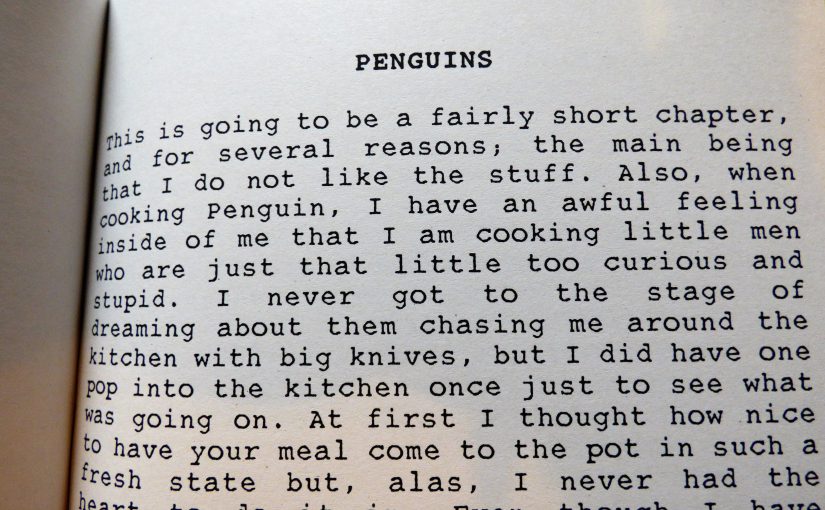
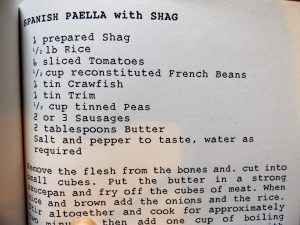
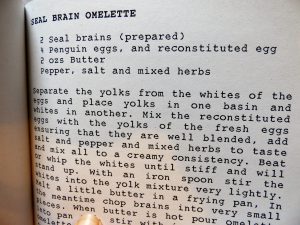
I have also found a funny little book called recipes “Fit for FIDS” It was written in the 1950’s by a interesting character who is spoken of very highly on the Islands. I have eaten smoked Sea Shag in Iceland last year and very good it was too but I am a good deal more wary about seal brain and penguins!

Extracts from “Fit for FIDS”


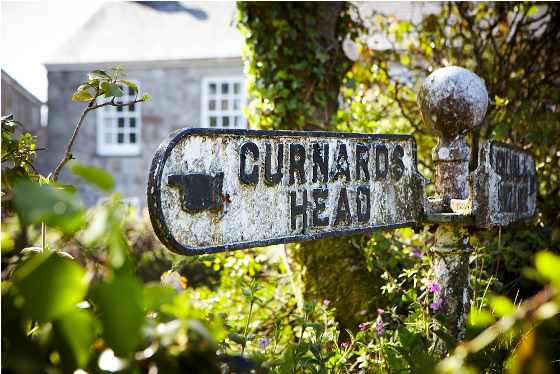
The Gurnard’s Head, Zennor

I love the Gurnie. It’s one of those pubs that you pop in to for a coffee at 11am and end up staying all day. I lived in Hay on Wye for number of years and was a regular at Charles’s other Hotel the Griffen at Felin Fach. I used to eat there when Max was the Chef. Max has just moved to become Head Chef at the Gurnard’s and I will be working with him, Fionn, Trigs and Dan. I love the team and I’ve done some adhoc work there a few times now. It’s always intensely busy but such a  good laugh working with the lads and all that gorgeous food.

I’m looking forward to learning lots of tips and new recipes. The pastry chef Fionn makes the best Soda Bread and the added joy of it is that he has his Mum’s recipe for it tattooed to his bottom. Just as well as I do seem to forget that recipe quite alot!!. I will try to take a photograph of it for you one day. To be honest that is hard core cheffing when you start inking your body with recipes!

www.gurnardshead.co.uk

Spring Stew

A typical supper at this time of year

Mushroom Soup *
Purple sprouting broccoli, garlic, za’atar, yoghurt *
Mackerel, brown shrimp, sesame & coriander broth *
Scampi monkfish, mango, carrot, red onion & coriander 8.50
Cod tongue, ham hock & parmesan cassoulet, garlic oil 8.00
Hake, mushroom, spring onion & seaweed dashi 8.50
Chicken liver parfait, red onion jam, toast 8.50
~
Ray wing, crushed potatoes, spinach, caper butter *
Sprouting broccoli, garlic, za’atar, yoghurt *
Lamb breast, kale, goats cheese, cauliflower *
Red gurnard, spring onions, ginger, seaweed, cuttlefish  18.00
Cod, taramasalata, broccoli tempura, smoked almonds, za’atar  19.00
Pork collar, black pudding, mash quince 19.00
Rump of beef, wild garlic, broccoli, crispy tongue  21.00

www.gurnardshead.co.uk

Facebook
Instagram
LinkedIn
WhatsApp