I first cooked seaweed for myself on a boat off St Kilda. We’d had an unusual spate of warm, dry weather and my vegetable cupboard had turned yellow despite my best efforts. On a run ashore I had spotted the fine chestnut tangles of sea spaghetti floating out of the crystal clean Atlantic waters, I cut some and headed back to the boat to see what the passengers would make of it. They were a game lot and we all crammed in to my tiny galley to watch as the strands turned to a vivid green when placed in the hot water. As a child seaweed had figured highly on the Scanlon dining table. My father would pick carrageen and dulse and make potato cakes for Sunday breakfast. Other exiled Irish relatives who found themselves in Wales would cook up a sludge of laverbread which always looked wholly inedible and was served with roll mop herrings, another bizarre family favourite. My Kildan supper was sautéed in garlic butter and oil and served with lamb. It had nothing of the foul smelling slime that I remembered. I watched giggling passengers pass around the bowl of and a pair of scissors . I wanted to learn more so I bought books, went on foraging courses and strolled on the beach, sketching, picking and later cooking weeds. I was hooked.

Seaweed is Algae. It’s a generic term, like seagulls, and it falls in to three main categories; red, brown and green. There are no poisonous seaweeds, some don’t taste very pleasant but, they wont kill you and for that reason it is the perfect way to get in to wild food foraging.
For thousands of years seaweed has been part of our diet. There are records dating back to the 1st century BC which mention sargassum being used to treat thyroid problems. In the Tang Dynasty the Chinese were successfully treating goitres by using the iodine rich thyroids of sheep which they made in to pills, potions and powders. In the western world outlying Islands helped support themselves with kelp harvests which were exported to the mainland for use in agriculture. It is only quite recently that seaweed fell out of favour in the west. In the early 20th century many inland countries were developing diseases which were associated with poorly functioning thyroid. Over farmed soil deficient in iodine led to goitres. In America in the 1920’s it was common to wear a bottle of iodine around your neck to protect you. The problem became so bad that Americans began to iodise salt which helped to prevent diseases within problem areas like the Mid West which was aptly named the “Goitre belt†. In the midlands of England you might suffer from a “Derbyshire Neck†whilst in Germany you might wear jewellery called a Kropfband which was used to cover the scars left by surgery. Japan and China were virtually immune to all this, and I had to double check this figure, but, forty to fifty percent of their diet is from seaweed. Remarkably the figures from the WHO, advise that you need 150 micrograms of Iodine a day, show that the average Korean diet contains 2,000 % more than that a day!.
Whilst we are on the subject of salt, did you know that the pouring salt (ubiquitous on all dinning tables and used to kill slugs) is salt with all the goodness taken out?. Salt in its natural form is made up of minerals. These are striped out during processing and then sold as supplements. This is very clever business to deconstruct food and then sell it back to us as necessary to health. This is what happened with iodine until the health costs were taken in to account and salt was iodised. A process that has continued in the West. As I always say if you want to substantially help your body use good salt!
Back to seaweed and what it’s made up of. It might surprise you to learn that it has more vitamin C than an orange of equivalent digestible weight. It is packed with calcium (astonishingly ten times as much as milk) and it has lots of good old fibre. It is the only vegetable to contain B vitamins, although there is still some argument as to whether we have the ability to digest them in their seaweedy form. And where do you think fishes get their Omega 3? Seaweed! It’s also home of vitamins; A, B’s C D E and K and minerals; Iodine, Iron, Copper, Zinc, Potassium, Manganese. Do you remember Dr Gillian McKeith from the 80’s (she purported to be a Doctor but no-one know what of) well her mantra included telling us all the we needed to arrange bowel movements after every meal and to eat spirulina. It turns out that she was right about the Spirulina!. But, you don’t need to buy foul smelling fish food in plastic tubs. Seaweed is a tasty addition to any diet and fun to find.
Since the beginning of this century the seaweed industry in the west has developed significantly. Virtually every where that I travel I come across another group of algae fans or seafood chefs who are playing around with recipes to incorporate seaweeds lovely umami taste. If you don’t have access to beach there is the Pembrokeshire beach food company, Mara in Scotland, The Cornish Seaweed Company and Seaman in Denmmark (who just won best cocktail of the year award for his Cointreau seaweed combo). All of these businesses offer all manner of dried products,  they are beautifully packaged and vary in price but they are a great place to begin by adding a sprinkle of dried flakes before going headlong into Dashi making or steeping your own gin

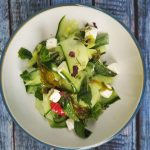
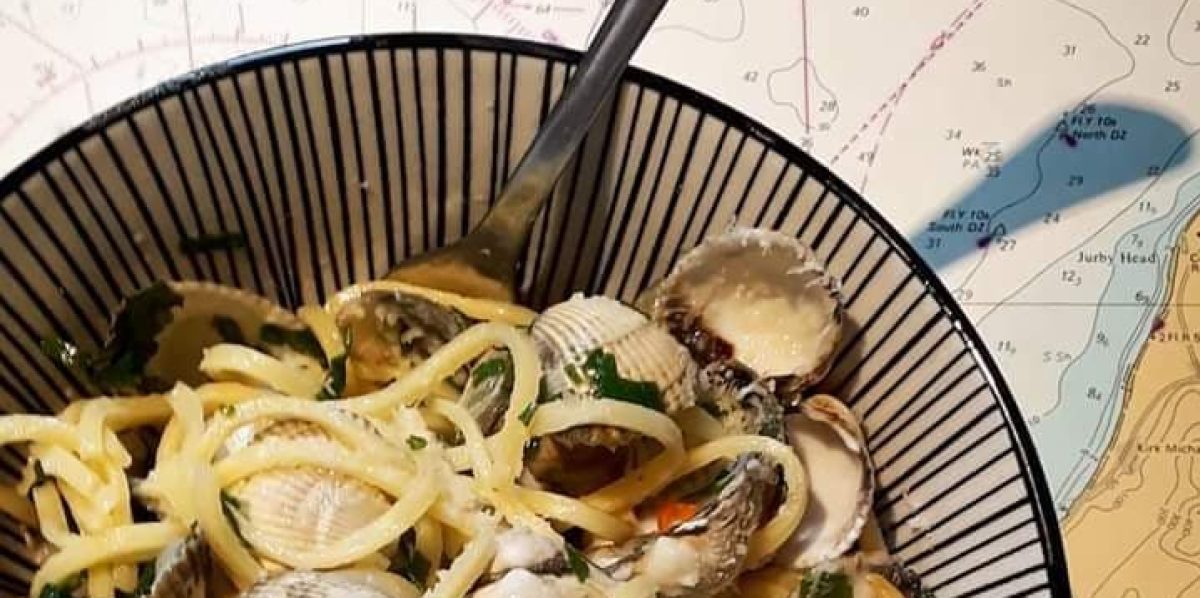
Since being stuck in Wales for lockdown I have used a lot of seaweed in my cooking. I think it began because I would rather walk on the beach than stand in the queue at Tesco’s. I have added dried sea lettuce to salt and crackers. I made a very lovely take on the welsh favourite, laverbread, by making a stock and adding it, along with cockles and bacon to a risotto. I made a gritty seabead noodle dish, (seabeads are a nightmare to get the sand out of) I added a handful of dulse flakes to new potatoes and butter. I pickled sea lettuce and used it to brighten up some crab cakes. It is not salty by the way. That is the most frequent question that I am asked and no it’s not salty.
My personal favourite usage for bladderwrack, kelp et al is a bath. For some people this may sound wonderful and for others yukky but, give it a go anyway. A lot of wonderfully expensive creams use seaweed as it produces a substance more like a serum than a greasy film. I begin by collecting half a bucket of brown weed, any type will do but a mixture is nice. If I am not using that day I pop it in to some cold water at home. It will keep for two or three days. Draw a bath of hot water and add the weed, if you are brave, or sieve the water through a teatowel and add that if you don’t fancy kelp rubbing around your legs. Personally, it gives me a giggle but I understand that’s not for everyone. When I first heard about baths I was sceptical. I like science I am not one to believe in things unless I have a good grounding in fact so despite some fairly instant benefits of my bath I set about learning about how lying in weed listening to Melvyn Bragg for an hour could have an beneficial affect on me.
In the most simple terms your skin is made up of three sections the Hypodermis, Dermis and the Epidermis (think of that as upperdermis) They differ a lot in function. The Hypodermis is your fat layer, the buffer between your delicate organs and the outside world. The Dermis is home to blood capillaries and forms the ‘true skin’ containing sweat glands, hair follicles and sebaceous glands etc. It carries nutrients and supports the epidermis. It enables the skin to thrive. It is also the layer which transports whatever you put on to your skin around the body for example a contraceptive patch, Nicotine patch or HRT. The epidermis is made up of 4 or 5 layers depending on the part of the body. It grows from the dermis where it is fed with nutrients and each layer is pushed away with the growth of the next. By the time the outer layer gets to the top it’s quiet old in skin terms. These layers provide a barrier to infection and they regulates the water lost through the skin. If you imagine them like bricks and mortar, the mortar is were things seep through in to the lower layers. That outer layer called the stratum corneum is dying and dry and it should be as damp skin would be perfect for harbouring all sorts of bacteria. It has lost its ability to store calcium as well as host of other deficiencies but it is really useful as it protects they layers beneath it. This is why acid peels and scrubs work to make your skin look a bit brighter. They strip layers of skin. Such a strange thing to do when you think about it but there we are. The Stratum Corneum means horny layer in Greek by the way I am not sure which horny they mean. Cell turnover takes about 30 days in young adults and 45 to 50 days when you get older which explains why you don’t heal as quickly later life.

So there you are lying in some kelp and all those lovely nutrients are flowing in to your skin. They pop in to the blood stream and off they go. The skin loves calcium it helps form Keratinocytes which in turn forms the protein keratin responsible for hair, nails and lovely skin. It is why Cleopatra was bathing in milk two thousand years ago. Calcium works best with Vitamin B and C and Zinc which is abundant in seaweed. You have probably seen shampoos telling you that they contain Keratin but after looking in to it I would seriously doubt that washing it on and off your hair would make the slightest difference.  Keratinocytes need feeding and shampooing your hair with something that smells of apples will not make up for the harshness of the detergent that is its main constituent.
It has been fascinating for me to read up about the thyroid and oronary vascular disease (CVD). I had not realised what an important role the thyroid played in regulating the bodies metabolic rate, controlling the heart, muscle and digestive function as well as brain function and bone development. After two baths I felt less achey and, remarkably, some horrid little lumps on my leg had gone. Most chefs have varicose veins to some extent and I was shocked by how quickly they disappeared, the blueness of thread veins is also markedly improved. My hair and skin is lovely and I am told that I don’t smell of seaweed which is probably a good thing.
Seaweed does have some dangers though. It is not suitable for people who are already taking heparin, a blood thinning agent or warfarin an anti coagulant. Seaweed acts in the same way and so should be avoided for people who take medication after having a heart attack.
The other thing I should mention is use the tiniest bit of shampoo in the bath if you must. It will foam up like the sea on a rough day because the water is so soft.
The recipe below is for Dashi which is a great stock taste of Umami to add to your food. If you wish to make a vegan version leave out the Bonito flakes.
Feel free to email me if you have any questions or follow me on Facebook for recipes and news.
Footnote
If you don’t like the sound of any of this maybe you could just try drinking isle of Harris Gin which is flavoured with sugar kelp I am not saying that It has any beneficial affects but if you drink enough of it might just give you the courage to have a seaweed bath!.

To make your own Dashi
A Japanese stock that will add goodness and flavour to soups and sauces
Take 10 grams wet weight of Kelp and add to 500mls of water and bring to the boil. Take off the heat and leave to steep.
Add 8 grams of Bonito Flakes and bring to the boil again.
Take of the heat as soon as it boils.
Strain through a teatowel and bottle.