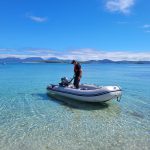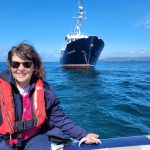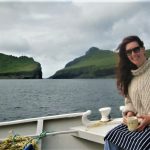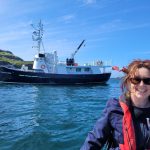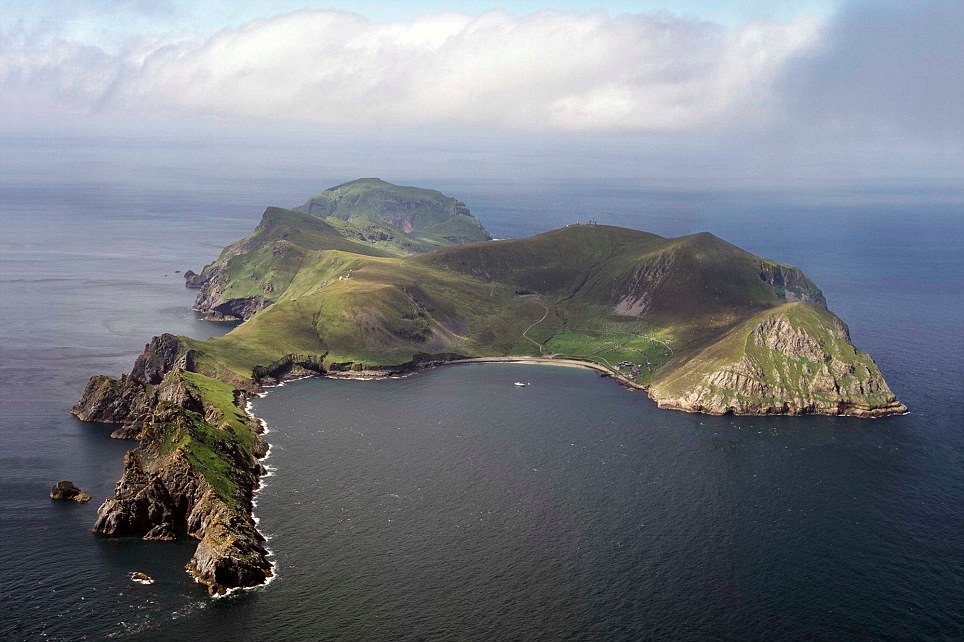
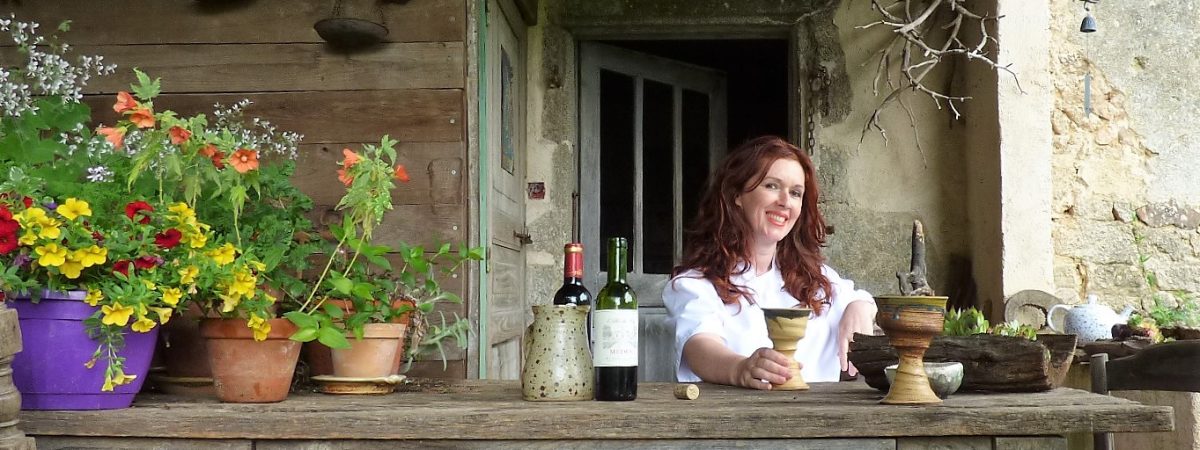
Cruising the Scottish Islands

Handa and Loch Eribol were covered in fat red arrows when Peter, Jill and I looked at the weather app on Tuesday night.

‘Well, we could get there’ said Peter… ‘and very quickly!’ I added. There was a short silence before Peter pronounced gravely, ‘but, we’d never get back!’

It’s July in Scotland so you might think that sailing up along the west coast would not be too much trouble. However, the weather is whimsical in the British Isles. One of the deals that you have to make when you step on to a boat, of any worth, is that you go where the sea and the sky want to take you. The crew were all concerned about how disappointed the passengers might be but they have all sailed with us before and understand that nothing can be done about oncoming storms. Peter comes up with  a plan to head south, avoid the worst of the weather and take in the whiskey Isles, the whirpool of correyvreckan, puffins and maybe some islands that we hadn’t been to before.

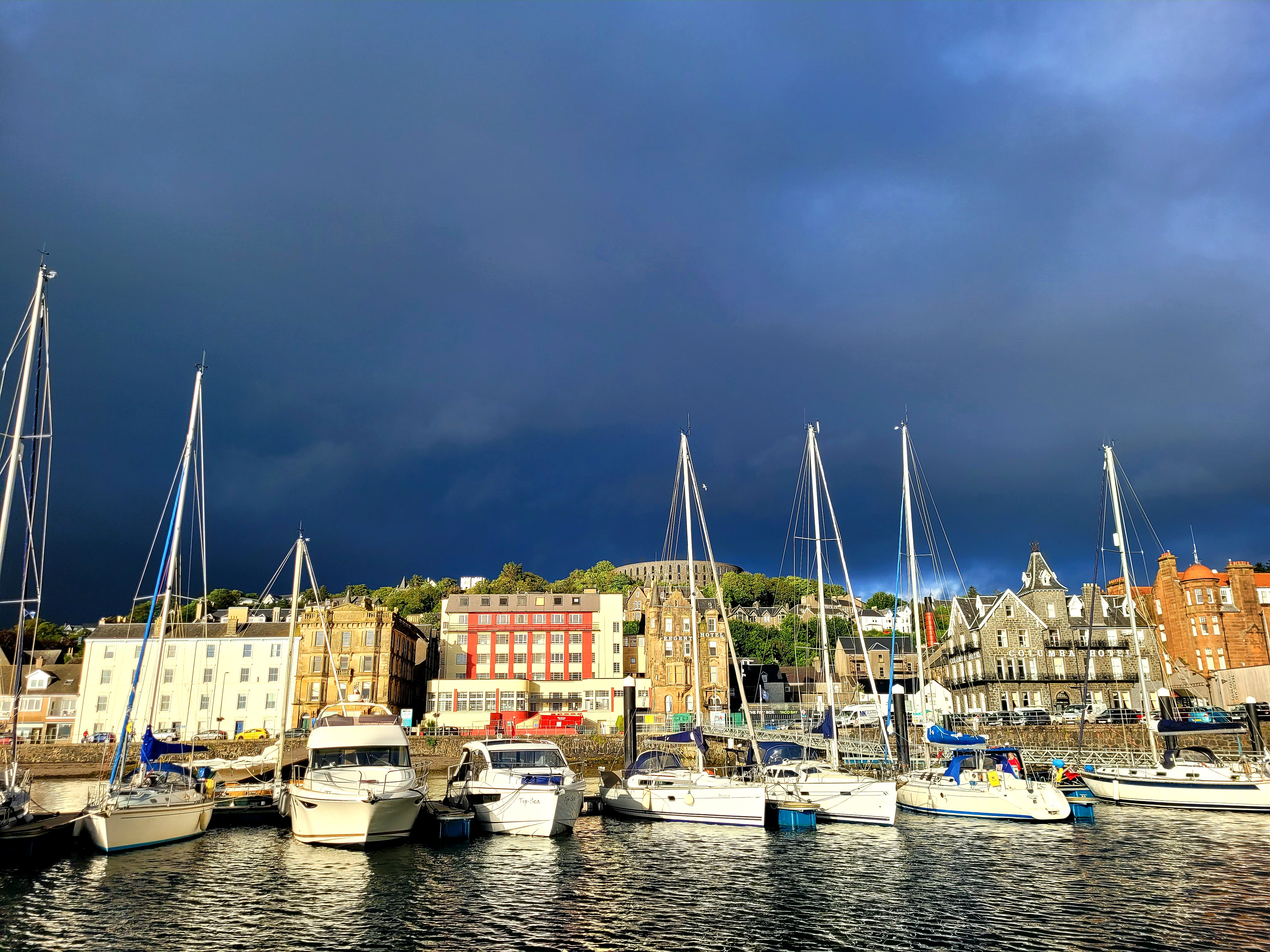
The next day the passengers arrive, quite literally, in dribs and drabs. The rain has begun and the wind is rattling through the halyards of the yachts and pinning us onto the pontoon. Michael and Pam are stuck on rail replacement buses and running very late due to the extreme conditions. Peter, our skipper, decides that it is best to alleviate the pressure and to stay alongside for that night. The alarming weather predictions are now south westerly 40mph and everyone agrees with the plan as none of us wants to sail in to the eye of a storm. Gales are fun for a few hours but their excitement quickly wears off. It is a holiday after all!. We have dinner alongside and take photo’s of the gorgeous sky over Oban caused by the low pressure.
Thursday 7th July

We leave Oban at 9.00am and head along the sound of Kerrera towards the correyvreckan whirlpool. The skipper says that it is best seen on a flood tide but we are to go past it at slack water. The whirlpool is created by the underwater features of a deep hole and a basalt pinnacle that rises from 70m to 29m at it’s rounded top. When the flood tide runs in between the islands of Jura and Scarba it creates standing waves and one of the largest maelstroms in the world. A tenth century Irish King wrote that the sea here

‘whirls around like moulding compasses, each of them taking the place of the other, like the paddles of a millwheel, until they are sucked into the depths so that the cauldron remains with its mouth wide open’.

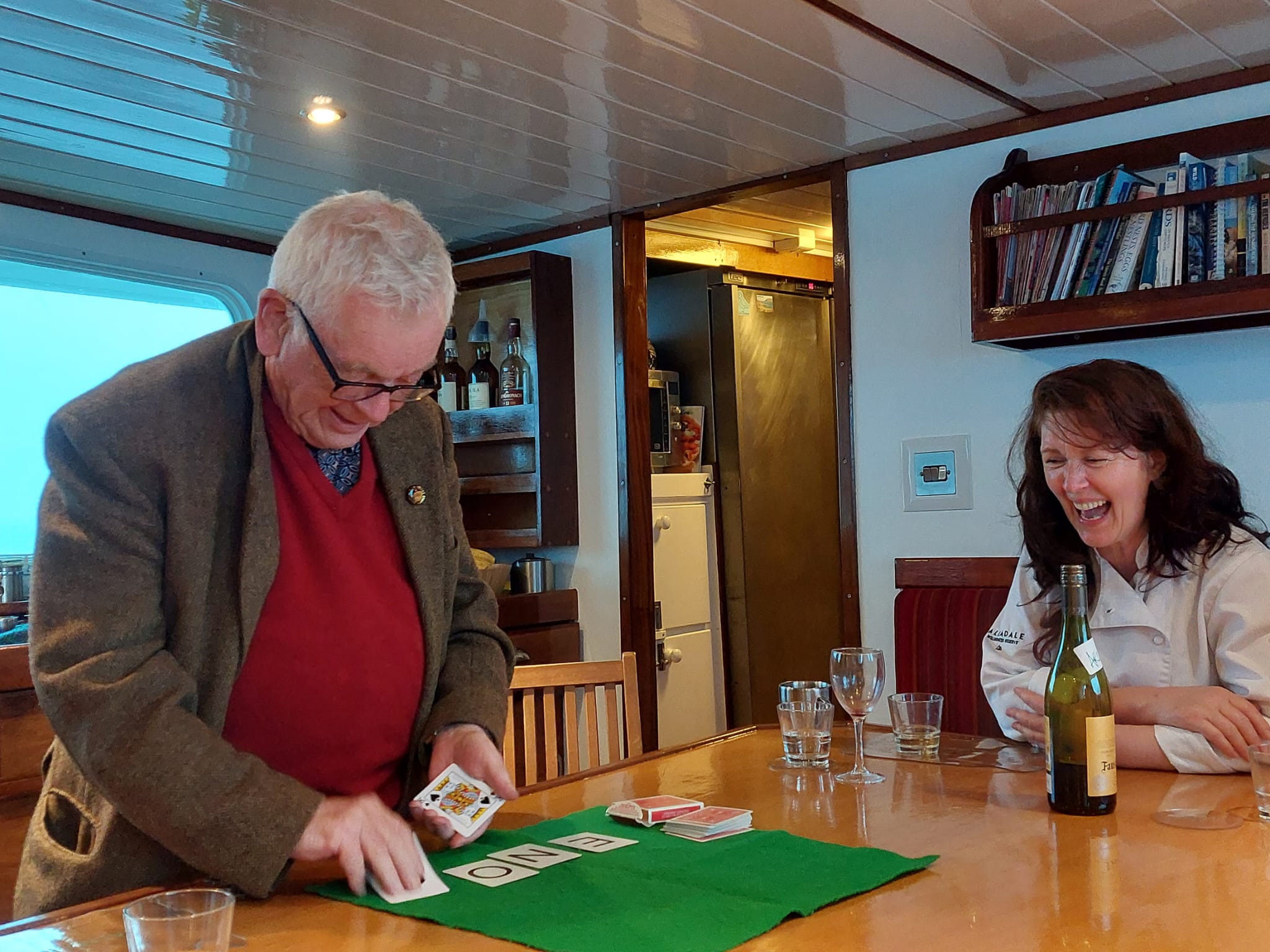
This morning the sea was like a mill pond and although I was slightly disappointed I thought that maybe it was a good sign. There is a cailleach who is supposed to inhabit these waters and hopefully she is allowing us a safe passage and a calm onward journey. We arrive at Tayvalich after lunch and all go ashore for a leg stretch and coffee at the excellent little café. It is such a pretty place with sculpture trails and art studios. Jill and I have time for spot of beach combing and collect seaglass along the shoreline. Back aboard for dinner and the passengers are treated to Mediterranean salmon parcels with homemade spicy seaweed chutney followed by an after dinner magic show. Archie has been sailing with Northern Light Charters since 2002. I sailed with him in 2015 and was always delighted by his slight of hand. I decide that I will change my seat every evening so that I can try to gauge how he does his tricks (if I might call them that?). Despite my cunning tactics I still have absolutely no ideas. I continue the cruise wary of saying ‘flibberdy gibbit gorgonzola’ in case a bowline shortens by half or a playing card turns up in an orange!.
Friday 8th July

We are away from Tayvalich at 9.00am.  It has come to light (!) that there is a more knowledgeable pharologist than me onboard. Ruth has sailed on Hjalmar on a lighthouse viewing cruise back in 2019. Although I try desperately to out lighthouse her (Pembroke head on the Falklands?) I have to concede that her erudition about all of the beacons of the sea is utterly comprehensive. She even knows about SPLATS!. We grin like lunatics as we sail past Skervuile which she tells me is a Stephenson lighthouse. Hjalmar arrives at Jura just after 11am and our passengers disembark for a few hours ashore. Everyone is back aboard for a lunch and I serve pan fried mackerel, salads and homemade goats cheese bread. I thought the bread was quite appropriate as Jura is famous for it’s wild goats who, some think, made it ashore from the Armada fleet. We up anchor at 3pm and head over to glorious Gigha where we settle in for the evening.

Saturday 9th July

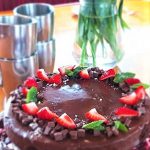
Passengers wake to the smell of freshly baked pastries. The sun is shining and the island is so stunning we all want to go ashore. Jill and I organize packed lunches so that everyone has plenty of time to explore the island. It’s my visit to Gigha and I am instantly taken by how beautiful the sea looks as I walk along the pontoon. The seaweed is unfeasibly large and vibrant and the sand a pristine pale gold. I am on a mission to get hold of some of the famous Gigha halibut which is smoked on the island. I walk up to the shop and chat to the owner about how best to serve it and she recommends that I accompany it with pickled samphire. She also tells me that she teaches at the school and shows the children how to pickle the seed pods from wrack. Before heading back to the boat I pick up handfuls of seaweed bladders with the intention of preserving them. Everyone is back aboard for 4pm and Jill picks up the anchor. We all have freshly baked scones, jam and clotted cream en route to Islay home of, amongst other things, one of my favourite gins. Dinner is a pea and mint risotto with scallops and prawns followed by chocolate tart. It has been a fantastic day and I, for one, am very glad we are not battling through snotty weather around the Cape.

Sunday 10th July

Bacon butties for breakfast and a couple of hours ashore on Islay, also known as the ‘Queen of the Hebrides’. I manage to take an hour off for a run into port with Peter. We head for the Botanist visitor centre and arrive at six minutes past ten, it opens a ten, to find Steve propped against a pole sampling whiskey, ‘I’ve had two already’ he says merrily, ‘what a way to start the day!’. It makes me think that I must come back as a passenger, It’s looks like so much fun!.  Peter and I fill the dinghy with merry passengers and try to wiggle it free from the beach. Everyone is giggling as we glide slowly back to the boat…I can hear hiccupping over the sound of the outboard. Safely aboard and somewhat soused, we leave Port Charlotte and turn west towards the Rhinns of Islay. Rhinn is an old Irish word for point or promontory and it is where the word, rind, comes from. It is the outer edge of the most southern of inner Hebrides and has a ferocious little race. We pass another elegant Stephenson lighthouse established in 1825 on the Isle of Orsay and here the sea plunges and rises like a roller coaster. I vaguely wonder whether the term originally comes from sailors as nothing rolls about as much as a boat rounding a coastal headland. Lunch on the hoof as Mark used to call it. I decide on Welsh rarebit, which I am quite good at since moving to Wales. It is not simply cheese on toast it has beer, worcester sauce, eggs and mustard and is just the thing for being on the roll. Jill and I pass it around to passengers sitting out on deck. The two of us walk around with the most ungamely gait at sea, hopefully we don’t walk like that ashore ‘though they do say you can tell a sailor by their walk. We arrive off Oronsay at 3pm and everyone is quite excited as it’s a first for all of us. Mike tells me that St. Columba briefly lived here but, legend has it, that because he could still see Ireland he moved to Iona. According to the vita or Life of Saint Columba written by Adomnán at the end of the seventh century, the monastery on Iona had a number of satellites or daughter houses. The main one was named Hinba, it is not certain that this is the island of Oronsay but, William Watson proposes that Hinba derives from inbe, a Gaelic word meaning ‘incision’. This would fit with the great slice of tidal strand that intermittently attaches Oronsay to Colonsay. Oronsay is home to a 10th or 11th century priory dedicated to Saint Columba and some of our passengers head off to look at it. For some mad reason I take a wrong turn and end up in the heart of the Island where I am followed by a short eared owl. It laughs and makes stunning acrobatic turns as it follows for most of my walk and almost back to the landing beach. The island is full to the brim with bird life, angsty little oyster catchers chatter at me as I intrude on their homes. I hear the haunting call of curlews and see five lapwings near the boathouse. Some of our passengers swim in the crystal clear waters, others are floored by the history of the priory… quite literally in Mike’s case!
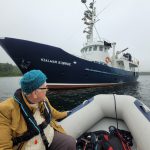
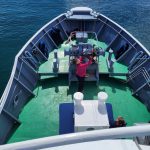
One of the most magical aspects of working aboard Hjalmar has been the sheer amount of knowledge that I have effortlessly acquired. I was very green when I first joined Mark in 2014 and I was always astounded, not only by Marks skill and proficiency as a skipper but, also by his expertise when it came to wildlife and island life. Mark was and, I am sure still is, a consummate enthusiast. Hazel, who has sailed with NLC six times remembers that he and Anna always exuded an intense enjoyment each and every time they saw dolphins or other sea mammals. Hazel said  how rare she thought that was and she is right. You would think that no-one could ever be sick of seeing dolphins but, I have worked with people who are intensely bored by being at sea. Peter, Jill and I still joke about a skipper we knew who when the shout went up of ‘Dolphin!’ would respond dryly with, ‘seen them before’. I think if you don’t grin like a Lulu at the sight of these fabulous creatures then your life has taken a very unfortunate direction. Mark used to say that ‘dolphins love Hjalmar’ and after working on many other boats I realize that it is absolutely true. Maybe it is the shape of the hull, the speed she can reach or all of us grinning idiots hanging two meters above their heads but, they do seem to make a bow charge toward her from miles away. Later in the cruise we are joined by six bottlenose dolphins off Iona and I recognize them as dolphins that I had seen before. I have so many photographs and remember Mark showing me how he could identify them by the rope scars caused by finishing lines. It is this kind of attention to detail, I think, that makes a Northern Light cruise so unique.

Everyone is back aboard for six o’clock, and Peter, Jill and I have a crew attitude adjustment drink in the wheelhouse. There used to be a piece of wood aboard with ‘crew attitude adjustment stick’ written on it in bold black felt tip. I am not sure what happened to the stick but, the drink is still part of the Hjalmar legacy and long may it continue. At dinner we all sample the Gigha smoked halibut, pickled samphire and mackerel pate followed by individual venison wellingtons. I make champ mash as I can see Ireland and have an odd yearning for it. During the night the anchorage develops a lolling swell which keeps Peter and Jill awake but, from my bunk below the waterline I am rocked to sleep like a baby in a crib. There are a few advantages to sleeping in steerage.

Monday 11th July

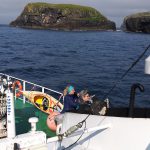
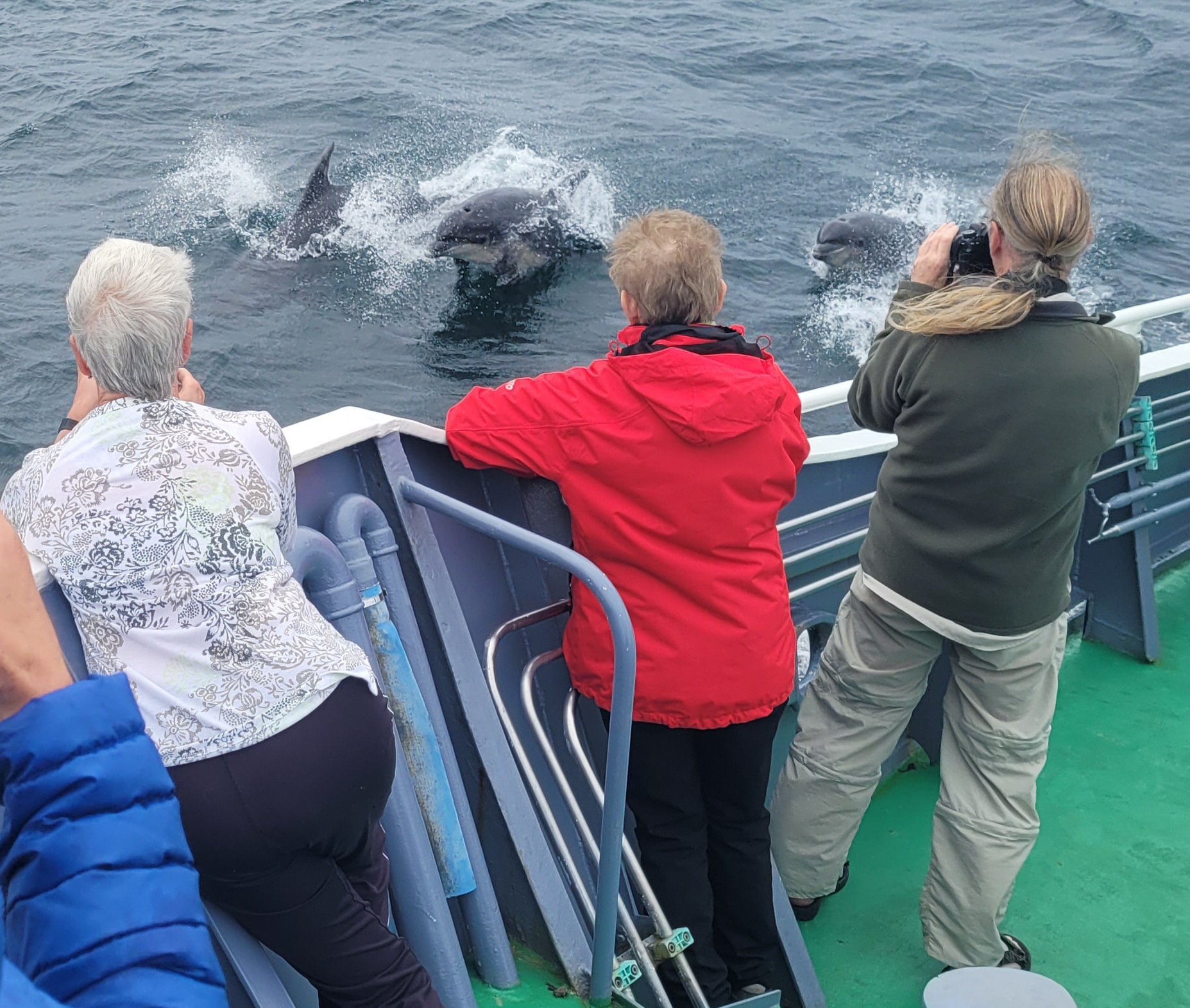
Winch operator, waitress and woman of innumerable talents, Jill, gets us underway at 9am and we roll along the west coast of Colonsay to Iona. None of us had ever been around the west of the island before and seeing as the tide wasn’t quite right for the sound we take the long way round. Jill drops the hook off the north end of the island but, Peter feels it is a bit exposed so we pick it up again and head for Bunessan. We are bimbling along slowly when a bottlenose dolphin joins us. Peter cranks Hjalmar up to dolphin speed and soon we have six playing around in our bow wave. Mike has told me that it is his birthday tomorrow and I wonder what I can get for a man who has spent so much of his life photographing wildlife. The answer, of course, is a photo of him with a dolphin giving him the eye!. I take endless photo’s and 99% of them are of the backs of peoples heads and a wash of grey sea…. but, finally ‘Derek’, as we call him, obliges me with a full on cete smile for the birthday boy.
At Bunessan passengers pop ashore for late afternoon walk. I notice that they seem to have acquired a bit of a nose for sniffing out pubs.

Tuesday 12th July

No tour of the southern islands would be complete without a jolly to Fingal’s cave. Even if you missed being told that it was part of the plan, you would know because at breakfast, every second person is humming the Hebridean overture. Mendelsohn’s association with Staffa is well documented but, Keats also visited the cave and fittingly described it as ‘the cathedral of the sea’. It’s basalt columns inspired the lines

This was architectur’d thus

By the great Oceanus!–

Here his mighty waters play

Hollow organs all the day;

Little did Mendelsohn and Keats know that the caves would go on to arouse and impel another great talent in the form of Steve. We are all treated to a remarkable musical journey via comb and paper as we sail over the northend of the Giant’s Causeway and on to Inch Kenneth. Many of us wept laughing and begged him to stop … but he wouldn’t. It turns out that in the land of bagpipes, the tuneless comb and paper player is most definitely king!

We arrive at Inch Kenneth and there is an opportunity for a walk before we head to Ulva for a sheltered evening anchorage and, amongst other treats, sticky toffee pudding for Mike’s birthday. Jill has organized us all to make dolphin bunting with the aid of her extensive art box. Jill could make an art gallery out of a midden tip. The drying room has become a museum of sea glass and shells. It is because of Jill that the boat always looks shipshape and Bristol fashion and she is a joy to sail with. We chatter on about everything and anything and hope that our galley banter is not too overheard by guests!. Jill once made me laugh so much that I nearly choked to death and as a result could not actually look at her without crying laughing for three days. Crewmates can make a hell of heaven and a heaven of hell and I have been extremely fortunate to have worked with people who are incredibly good at their job and also bloody good fun to work with. I think I will miss the camaraderie even more than the dolphins.
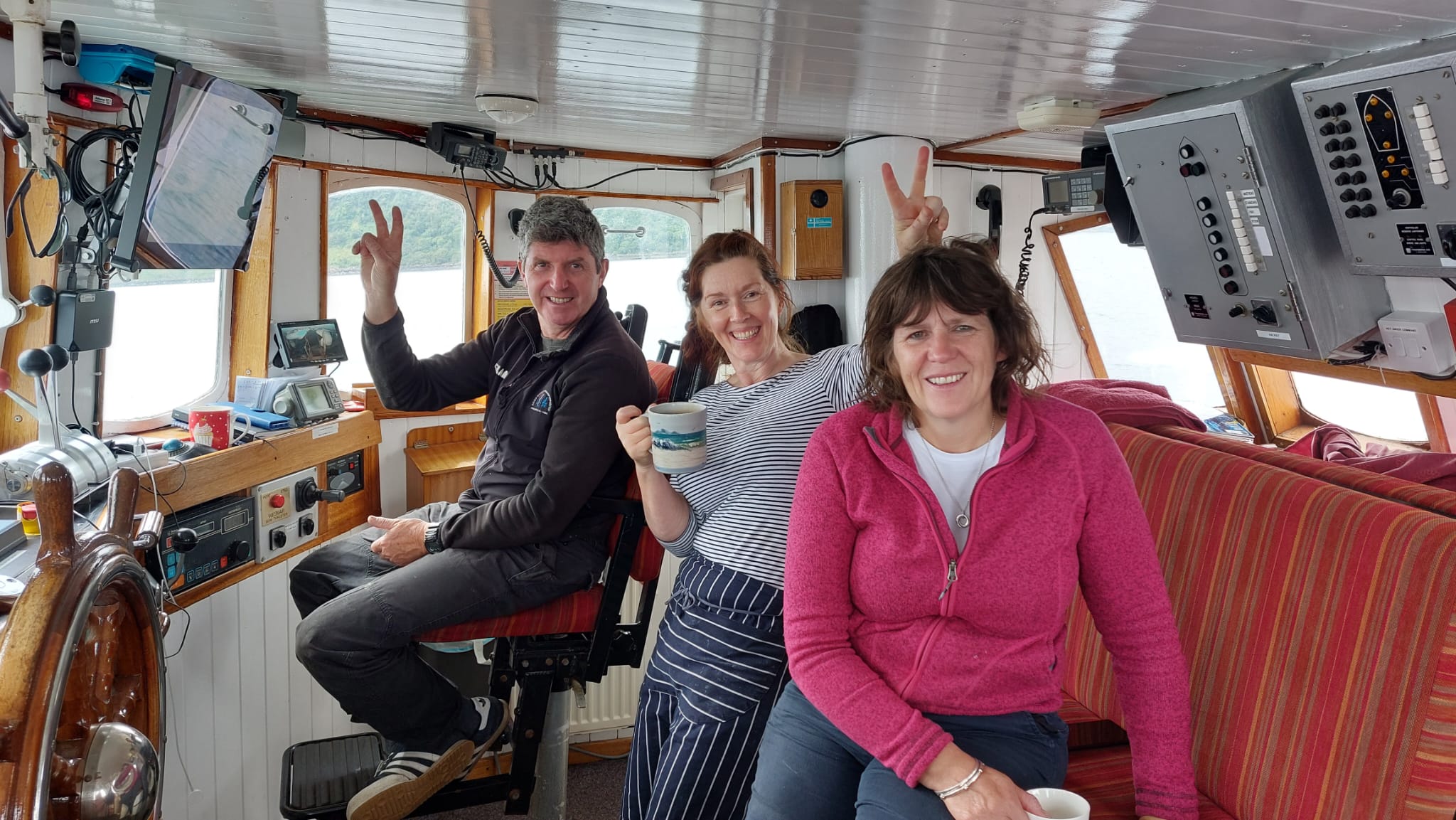
And on that note any final blog would not be complete without mentioning Tim Weir. For anyone who ever sailed with him you will know how exceptional he is and to those of you who didn’t … well, you missed something incredibly special.. like concorde or being part of the EU. I think all the passengers on this trip knew Tim and everyone says ‘Hello!’ and wishes him a happy retirement.

We rounded off another evening with more magic, mirth, mayhem and merriment and I got a kiss for taking the best photo of the birthday boy and Derek the dolphin!

Wednesday 13th July

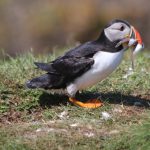
Away after breakfast for the island of Lunga, home to puffins and men with enormous extensions. In the next few weeks the owners are considering closing the island because of the avaian flu which is wreaking havoc amongst the bird population. The Farne islands have already been shut and more sanctions are to be put in place. It is very sad and hopefully the puffins will avoid it as they will be off soon to spend winter rafting at sea. On a positive note I saw many more birds with sandeels in their beaks than I had seen in previous years.

Puffins go to sea for winter, they no longer have their distinctive plumage, they moult and lose their wing feathers which makes them flightless and vulnerable to weather and food supplies. Some vessels have reported huge rafts of puffins offshore but, it is thought that they are  largely solitary in winter and that they lead eremitic existences. Research and tagging has shown that some birds make one to three month trips in to the Atlantic and do not just stay in the north sea as was previously thought. Puffins it turns out are very like boat crew in that they are incredibly sociable and always on show in summer but, a bit of an enigma in winter!
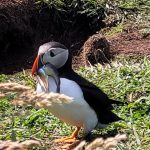
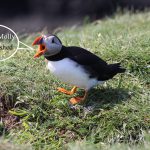
Back aboard and we pootle around the north of Mull to Tobermory. Jill and I effortlessly pick up the buoy, which is a pleasant surprise although the sodden ropes still bring up a harvest of seaweed onto the foredeck. I consider serving some for dinner but decide against it. Fish pie for supper with a haggis pastilla as an entre.

Thursday 14th July

A few hours ashore in Tob is almost an obligatory ending for a charter. Tob is the only place that I have ever seen otters in the wild. Last year there was one in the carpark eating a crab. The closest I have ever got to an Iolaire Suile na Grein was whilst drinking a coffee on the aft deck in Tob. The sky became very dark and when I looked up the ‘eagle with the sunlit eye’ was flying like a barn door ten meters above my head. It was white tails that led me to want the job aboard Hjalmar. I met Mark and Anna in Hastings in 2014 and after being offered the job Mark said very definitely, ‘you will see sea eagles’. I did and I still do, I was obsessed by them at that time. I had been to Iceland and Norway and never caught a glimpse. Since 2014 I have been incredibly lucky to see them so often. What I didn’t understand back then was just how much working aboard Hjalmar would open my eyes to everything else that the sea along the west coast had to offer. All the information I have learnt aboard has, undoubtedly, led me to going to Aberystwyth University. I hope to go on to read for a masters in Island Studies on Orkney in 2024. I feel incredibly fortunate to have been a small part of this boats history and to have continued to work aboard in the same spirit which Mark instigated so many years ago. I feel very sad to be leaving.

After lunch we steam along the sound of Mull and anchor off Kerrera. It’s an island that I have sailed past almost every summer for the past eight years but, one which I have never set foot on. I walk up to the iconic monument at the north of the island and consider how many places I have missed because I have been too busy to get underway or depart. My future will, hopefully, include the chance to spend more time on these spectacular islands instead of being moored off them. I sincerely hope that when I am ashore I will still see Hjalmar, her crew and passengers. I asked our eight guests how many times they have sailed on HB and totaled it up. Between us all we have knotted up over 100 cruises. That is not to say that we are an elitist club, it is more that, like anything really good in life, it just keeps getting better the more you do it.

I look forward to returning as a passenger.
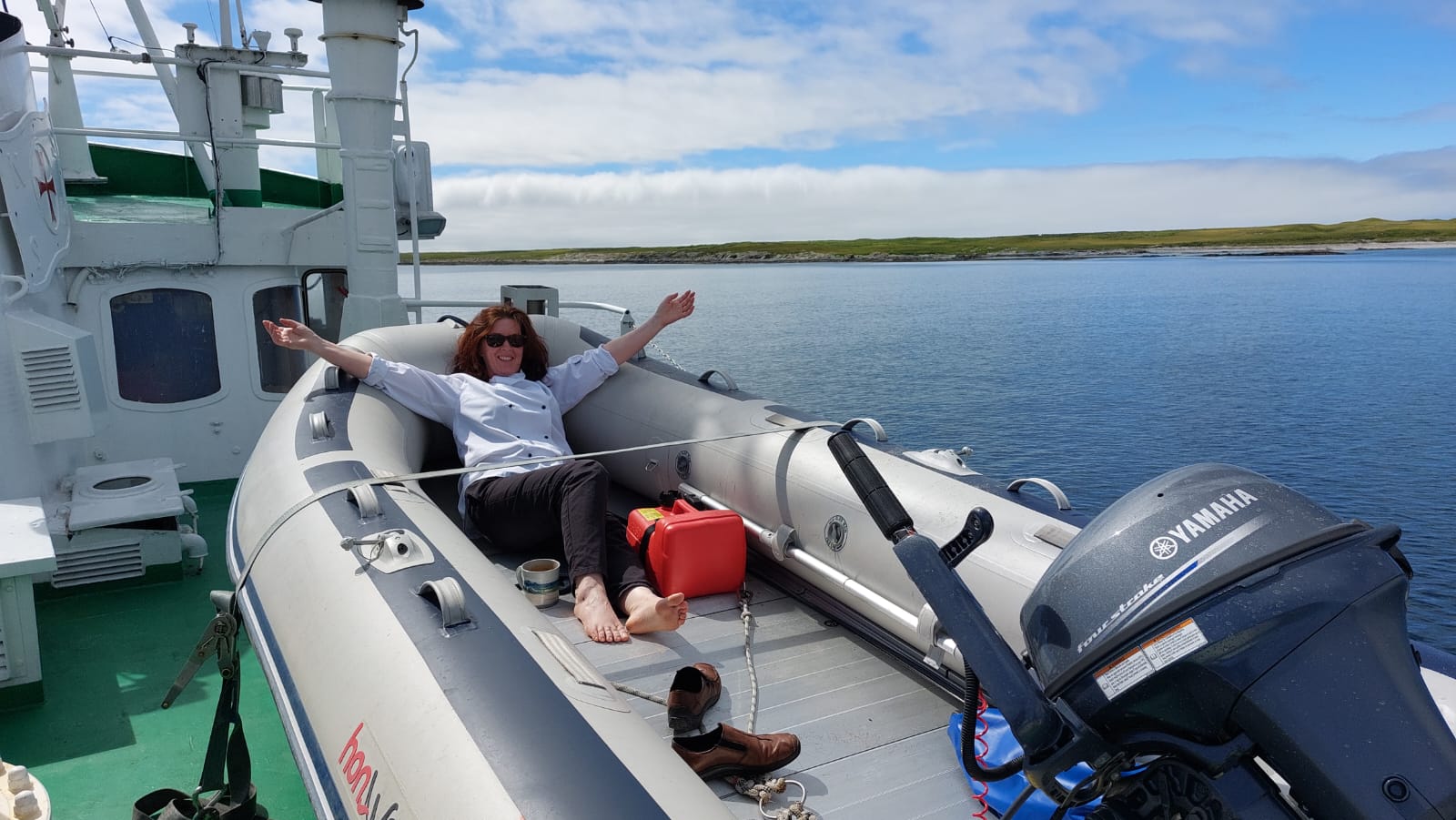
Thank you

Can I just give an ocean of thanks to all the crew I have sailed with over the years. To the skippers; Mark, Tim, Chris and Peter thanks for keeping me safe. To my bosun’s; Lulu, Anna, Sarah and Jill thanks for keeping me laughing. Thanks to Michelle for always making sure that I am abreast of the weird and wonderful dietary requirements (which I am sure some folk write when they have been drinking!!!) Despite the absurdity of victualling a 25m boat with enough food for 16 over 10 days it has, no doubt, made me a better chef. To all the passengers can I say a huge thank you for sharing your holidays with me. It has been an absolute, wonderfully exhausting, pleasure.

All the best to David and the new team. I cannot think of anything better than being part of Hjalmar’s ongoing legacy.
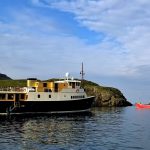
Cruising around Mull with Majestic

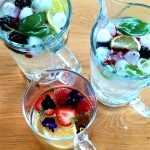
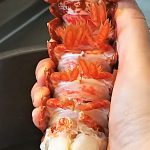
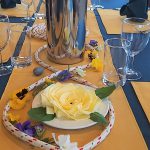
I was working for the Salvesson’s at the Lary Estate when I took a call from Mike at Majestic.  “Molly where are you?” It turned out that on the first cruise of the year chef Will had missed his footing, fallen and broken his leg in a few places. It was Wednesday and, luckily for all of us, my contract finished on Friday so I said yes and began planning my journey from Balmoral to Oban. I left Ballater at 7am on Friday arriving in Oban at 8pm by the last train. I found the galley full to the brim of dry goods, vivid and varied fresh vegetables, smoked meats, pates, wonderful cheeses and a box of lobster. Usually chefs order supplies after some very precise menu planning but we had no time. I asked head chef Gordon to repeat the previous chefs orders and I decided to go with a ready steady cook approach. This isn’t as daunting as it sounds when you have a fully stocked floating delicatessen. There was nothing I was short of and a few things that I had more than enough of. Passengers from that week will remember the pansies! Somehow in the ordering someone had not realised that decorative flowers came in packs of four and so had ordered 24 boxes instead of six. It became a standing joke amongst crew and passengers as the pansies featured in and on everything but, I do hate waste especially onboard.

I had met Captain Neil briefly in 2019 when working for another Hebridean cruising company. A storm had pinned us all to the pier in Casteltown Bay and so we had two days sat alongside waiting for a gap in the weather. Neil had invited myself and skipper Tim aboard the Glen Shiel, Majestics newest and most luxurious vessel. We were keen to have a look around and I remember being incredibly envious of the galley, which was palatial in terms of little ships. It was well equipped and sparklingly clean with a porthole above the sink. I imagined myself peeling vegetables whilst gazing at gannets and herring gulls following us around the islands. We were both extremely envious of the wheelhouse, crew dining area and crew accommodation which all felt luxurious. I had applied to work for Majestic later that year but had been given a job working for Belmond in France so it was a wonderful stroke of luck for me to have a few weeks aboard after what had been a crazy year.
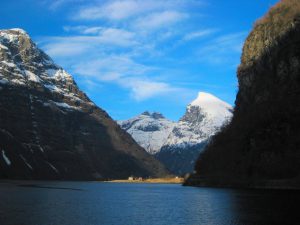
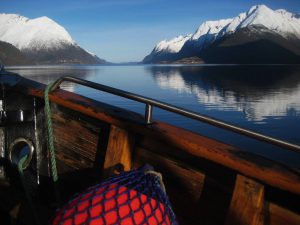
Glen Shiel usually accommodates 12 passengers but because of covid restrictions we had eight. I quickly did the maths and this worked out at three boxes of pansies per passenger!. On Saturday with everyone aboard, socially distanced and having been fully briefed on covid awareness we set off around Mull. The forecast wasn’t looking too bad and Neil decided to head straight out to the west and clockwise around Mull. The idea being to first stop at Iona and hopefully land at Fingal’s cave on Staffa. As we pootled past Carsaig I chatted to passengers. I like to get a feel of what sort of food people are hoping to enjoy on the trip and confirm any special dietary requirements. These are sent to me beforehand but things change so I like to make sure. I discovered that one of our passengers was a geologist so I tried to pick his brains about the stunning geology of the south coast of Mull.

It’s lovely when you step aboard and settle straight in with a crew and even better when the guests do the same thing. I think that from the first night we all felt that we had been aboard for years. I had been slightly concerned that we  had acclaimed cruising aficionado Dave “Shipmonk” Monk onboard. Usually when journalists are aboard I would have menu planned for weeks in advance but the ‘font of knowledge for all things that float’ could not have been more lovely. We spent the week chatting about ships and the world of cruising. Dave is always up to date and seems to have a good deal of insider information. I was delighted to learn, from him, that Swan Hellenic, who I had worked for many years ago, was set to build a new ship.

As we came in to the sound of Iona dolphins left where they had been playing with the CalMac ferry and escorted us to our anchorage. It was a beautiful blue day and I took the opportunity to head ashore with the passengers as it was years since I’d had been to this gorgeous Island. I walked out to the Abbey and lay down in the grounds to sketch. After a while I noticed a white tailed sea eagle circling above me. This majestic raptor was the reason I first came to the west coast of Scotland (although my grandmother’s family are Tait’s from Aberdeen) I had read William Horwood’s The Stonor Eagles when I was 14 years old and I was obsessed by the birds from there on in. In Scots Gaelic they have many names including Iolaire Ghlas, Iolaire Chladaich and my favourite Iolaire suil na greine; the eagle with the sunlit eye. The Anglo Saxon name for them is Erne which means soarer and that is just what it was doing directly above my head.  Dolphins and the largest bird in the United Kingdom on the first day!.

I decided to learn a smattering of Gaelic on the trip. Shortly before coming up to Scotland in August I had been accepted to read English at Aberystwyth University and I wanted to incorporate my interest in the six Celtic languages in to my degree. My first words were blasta meaning tasty and snog meaning nice. This seemed quite easy!.

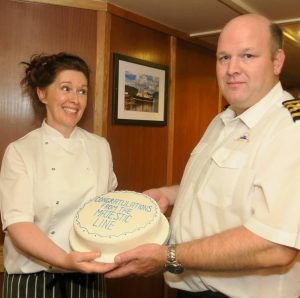
Chef Moll and Captain congratulate passengers on birthdays and anniversaries

I possibly shouldn’t say this just in case Majestic don’t want to pay me in the future but the cruise did not feel like work. It was more like having friends to stay and having a marvellous time being a top host. Yes there are a great many stresses to cooking, the hours are long and budgets can be tight but, as a chef, when you are allowed to buy the best ingredients and you have a team who supports you then it can be one of the most rewarding vocations that there is. I quickly got used to the idiosyncrasies of the boats movements and had room to spread out in the galley. Glen Shiel is an amazingly sturdy little boat and rolled very little in the recalcitrant Island swell. Nothing got smashed which is a testament to myself Jaimie and Dave’s forward thinking and stowage of all things that roll and wander. I even found the perfect place to prove my bread; Dave’s battery room. If it needed, I get it a little extra burst of heat from the engine room. Don’t knock it back ‘til you’ve tried it.

We pootled around Mull mostly in good weather though it became a bit murky near Calgary. It was such a splendid week Neil made me laugh with his turns of phrase and unique wit. Dave recited poetry in the galley when the stress of the pansies got to me. Jamie kept me in tea which, arguably, is the most important job aboard and along the lines of naval standing orders. The passengers were such an affable and erudite lot and two couples booked for 2021 before leaving the cruise.

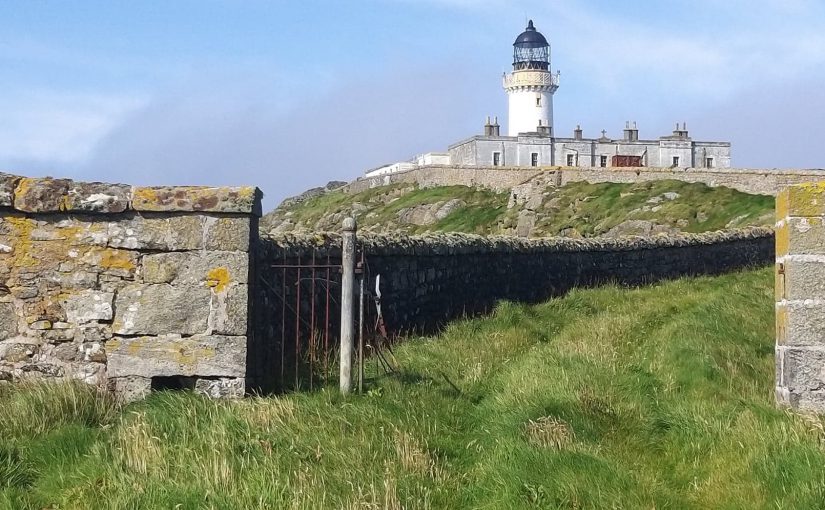
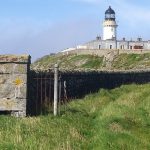
The following week was a change of crew and lots of singles which made for a very different cruise. Skipper Peter’s wheelhouse was full of solo travellers who wanted to learn as much as possible about flora, fauna and seascapes. My right hand on this trip was Jill; Peter’s partner. Jill added colour and artistry to everything she touched. She had taught cookery and it was lovely to try out her ideas as she is, obviously, a very accomplished cook in her own right. She introduced me to avocado cheesecake and a whole new world of cake decoration that I did not know existed. It still brings tears to my eyes thinking about it. Dave my poetic engineer was replaced by Chris, one of the most upbeat people I have ever met so, although the weather looked filthy for most of the week and there seemed little chance that we would get around Skye the atmosphere onboard was sunny. We managed to get to Muck, which was a first for me, I had anchored off many times but had never managed to get ashore. Other highlights were Canna, one of my favourite places on the planet, and seeing three White tailed Sea Eagles on an islet in the sound of Mull. On the final day I was lucky enough to get to Lismore and meet the owners of the Lighthouse. Lismore lighthouse was built in 1833 by Robert Stevenson, it is situated on Eilean Musdile which is attached to Lismore island by a tiny bridge. I have sailed past it possibly hundreds of times so it was a real treat to set foot ashore and to stand still and watch the vessels go by for a change. The next morning we headed back to Oban and were all on the bridge to witness the most stunning sunrise behind the lighthouse.

A big thank you to the crew and all at Majestic for a sporsail fortnight and thanks to all the passengers who so appreciated being cooked for after nearly six months of lock down. Many of you have kept in touch and I do hope that we will meet again in 2021.

Thank you for some of the best memories of 2020. Those few weeks made it all worth while.

For more information about Majestic Line click the link.

The Wonders of Seaweed

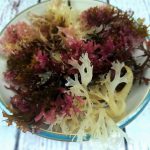
I first cooked seaweed for myself on a boat off St Kilda. We’d had an unusual spate of warm, dry weather and my vegetable cupboard had turned yellow despite my best efforts. On a run ashore I had spotted the fine chestnut tangles of sea spaghetti floating out of the crystal clean Atlantic waters, I cut some and headed back to the boat to see what the passengers would make of it. They were a game lot and we all crammed in to my tiny galley to watch as the strands turned to a vivid green when placed in the hot water. As a child seaweed had figured highly on the Scanlon dining table. My father would pick carrageen and dulse and make potato cakes for Sunday breakfast. Other exiled Irish relatives who found themselves in Wales would cook up a sludge of laverbread which always looked wholly inedible and was served with roll mop herrings, another bizarre family favourite. My Kildan supper was sautéed in garlic butter and oil and served with lamb. It had nothing of the foul smelling slime that I remembered. I watched giggling passengers pass around the bowl of and a pair of scissors . I wanted to learn more so I bought books, went on foraging courses and strolled on the beach, sketching, picking and later cooking weeds. I was hooked.

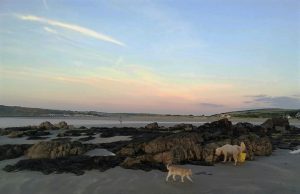
Erik and Mavis on the beach at Poppit sands

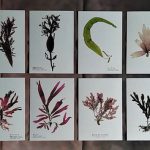
Seaweed is Algae. It’s a generic term, like seagulls, and it falls in to three main categories; red, brown and green. There are no poisonous seaweeds, some don’t taste very pleasant but, they wont kill you and for that reason it is the perfect way to get in to wild food foraging.

For thousands of years seaweed has been part of our diet. There are records dating back to the 1st century BC which mention sargassum being used to treat thyroid problems. In the Tang Dynasty the Chinese were successfully treating goitres by using the iodine rich thyroids of sheep which they made in to pills, potions and powders. In the western world outlying Islands helped support themselves with kelp harvests which were exported to the mainland for use in agriculture. It is only quite recently that seaweed fell out of favour in the west. In the early 20th century many inland countries were developing diseases which were associated with poorly functioning thyroid. Over farmed soil deficient in iodine led to goitres. In America in the 1920’s it was common to wear a bottle of iodine around your neck to protect you. The problem became so bad that Americans began to iodise salt which helped to prevent diseases within problem areas like the Mid West which was aptly named the “Goitre belt” . In the midlands of England you might suffer from a “Derbyshire Neck” whilst in Germany you might wear jewellery called a Kropfband which was used to cover the scars left by surgery. Japan and China were virtually immune to all this, and I had to double check this figure, but, forty to fifty percent of their diet is from seaweed. Remarkably the figures from the WHO, advise that you need 150 micrograms of Iodine a day, show that the average Korean diet contains 2,000 % more than that a day!.

Whilst we are on the subject of salt, did you know that the pouring salt (ubiquitous on all dinning tables and used to kill slugs) is salt with all the goodness taken out?. Salt in its natural form is made up of minerals. These are striped out during processing and then sold as supplements. This is very clever business to deconstruct food and then sell it back to us as necessary to health. This is what happened with iodine until the health costs were taken in to account and salt was iodised. A process that has continued in the West. As I always say if you want to substantially help your body use good salt!

Back to seaweed and what it’s made up of. It might surprise you to learn that it has more vitamin C than an orange of equivalent digestible weight. It is packed with calcium (astonishingly ten times as much as milk) and it has lots of good old fibre. It is the only vegetable to contain B vitamins, although there is still some argument as to whether we have the ability to digest them in their seaweedy form. And where do you think fishes get their Omega 3? Seaweed! It’s also home of vitamins; A, B’s C D E and K and minerals; Iodine, Iron, Copper, Zinc, Potassium, Manganese. Do you remember Dr Gillian McKeith from the 80’s (she purported to be a Doctor but no-one know what of) well her mantra included telling us all the we needed to arrange bowel movements after every meal and to eat spirulina. It turns out that she was right about the Spirulina!. But, you don’t need to buy foul smelling fish food in plastic tubs. Seaweed is a tasty addition to any diet and fun to find.

Since the beginning of this century the seaweed industry in the west has developed significantly. Virtually every where that I travel I come across another group of algae fans or seafood chefs who are playing around with recipes to incorporate seaweeds lovely umami taste. If you don’t have access to beach there is the Pembrokeshire beach food company, Mara in Scotland, The Cornish Seaweed Company and Seaman in Denmmark (who just won best cocktail of the year award for his Cointreau seaweed combo). All of these businesses offer all manner of dried products,  they are beautifully packaged and vary in price but they are a great place to begin by adding a sprinkle of dried flakes before going headlong into Dashi making or steeping your own gin

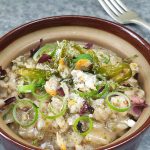
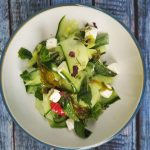
Since being stuck in Wales for lockdown I have used a lot of seaweed in my cooking. I think it began because I would rather walk on the beach than stand in the queue at Tesco’s. I have added dried sea lettuce to salt and crackers. I made a very lovely take on the welsh favourite, laverbread, by making a stock and adding it, along with cockles and bacon to a risotto. I made a gritty seabead noodle dish, (seabeads are a nightmare to get the sand out of) I added a handful of  dulse flakes to new potatoes and butter. I pickled sea lettuce and used it to brighten up some crab cakes. It is not salty by the way. That is the most frequent question that I am asked and no it’s not salty.

My personal favourite usage for bladderwrack, kelp et al is a bath. For some people this may sound wonderful and for others yukky but, give it a go anyway. A lot of wonderfully expensive creams use seaweed as it produces a substance more like a serum than a greasy film.  I begin by collecting half a bucket of brown weed, any type will do but a mixture is nice. If I am not using that day I pop it in to some cold water at home. It will keep for two or three days. Draw a bath of hot water and add the weed, if you are brave, or sieve the water through a teatowel and add that if you don’t fancy kelp rubbing around your legs. Personally, it gives me a giggle but I understand that’s not for everyone. When I first heard about baths I was sceptical. I like science I am not one to believe in things unless I have a good grounding in fact so despite some fairly instant benefits of my bath I set about learning about how lying in weed listening to Melvyn Bragg for an hour could have an beneficial affect on me.

In the most simple terms your skin is made up of three sections the Hypodermis, Dermis and the Epidermis (think of that as upperdermis) They differ a lot in function. The Hypodermis is your fat layer, the buffer between your delicate organs and the outside world. The Dermis is home to blood capillaries and forms the ‘true skin’ containing sweat glands, hair follicles and sebaceous glands etc. It carries nutrients and supports the epidermis. It enables the skin to thrive. It is also the layer which transports whatever you put on to your skin around the body for example a contraceptive patch, Nicotine patch or HRT. The epidermis is made up of 4 or 5 layers depending on the part of the body. It grows from the dermis where it is fed with nutrients and each layer is pushed away with the growth of the next. By the time the outer layer gets to the top it’s quiet old in skin terms. These layers provide a barrier to infection and they regulates the water lost through the skin. If you imagine them like bricks and mortar, the mortar is were things seep through in to the lower layers. That outer layer called the stratum corneum is dying and dry and it should be as damp skin would be perfect for harbouring all sorts of bacteria. It has lost its ability to store calcium as well as host of other deficiencies but it is really useful as it protects they layers beneath it. This is why acid peels and scrubs work to make your skin look a bit brighter. They strip layers of skin. Such a strange thing to do when you think about it but there we are. The Stratum Corneum means horny layer in Greek by the way I am not sure which horny they mean. Cell turnover takes about 30 days in young adults and 45 to 50 days when you get older which explains why you don’t heal as quickly later life.

So there you are lying in some kelp and all those lovely nutrients are flowing in to your skin. They pop in to the blood stream and off they go. The skin loves calcium it helps form Keratinocytes which in turn forms the protein keratin responsible for hair, nails and lovely skin. It is why Cleopatra was bathing in milk two thousand years ago. Calcium works best with Vitamin B and C and Zinc which is  abundant in seaweed. You have probably seen shampoos telling you that they contain Keratin but after looking in to it I would seriously doubt that washing it on and off your hair would make the slightest difference.  Keratinocytes need feeding and shampooing your hair with something that smells of apples will not make up for the harshness of the detergent that is its main constituent.

It has been fascinating for me to read up about the thyroid and oronary vascular disease (CVD). I had not realised what an important role the thyroid played in regulating the bodies metabolic rate, controlling the heart, muscle and digestive function as well as brain function and bone development. After two baths I felt less achey and, remarkably, some horrid little lumps on my leg had gone. Most chefs have varicose veins to some extent and I was shocked by how quickly they disappeared, the blueness of thread veins is also markedly improved. My hair and skin is lovely and I am told that I don’t smell of seaweed which is probably a good thing.

Seaweed does have some dangers though. It is not suitable for people who are already taking heparin, a blood thinning agent or warfarin an anti coagulant. Seaweed acts in the same way and so should be avoided for people who take medication after having a heart attack.

The other thing I should mention is use the tiniest bit of shampoo in the bath if you must. It will foam up like the sea on a rough day because the water is so soft.

The recipe below is for Dashi which is a great stock taste of Umami to add to your food. If you wish to make a vegan version leave out the Bonito flakes.

Feel free to email me if you have any questions or follow me on Facebook for recipes and news.

Footnote

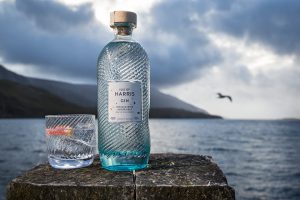
If you don’t like the sound of any of this maybe you could just try drinking isle of Harris Gin which is flavoured with sugar kelp I am not saying that It has any beneficial affects but if you drink enough of it might just give you the courage to have a seaweed bath!.

To make your own Dashi

A Japanese stock that will add goodness and flavour to soups and sauces

Take 10 grams wet weight of Kelp and add to 500mls of water and bring to the boil. Take off the heat and leave to steep.

Add 8 grams of Bonito Flakes and bring to the boil again.

Take of the heat as soon as it boils.

Strain  through a teatowel and bottle.


Cooking afloat around the Hebrides

I was lucky enough to spend the past ten days cooking aboard Hjalmar Bjorge.

Learn more about life in the restaurant with the best views in Scotland here Moll’s Outer Isles Blog

For more information contact www.northernlight-uk.com


Selection Voyage for The Williams II

Antarctica was discovered by a ship from Blyth, Northumberland…

In April I will be joining The Williams II on its training and selection voyage around Britain. I will pick up the ketch in Weymouth and sail with her to Milford Haven. I am so proud to be involved in such an important Charity. Here’s some information about this fantastic project.

Almost 200 years ago Antarctica was discovered from a ship built in the small North East town of Blyth, Northumberland.

The Williams was built and owned by a Captain William Smith a man born and raised in Blyth. On the anniversary of this British achievement in 2019 it is The Williams Expedition aim to build a modern replica of the Williams in Blyth to recreate the original expedition with a local crew.

The expedition aims to showcase the North Easts talent, engineering and technology on a world stage and in conjunction with Newcastle University undertake meaningful marine science.

We have now completed the core refit of Williams II in preparation for  after three years of dedicated work by our trainees and volunteers. Over the 2018 summer, we have also trained a core group of volunteers with specialist senior skills to operate efficiently onboard the vessel while training and supporting inexperienced crew.

The Williams II is a 36m gaffed riffed ketch, which was built of oak with pine decking and masts in 1914 in Denmark and at 24m on deck, with a 2.7m draft she is almost exactly the same dimensions as the original Williams built 100 years earlier in Blyth.

Sushi with Al Matias in Stanley

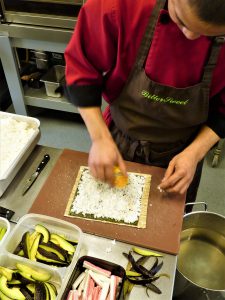
I’ve been helping out a Bittersweet in Stanley.  Firstly I began on the Tapas Menu whilst Head Chef Al worked flat out on Pizzas. We soon began to talk about our favourite food, countries we wanted to visit and the wonders of local produce. All this lead to us planning a new menu for the restaurant. The owner Julie was delighted with our ideas and gave us carte blanche. I reinvented the brunch menu to include freshly made hollandaise with all the usual trimmings like smoked salmon, bagels, spinach and poached ggs. Al worked on some gorgeous toothfish recipes for lunch. After a few weeks we formulated the idea of a sushi night. I was mad keen to learn all Al’s secrets as he had worked on several prestigious cruise ships as Sushi Chef.

Al Matias Sushi Chef

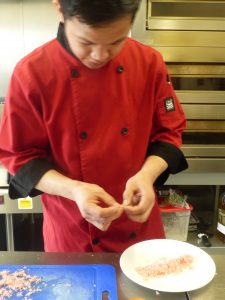
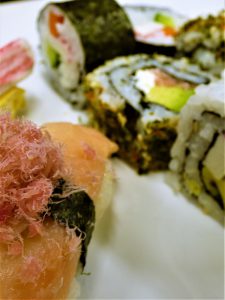
He set about making Furikake known as the salt and pepper of Japan. He spent a week drying fish and picking it apart into tiny flakes. We added toasted sesame seeds, seaweed, salt and sugar. It is truly gorgeous when you make it yourself and a superb addition to most dishes.

Al carefully separates the strands of dried fish. Part of the intense process of making your own Furikake

We all had a fabulous evening although it was such hard work making all the rolls, homemade wasabi, pickles and garnish. Proud to say that I think it was one of the events that we held at Bittersweet that lead us to being awarded the Taste of the Falklands Award.

I adored working with Julie, Al. Michelle and Baron. Thank you so much. I do hope our paths cross again on our culinary wanderings.

Look out for some of the recipes on my page coming in March.

Sushi

Darwin House, Falkland Islands

Well here I am on the Falkland Islands. After four months of interviews, work permits and medicals I have finally arrived via RAF Brize Norton. I have  discovered some incredibly tasty new fish and produce and all sorts of innovative recipes. I am particularly fond of Toothfish Cheeks. A Toothfish can grow up to 10 metres in length and live until it’s 50! It’s an absolute privilege to be here and even though the Military call the Islands Dartmoor by Sea in a derogatory sense, I can’t think of any place more lovely.

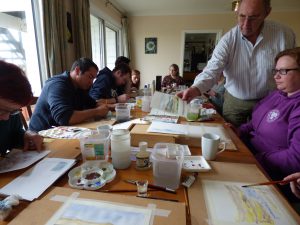
My first major catering event was a watercolour course run by the very talented Richard Cockwell. In between prepping Balmoral Chicken, Toothfish cheeks and STP I managed to join in for an hour of painting. Form the gardens of the Lodge the views over Mount Usbourne are simply breaktaking. What I most like about painting is it gives you the chance to look and watch the clouds skating past the hills. The winds here are deceptive and although the weather can look beautiful from my kitchen window it’s quite often blowing a hooley when I step outdoors.

Richard teaches watercolour at Darwin house

www.darwin-house.com

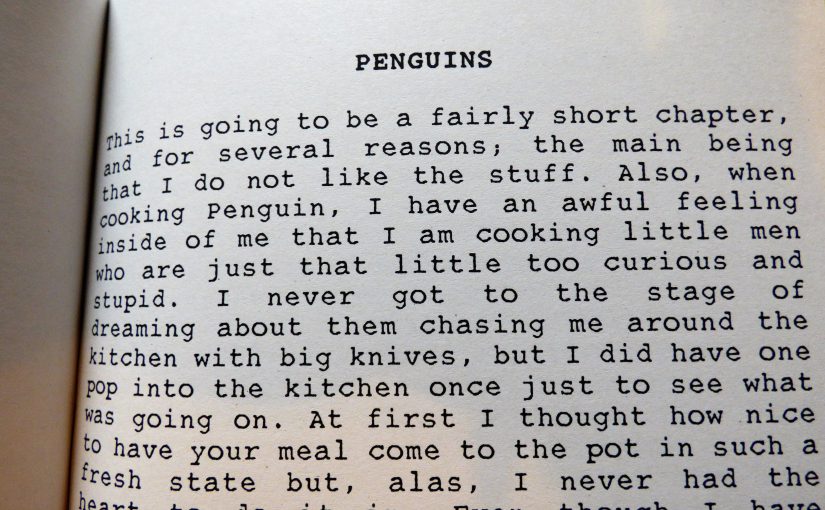
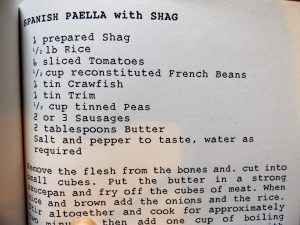
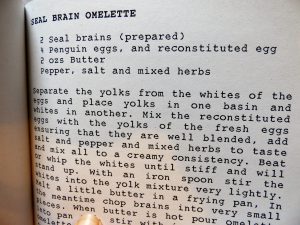
I have also found a funny little book called recipes “Fit for FIDS” It was written in the 1950’s by a interesting character who is spoken of very highly on the Islands. I have eaten smoked Sea Shag in Iceland last year and very good it was too but I am a good deal more wary about seal brain and penguins!

Extracts from “Fit for FIDS”


Cooking on a Swedish Rescue Boat out of Alesund

For the next six weeks I shall be working aboard Gaasten with old friend and skipper Tim. We are sailing from Alesund on one week trips around the Norwegian Fjords. I’m looking forward to cooking with new ingredients.

Navigation from saebo

Handy tips so far are don’t give skiers chocolate bars head up in to the Mountains with. They get too cold to bite in to. One of our seasoned cross country ski guests shared her recipes for flapjack with me. It was like no flapjack that I had ever had in the UK which i find is often bland or sickly sweet.  This was a cornucopia of the tastiest seeds, nuts and dried fruit. I have been rejigging the recipe all week and have made four different varieties each, I think, better than the last.  Where I have really excelled myself though has been in the discovery of THE best ever sauce for Deer. I began with all the usual suspects; onion, garlic, carrots, celery, thyme, rosemary and a bay leaf but then went off piste with the addition of almost a handful of juniper. I added star anise and orange later and the classically Scandinavian finish of cream rather than butter.

Heading out of the Fjord

It was intense, dark and almost smokey. If you closed your eyes you could taste a Norwegian woodland. I think I may have added a cube of 70% Choc at the end to create that silky feel.


Sometimes I think you really have to be in a country to cook it’s food. You have to smell it, see it and touch it before you can begin to understand how it needs to taste. The Norwegians loved it and we ended the cruise with a heady mixture of Aquavit and Whiskey.

Trolls of Gaasten

Tim, Tash and I spent the last day climbing the hill near Alesund, where I finally saw my White Tailed Sea Eagle, before heading to town to buy jumpers and pose with Trolls. I think we are beginning to look more like Trolls each day.


Northern Light Cruising

Saturday 19th We left Oban and headed for Loch na droma Buidhe on Mull. It was a beautifully calm evening, low lying clouds festooned the trees along  the shoreline. Dinner aboard

Sunday 20th After breakfast we left the Loch and headed to Canna arriving shortly after lunch where guests went ashore for afternoon strolls in the July sunshine. Dinner aboard although Canna now boasts a restaurant and rather good community shop.

Monday 21st Lulu was up early to pull up the anchor and leave before breakfast heading straight out past Heisker rocks and on to Mingulay spotting common dolphins on the way. My first run ashore on Mingulay and the island is so much more lovely than it even looks from a distance. It is alive with history and wild flowers from the top of the cliffs at Blulacraig I  sat in the sunshine reading my book occasionally  passengers and crew would wander  stopping to say hello surprised to find each other again. Back onboard at 17.00 and off to Vatersay bay for the evening

Tuesday 22nd Guests ashore for the morning and just before 2pm we lifted the anchor and had a short trip to Castelbay on Barra, once a prosperous herring port boasting over 400 boats. Myself and Lu tied up alongside the pier, watched with interest and amusement by a group of elderly male inhabitants who then praised us for our tying up abilities! Ashore. It seemed that nearly everyone headed for the fudge and toffee tearooms where a great deal of icecream and tablet was partaken. As if I don’t feed them enough! Anchored in the bay for the evening

Wednesday 23rd The sun was shining and the sky a vibrant blue when we upped anchor and turned Northwards along the eastern side of the Outer Hebrides being accompanied at first by a small solitary common dolphin. Many more dolphins enroute. It’s not often that we  spend a full day at sea but the consensus from passengers and crew was that it was too lovely to do anything other than bimble along sunning ourselves on deck. Diaries were written, tea and biscuits consumed and wildlife watched so that by the time we arrived in Borve Bay we were wonderfully relaxed and ready for dinner from me and tunes from Lulu. The weather is gloriously hot and we are all a rosier version of our former selves.

Thursday 24th Early start as we headed north again to the Monachs. One of our passengers has a particular interest in the Islands as her Grandmother was lady who locked the lighthouse door on Shillay when the light was turned off in the last 30’s

Mols off Skerryvore

Friday 25th Woke to find the boat blanketed in fog. Visibility down to about 50 meteres and not a hint of where the Monachs should be.  Plan A was for passengers to go ashore but as always the weather dictates our journey and so with the weather set to worsen tomorrow we go with Plan B and a long run back to Mull. By Lunchtime the sea mist had been burnt off by a fierce sun and we all enjoyed the antics of a sole bottlenosed dolphin who played with us through the sound of Barra. He was so agile that he decided not to bother bow riding us but instead lead the way, spinning and jumping a few meters off the bow.  We then saw porpoises and our first basking shark of the trip. By the end of the day we had seen 31 basking sharks, hundreds of dolphins (in a feeding frenzy off Rum) Minke Whales and a sun fish, whose untimely appearance lead to a lasagne with very little béchamel topping (sudden veer to port!) Moored up in Tobermory for the night.

Saturday 26th After breakfast we all went ashore to sample the delights of this pretty village. Oddly it’s sometimes difficult to spot passengers ashore as we all take on a ‘land’ persona but the ones that Lu and I managed to spot where in tearooms with rather nice looking cookies Back aboard for 11’s and chocolate and the Crew all witnessed a White Tail Sea Eagle fly right overhead. I’ve heard them called flying barndoors and I now understand why.

We left Tob (as the locals call it) after lunch and rounded the north of Mull to run past Calgary Bay and down to Ulva and Gometra where we all spotted Goldies and Whities. A lovely anchorage with Staffa just visible through the gap.

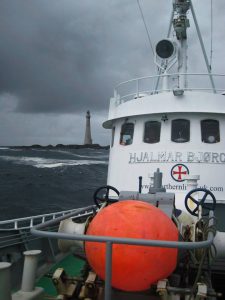
Hjalmar and Skerryvore Lighthouse

Sunday 27th Headed out around Staffa and on to Bac Mor or the Dutchman’s cap as it is known, it looks to me more like a submarine or a whale, on to the Trishnish Isles and back past Calgary. Lu told me that this beautiful beach was the departure point for many Islanders during the land clearances in the 1700’s   In to the sound of Mull which was a more comfortable route than going south and around the Ross of Mull. Lunch on the hoof and dinner aboard in Loch Spelvie. Complete with a Birthday Cake and music from Lu.


A fabulous trip with such a lot of variety. Many Thanks to all the passengers who were so wonderfully helpful and who myself and Lu couldn’t keep out of the galley.  It was a great pleasure to sail with you all and you are welcome back anytime! Thank you


St Kilda 2014

I’m over the moon to be cooking for the Northern Light Cruising Company this year. I shall spend the Summer bimbling about the Outer Hebrides and hopefully get to StKilda, which has been a dream of mine since I read Island at the Edge of the World as a teenager. I am working aboard an old Norwegian Rescue Boat called Hjalmar Bjorge.

https://www.northernlight-uk.com/2014/06/mollys-blog-on-her-first-kilda-landing/

Facebook
Instagram
LinkedIn
WhatsApp